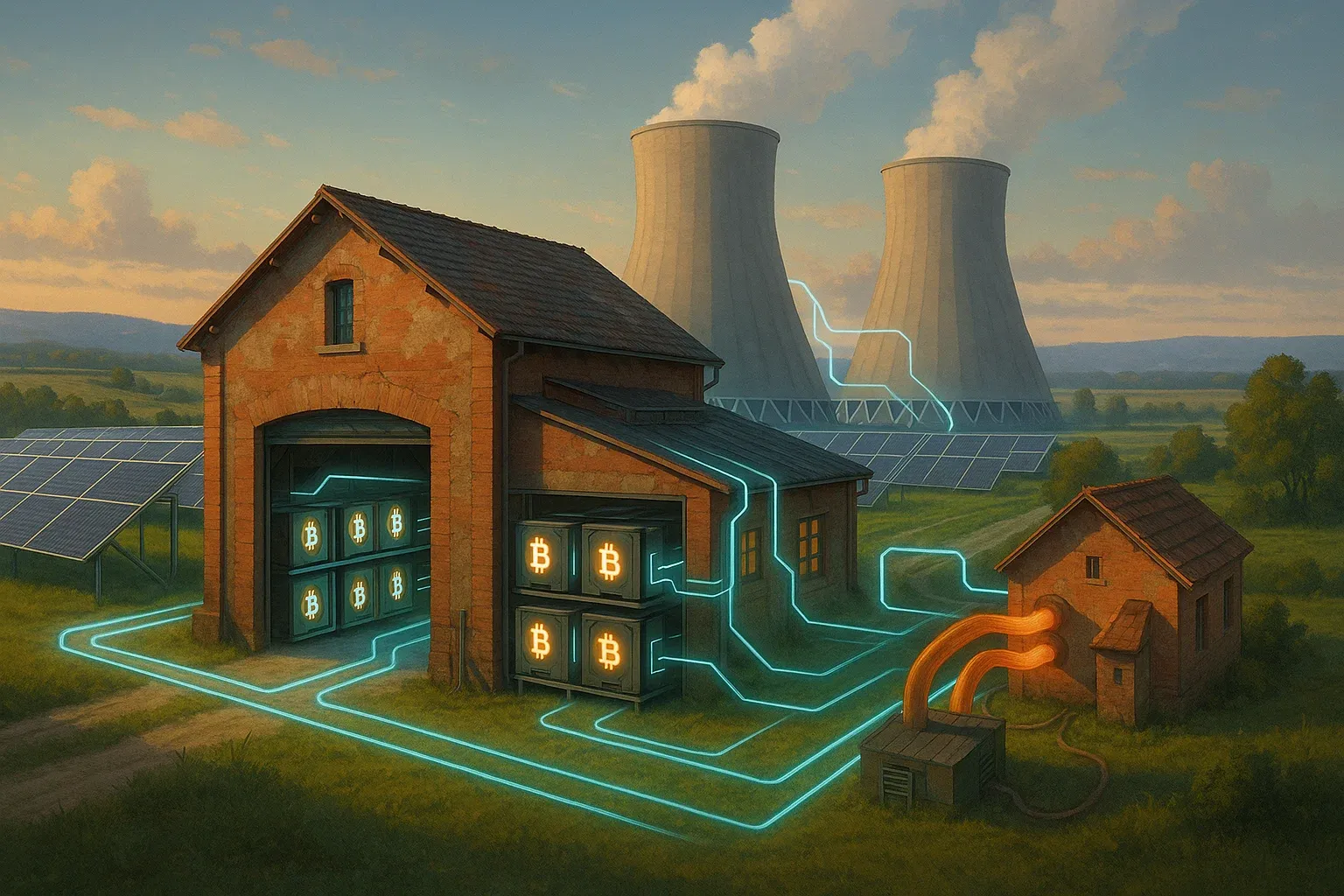

A legislative proposal presented to France's National Assembly on 12 June suggests that Bitcoin mining could become a strategic solution to manage France's constant surplus of electricity production, mainly due to its extensive nuclear power sector.
Legislators are calling for a national analysis to examine the potential use of Bitcoin mining as a tool to absorb excess electricity.
Legislators Propose Mining Of Bitcoin As Solution
According to data EBSCO, France obtains more than 70 per cent of its electricity supply from nuclear power plants, thus maintaining its position as a leader in clean energy production. Generating safe, low-emission electricity, however, involves regular excess production.
Raphaël Bloch, co-founder of The Big Whale, recently highlighted the economic losses associated with surplus electricity, estimating that France wasted EUR 80 million in 2024. Lawmakers believe that Bitcoin mining operations could convert wasted energy into valuable economic resources.
"At a time when France seeks to optimise the management of surplus electricity production-especially from nuclear or renewable sources-Bitcoin mining offers unique technical features," reads the proposal.
The suggested legislative change requires an official assessment of the integration conditions necessary for Bitcoin mining to become part of the national energy system. Proponents argue that mining centres represent flexible energy consumers, able to quickly switch from one operating state to another.
Bitcoin mining facilities can be located near power plants and expand their operations without disrupting the electricity grid, thus helping to stabilise energy markets and reduce the wear and tear on nuclear power plants by decreasing the need to frequently regulate production.
The proposal recommends the conversion of abandoned industrial sites into mining centres, which would also allow the reuse of heat generated by mining to power nearby urban areas and industrial facilities.
The French parliamentarians intend to establish a regulated, low-carbon Bitcoin mining sector that could contribute to France's decarbonisation goals, as well as create new opportunities for innovation and employment.
French interest in the idea reflects a growing global movement. The President of Belarus has instructed his government to study Bitcoin mining to utilise surplus electricity. Pakistan's National Cryptocurrency Council recently announced plans to allocate 2,000 megawatts of electricity to Bitcoin mining operations and artificial intelligence data centres in the country.
Researcher Daniel Batten says these initiatives demonstrate how the particular energy consumption pattern of Bitcoin mining plays a crucial role in maintaining abundant and low-cost energy resources around the world.