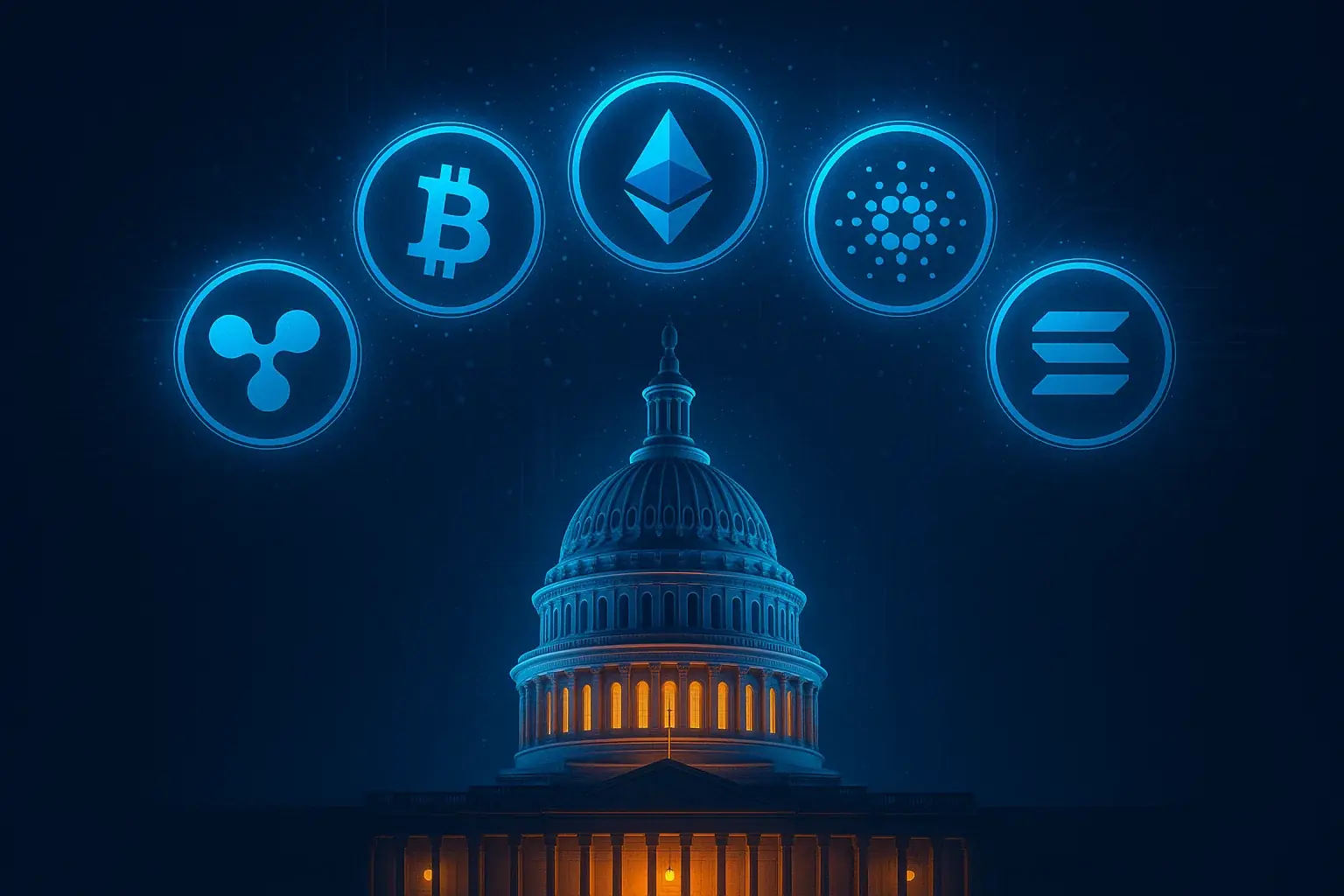

In a climate of anxiety among investors over cryptocurrency regulation in the US, there are signs that could radically change the mood of the markets. Indeed, the US Securities and Exchange Commission (SEC) has sent out multiple signals interpreted by traders as a relaxation of its previous hard line against major crypto assets: Ripple (XRP), Cardano (ADA), Solana (SOL), Bitcoin (BTC) and Ethereum (ETH).
Cryptocurrency national reserve under the wing of the White House
In March this year, former President Donald Trump signed an executive order creating a 'presidential task force' tasked with establishing a national cryptocurrency fund. The fund will include BTC, ETH, ADA, SOL and XRP. This unexpected decision is a strong signal of support from the authorities and is perceived as a concrete step to transform the US into a global leader in crypto.
Ripple towards reconciliation guarantee of growth
The decisive legal battle between the SEC and Ripple has been ongoing since 2020. Until recently, the public had hoped for a quick settlement, but Judge Torres rejected the conciliation procedure previously agreed between the parties. Despite the formal obstacle, analysts believe that the decision only complicates the process, but does not compromise the final outcome. Investors interpreted the rejection as a pause and not a defeat, and indeed XRP showed moderate growth after the initial drop.
🚨SCOOP: The @SECGov is in the early stages of creating a generic listing standard for token-based ETFs in coordination with exchanges.
- Eleanor Terrett (@EleanorTerrett) July 1, 2025
The thinking, I'm told, is that if a token meets the criteria, issuers could skip the 19b-4 process, file an S-1, wait 75 days, and the...
Why Cardano and Solana are winners
The ADA and SOL projects are perceived as among the most promising in the context of the gradual regulatory loosening in the US. Cardano continues to develop in the area of PoS (Proof of Stake) solutions, scalability and with the implementation of Layer-2, which makes it particularly attractive to institutional investors. Solana, after overcoming a recent security crisis, continues to strengthen; despite misperceptions about its vulnerability, the ecosystem proves resilient and ready for a new phase of growth.
Ethereum and Bitcoin are protected
The presence of Bitcoin and Ethereum in the possible government reserve is seen as an official recognition of their status as "secure assets", on par with government currency. This historic recognition, if implemented, could attract massive institutional investment and significantly reduce the current volatility.
A turning point for the entire sector
The combination of several factors is generating powerful synergies:
- Government support: the creation of a reserve fund implies that the US does not intend to ban major cryptocurrencies, indeed, it can invest in them directly.
- Positive judicial outcomes: even a partial settlement of disputes over XRP eliminates legal risks and allows large players to return to the market.
- Technological developments: Cardano and Solana are strengthening, Ethereum remains stable and Bitcoin remains the main store of value.
For traders and investors, now is the ideal time to rebalance the portfolio: add ADA, SOL, XRP and ETH, without excluding BTC as a base. The waiting period for regulation is over: a new phase of institutional growth and adoption has begun.
Reduced regulatory pressure from the SEC, the US government's interest in cryptocurrencies, and the technological maturity of major projects make this moment a strategic turning point. Each of the assets mentioned now has a real chance for sustainable growth. This is a clear signal for serious investors, especially those with a long-term orientation.