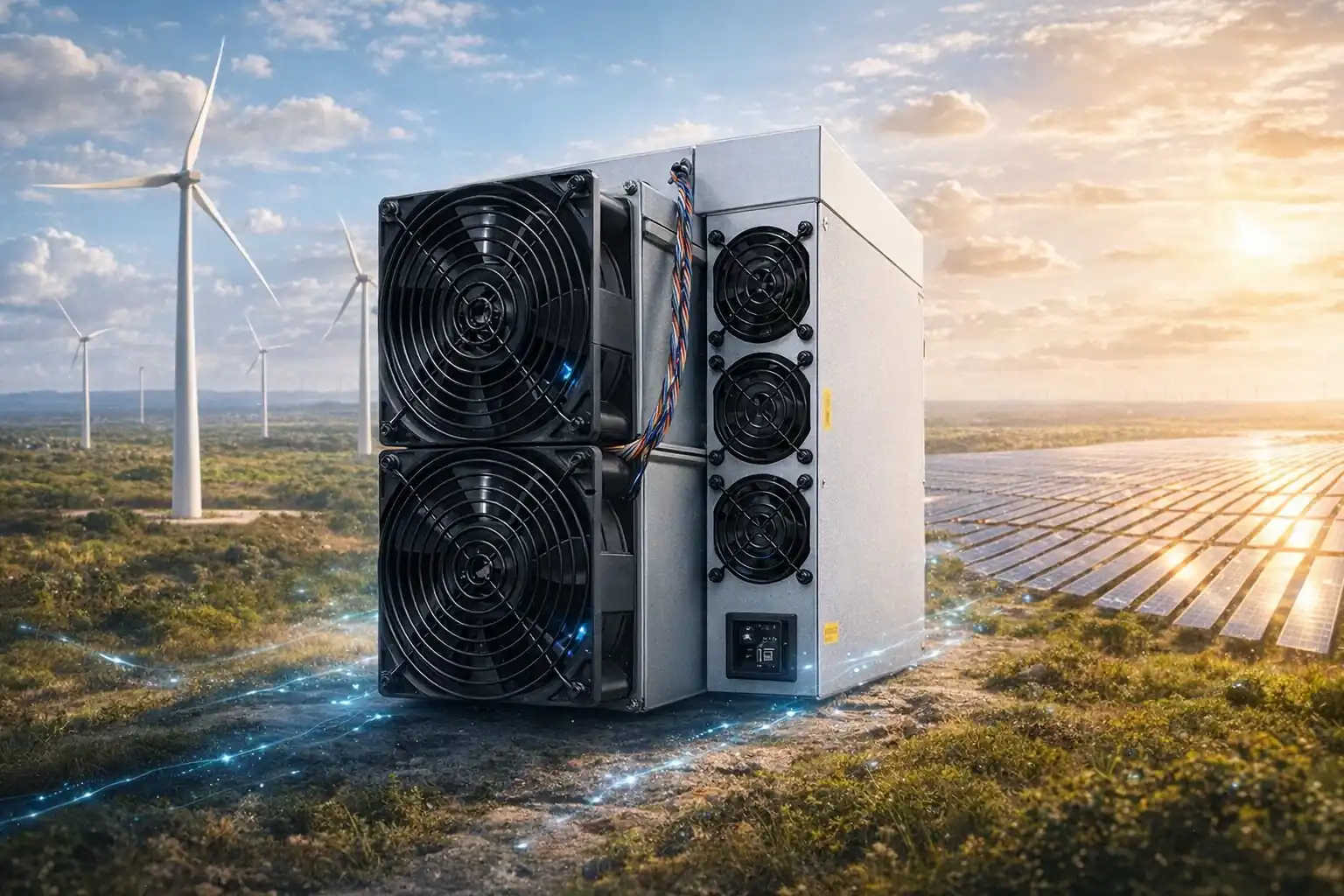

In the space of just three days, between 20 and 23 February, Brazil's energy and technology landscape underwent a silent but profound shake-up. This is not an ideological 'legalisation' of cryptocurrencies, but a pragmatic convergence of the energy surplus crisis and targeted tax incentives. Brazil is building a 'pressure valve' for insulated renewable energy, and Bitcoin mining is the delivery mechanism.
The Curtailment Problem: Billions That Vanish
Between October 2021 and September 2025, Brazil's wind industry suffered a 'curtailment' (production cut) of about 32 terawatt-hours. This energy, which was produced but not fed into the grid due to transmission constraints or oversupply, resulted in an estimated loss of 6 billion reais (around USD 1.2 billion).
With the share of wind and solar increasing from 24% in 2024 to 34% in August 2025, grid operator ONS confirms that curtailment is no longer a temporary hiccup, but a structural feature. This is where mining comes in: a local, modulable and immediate electrical demand, capable of absorbing electrons that would otherwise be destroyed.
The Fiscal Turn: Elite Hardware at Zero Duty
GECEX Resolution 861, published on 20 February, zeroed import duties for a specific class of hardware until 31 January 2028. The exemption is not for everyone, but focuses on technical excellence:
- Algorithm: SHA256 (Bitcoin).
- Efficiency: Less than 20 joules per terahash.
- Power: Greater than 200 terahashes per second.
This move breaks down one of the historical barriers in the Brazilian market, where the total import tax burden can range between 40% and 100%. By reducing the cost of hardware, the government shortens the payback time for professional miners, making energy arbitrage much more attractive.
The Interest of the Giants: The Engie Case
The final signal came three days after the resolution. French energy giant Engie told Reuters that it was considering installing miners at its Assu Sol solar plant (895 MW) in northeast Brazil. As Engie's largest solar plant in the world, the choice to use the Bitcoin to monetise excess energy transforms mining from a "speculative activity" to an "industrial demand management tool".
The Economics of Mining: The Breakeven Point
The numbers clearly explain the logic behind this choice. With a Bitcoin price of around 64,000 dollars (data from 23 February) and a hashprice of around 34.05 dollars per petahash, an efficient 200 TH/s rig generates around 6.81 dollars per day.
The break-even price of electricity for these machines is around 0.071 dollars per kWh (around 370 reais per MWh). Although retail prices in Brazil are much higher (0.657 reais/kWh), wholesale spot prices fluctuate between 250 and 450 reais. Curtailed' energy, by definition, has no other buyers: selling it to miners at a discount allows producers to recover revenues that would otherwise be zero.
Risks and Prospects
The Brazilian argument is sound but not without risks. If the construction of new transmission lines accelerated, the pool of 'wasted' energy would shrink. Moreover, the high cost of capital in Brazil and the volatility of Bitcoin's network 'difficulty' could erode margins.
However, the Brazil has created a 24-month window of opportunity. It is not a long-term bet on the future of digital currencies, but a pragmatic experiment: using computational computing to stabilise the balance sheets of renewable power plants. If the big producers follow Engie's example within the next 12 months, Brazil will become a prime destination for global hashrate, simply by letting the project economy take its course.