

Hackers and fraudsters stole over $3 billion in cryptocurrencies in 2024.
There was a significant increase in hacker activity related to cryptocurrencies in 2024, as reported by cybersecurity firm PeckShield. According to analysts, the total cost of losses caused by hacks, frauds, and scams in 2024 exceeded $3.01 billion.
The amount of cryptocurrencies stolen in 2024 was not a record: in 2022, even more, at $3.6 billion, had been stolen. However, in 2023, the losses had decreased to USD 2.61 billion. By 2024, however, they were back up by about 15 per cent to over $3 billion.
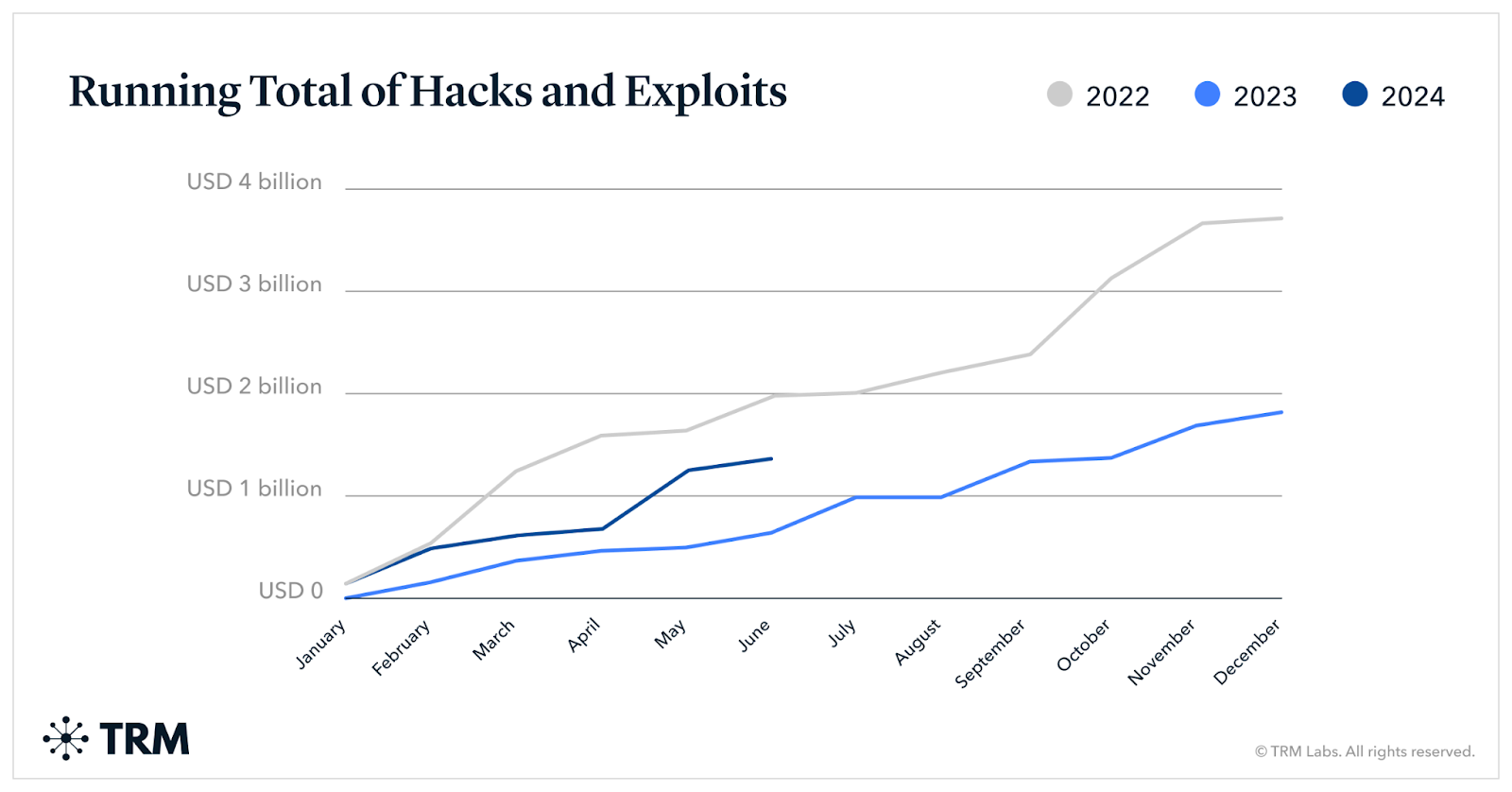
Of these losses, $2.15 billion (71%) was stolen through hacks and cyber attacks, while $834.5 million (29%) was taken by fraudsters. At the same time, stolen cryptocurrencies worth about $488.5 million were recovered.
The share of theft from centralised services increased again last year. In 2022 it was about 20 per cent, in 2023 just over 30 per cent, while in 2024 the CeFi platforms accounted for about 45 per cent.
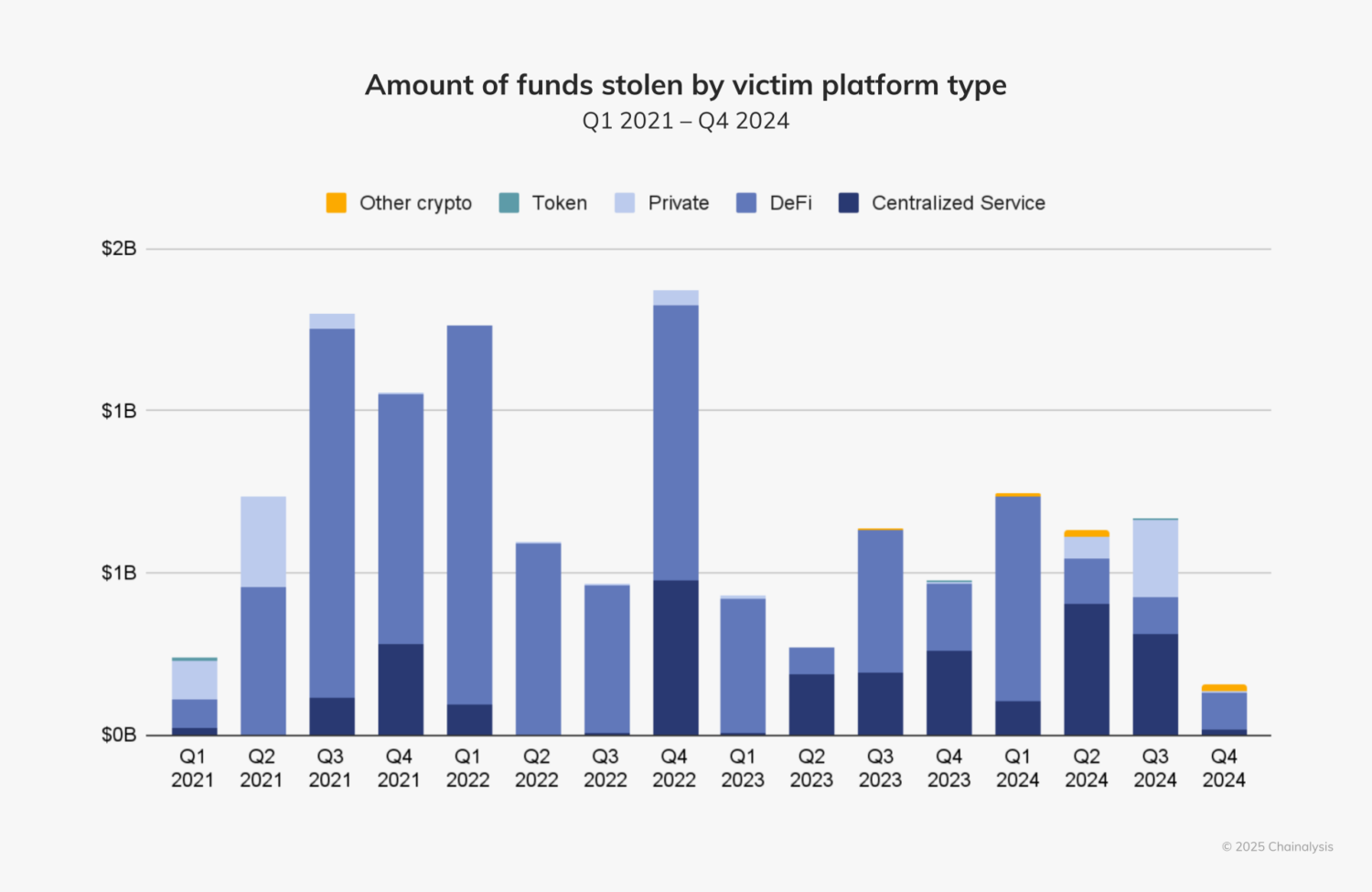
The biggest attacks in 2024 were:
- the attack on the Japanese cryptocurrency exchange DMM Bitcoin ($305 million stolen in May),
- the attack on the NFT platform PlayDapp in February ($290 million),
- the hack of the WazirX trading platform in July ($230 million).
Cryptocurrency Losses: Monthly breakdown-2024
The biggest losses occurred in the first half of the year: cryptocurrencies worth $662 million were stolen in May, while in February losses reached $440 million. In the second half of the year, the sums stolen decreased: in November, hackers and fraudsters managed to steal $95 million, and in December, $46 million.
Aggruders are using increasingly innovative methods to steal cryptocurrencies, increasingly resorting to social engineering techniques. Recently, a new scam has emerged in which unsuspecting victims, lured by the possibility of a seemingly easy theft, are lured into a trap.
Another new ploy consists of phishing attacks via invitations to fake video conferences on Zoom. By clicking on a malicious link that is supposed to lead to an online conference, software is installed on the user's device, allowing hackers to steal personal data and access cryptocurrency wallets.
The year showed a worrying trend in the security of cryptocurrencies, with significant losses recorded in the first few months. Hackers and fraudsters exploited vulnerabilities, with a peak of $662 million stolen in May and $440 million in February. However, the second half of the year showed a positive decrease in such activity, with thefts reduced to $95 million in November and $46 million in December.