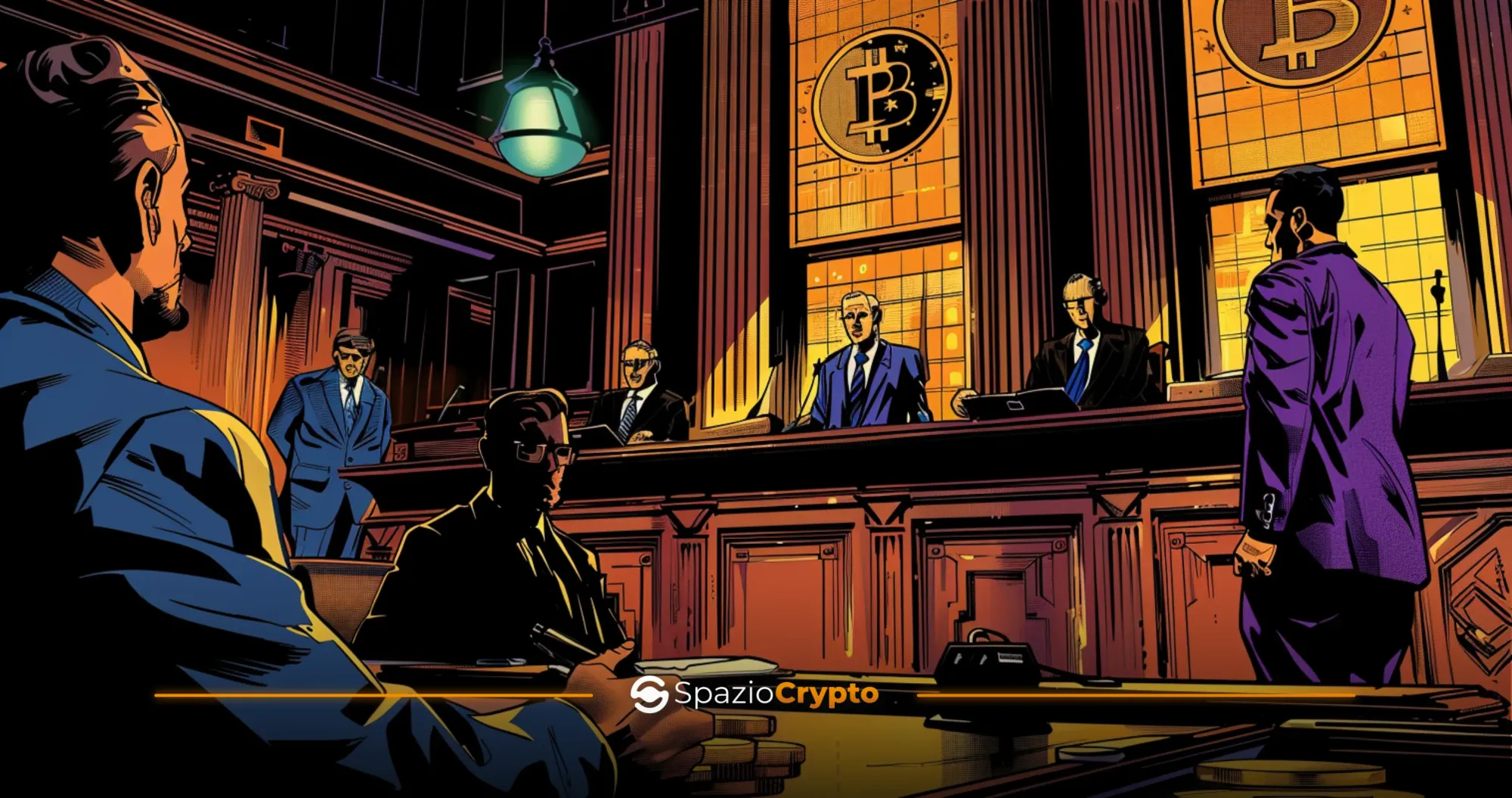

Uniswap Labs is the developer behind the cryptocurrency exchange Uniswap. Among the services it offers, the automated token exchange on the Ethereum blockchain is particularly popular. This has led it to the wall-to-wall with the SEC, the US commission that regulates stock market and financial indices and is required to make a final decision on the listing and trading of Ethereum-based ETFs (Exchange Traded Funds) before authorising their trading on Wall Street.
The battle between Uniswap and the SEC, however, has already begun, as the federal agency has sent a Wells notice to the exchange developer, threatening a potential enforcement action, which could likely turn out to be a multi-million dollar lawsuit.
What is a Wells Notice?
The instrument of the Wells Notice, or Wells Notice, in English, is little known on this side of the Atlantic, but it is a very important tool in US finance. Such a notice is a formal step by which the Commission informs the person concerned of its intention to take action against him. Generally, when it is issued, it means that an investigation,has already been undertaken and completed, and that it has gathered sufficient evidence of wrongdoing to formalise an allegation of violation of US securities law.
It is not automatic that the issuance of the notice will be followed by a formal legal action. It is indeed possible to settle with the SEC and resolve the issues highlighted by its investigation. Not only that. Before the action becomes enforceable you can present your version of the facts (known as a Wells submission) to convince the Commission that you are in the right. If this step is successful, the notice will be cancelled.
The Clash between Uniswap and the SEC
Uniswap chose the wall-to-wall route from the outset. According to the company, the SEC's point of view is wrong from the start, since the Commission treats all tokens as if they were securities within its competence, when in fact they are a new and not yet adequately regulated financial device. It is no coincidence that, just this week, the US House of Representatives voted on the Financial Innovation and Technology for the 21st Century Act, a measure with which the Commission's power over cryptocurrencies is greatly softened.
By virtue of this new legislation, which will give cryptocurrencies more freedom within the mainstream finance ecosystem, Uniswap has found the strength to respond vigorously, as the SEC will eventually be exonerated. The power to take legal action will in fact be transferred to the CFTC, Commodity Futures Trading Commission, a body that is typically rather lax because it is interested in padding Wall Street indices and attracting as many investors as possible.
Not infrequently, SEC notices have generally turned into actual lawsuits, such as the lawsuit against Coinbase dating back to March 2023. In the past month, then, the Commission had announced its intention to file enforcement actions against the trading platform Robinhood. In the light of these legislative developments, however, everything will have to be reviewed.
Uniswap Holds to Hold the Knife From the Handle's Side
According to Uniswap, the SEC's arguments against their actions would be extremely weak. From day one, the day the notice was posted, the company behind the exchange claimed to be ready to fight for its own operations and the very future of DeFi. According to Marvin Ammori, the Commission's persecutory intention was weak and wrong from the start, even before the new law was passed to limit the SEC's supervisory power, thus also preventing any potential abuse of its power. As Ammori put it:
"If the SEC were to file a lawsuit, it would lose, and lose in ways that undermine any future authority over DeFi, cryptocurrencies, and future technology."
Here on SpazioCrypto we are never too happy to have to recount a legal battle involving cryptocurrencies, because it shows us, once again, how far this world still has to go to gain full legitimacy. On the other hand, however, we can only welcome the new US measure, which levels the playing field somewhat and returns an anachronistic and oppressive system of checks and controls. Now we wait to see what new things this wind brings to the universe of decentralised finance and what changes for the Web3.