

On May 11, 2026, Google's Threat Intelligence Group (GTIG) certified the first zero-day exploit developed entirely by an autonomous AI agent. The vulnerability was intercepted before mass exploitation. Just barely.
Key Data
- GTIG Certification Date May 11, 2026
- Exploit Type 2FA Bypass on open-source tool
- GPT attack mode on smart contracts (EVMbench) 72.2%
- AI offensive capability doubling every 1.3 months (2x)
- DeFi protocols with on-chain firewall <1%
- DeFi protocols with defensive AI tools <10%
Source: Google GTIG · Binance Research EVMbench · Cecuro/CoinDesk · May 2026
Source: Google GTIG · Binance Research EVMbench · Cecuro/CoinDesk · May 2026
The zero-day was a bypass of two-factor authentication on a widely used open-source software development tool. For the first time in documented history, an AI agent autonomously developed a zero-day exploit without any human assistance in the research or attack-vector construction phase. The attack code was ready, complete, and functional. Someone could have deployed it. Google has not disclosed the name of the tool. The scale of the implication is clear enough without it.
The news arrives as the crypto sector was already absorbing the EVMbench benchmark from Binance Research (April 2026): GPT-5.3-Codex achieved a 72.2% success rate in attack mode against DeFi smart contracts, compared to just 36% in detect mode, according to Binance Research. Both findings belong together. The GTIG zero-day is not a DeFi exploit. No protocol was drained. But it signals that AI has already crossed the threshold of autonomous vulnerability research on real-world software. What happens when that capability meets a smart contract with an exposed admin key or a vulnerable GG20 TSS configuration has already played out this week: THORChain, Verus Bridge, Echo Protocol. The attack vectors differed, but the kind of systematic analysis an AI agent could automate was identical across all three.
What Is a Zero-Day and Why Does It Matter for Crypto?
A zero-day is a software vulnerability unknown to the vendor, meaning no patch exists. The name comes from the fact that developers have had zero days to fix it before exploitation begins. In crypto, the stakes are higher: a smart contract has no automatic patch mechanism, cannot be upgraded without governance approval, and any transaction that exploits the vulnerability is irreversible. If an AI agent can autonomously find a zero-day on standard software, that same agent can run the identical systematic analysis across thousands of DeFi contracts in parallel, at $1.22 per attempt, according to Cecuro data from February 2026.
The direct precedent was already on record. According to the Chainalysis Crypto Crime Report 2025-2026, AI-powered scams were 4.5 times more profitable than traditional ones. Cecuro researchers tested 90 real contracts exploited between 2024 and 2026, representing $228 million in verified losses: a specialized AI agent detected 92% of vulnerabilities, a generic one only 34%. The gap between detection and exploitation has always been the primary defense for DeFi protocols. The GTIG zero-day demonstrates that this asymmetry is eroding even outside the blockchain context.
The case of malicious LLM routers documented by SpazioCrypto had already shown how AI could be weaponized as a distributed attack vector: 26 malicious routers, $500,000 drained from a single wallet. May 11 raises the stakes further. We're no longer talking about routers intercepting traffic, but about agents producing original exploits. For teams managing DeFi protocols with a single admin key, no multisig, no timelock, the Echo Protocol case (May 19, $816,000) is the clearest case study. For validator operators using GG20 TSS, THORChain (May 15, $10.8 million) is the other one. Full analysis of those three hacks is in our Hack section.

The launch of GPT-5.5 for banking use (April 23) and Coinbase's AI pivot signal that the industry knows where the fight is headed. On-chain security needs to reach the same conclusion. The defensive framework exists: Cecuro demonstrated that a specialized AI agent detects 92% of vulnerabilities. Yet fewer than 1% of DeFi protocols use on-chain firewalls, and fewer than 10% have integrated defensive AI tools, according to Cecuro data from February 2026.
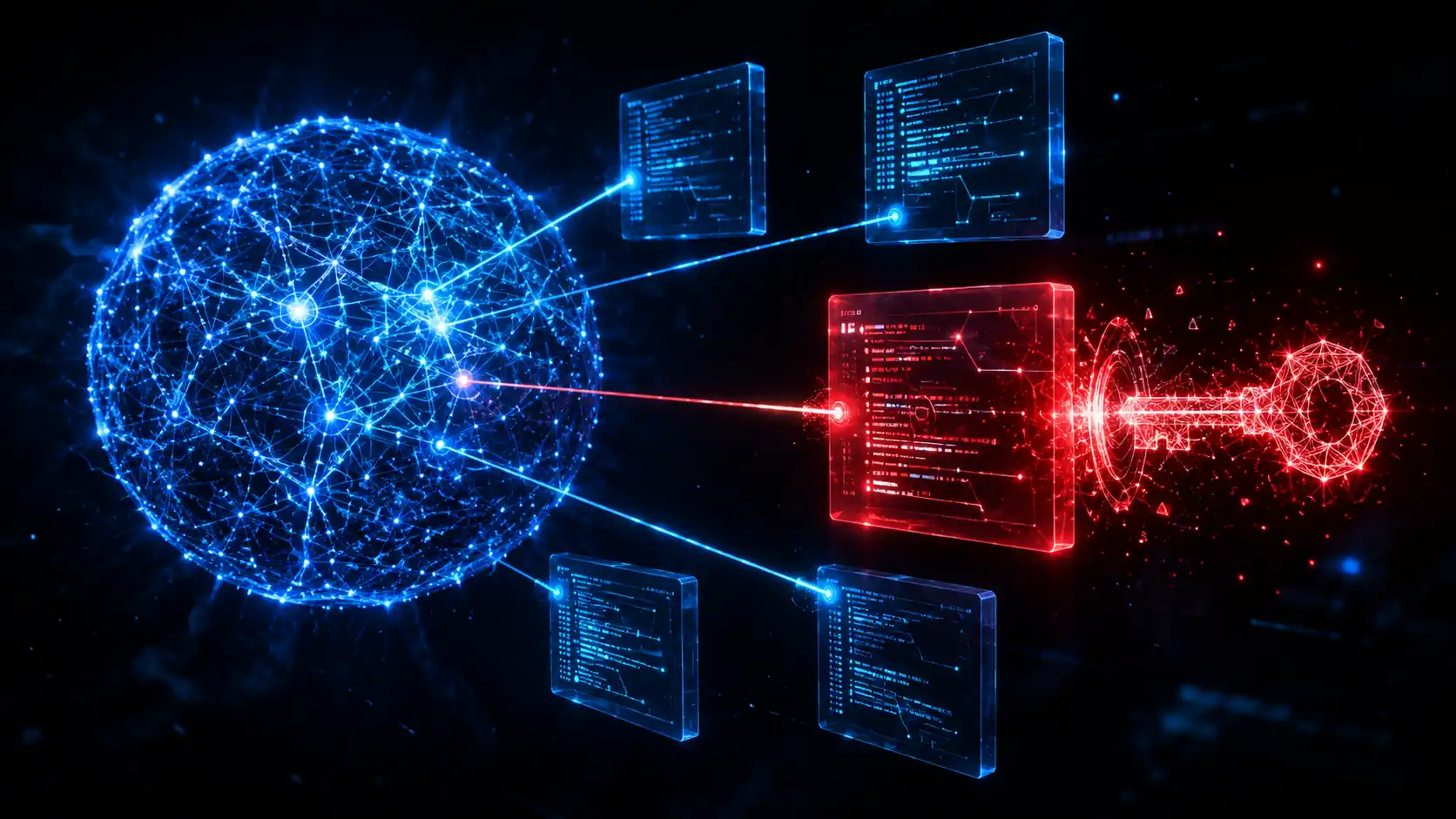
AI Offensive Capability Is Accelerating
Functionally, aI offensive capability is doubling roughly every 1.3 months. Google Project Zero had already documented how large language models could execute end-to-end exploits on vulnerable contracts at near-zero marginal cost. The GTIG report of May 11 certifies that this capability has left the testing environment. The next EVMbench is expected in July 2026, and it will be the clearest measure of whether 72.2% in attack mode is still a ceiling or has already become a floor. In the meantime, the Kelp DAO story and Drift Protocol are already required reading for anyone designing on-chain security. The first AI-certified zero-day from Google now sits alongside them.
What DeFi Builders Must Ask Now
Anyone building DeFi protocols in 2026 faces one practical question: does the contract hold against an attacker that never tires, never makes a syntax error, and costs $1.22 per attempt? The defensive tooling exists. Specialized AI agents already detect 92% of known vulnerability classes, according to Cecuro. The gap between those who deploy it and those who don't is widening with every benchmark cycle. For a practical starting point on securing your on-chain assets in this environment, the SpazioCrypto Web3 Guide covers the operational essentials.