

A new kind of buyer is showing up online, and it is not human. Artificial intelligence agents have started buying data, services and computing power from one another, at machine speed. And one blockchain has decided to put itself forward as the cash register of that market.
NEAR has rebranded itself as the “currency of agents”, and in June it shipped the most ambitious network upgrade in its history to back the bet. The question is how much of it is real, because the technology here is serious and the narrative is running ahead of the facts.
Why does an AI agent need a blockchain?
For two structural reasons, the same ones we covered when we explained how agents pay in stablecoins with x402. The first is identity: a piece of software cannot open a bank account, because it cannot pass KYC checks. A crypto wallet, by contrast, only needs a key.
The second is economics. An agent that calls dozens of services per second has to pay fractions of a cent, an amount that card networks simply cannot handle. Crypto solves both problems at once. This is the ground on which NEAR wants to plant its flag.
What changes with the June upgrade?
Network upgrade 2.13 brings two heavyweight changes. The first is called dynamic resharding. Shards are independent partitions that process transactions in parallel, like several checkouts open in a supermarket instead of a single queue. Until now, adding a shard took weeks of coordination among validators, a governance vote and a gradual rollout.
Now the process becomes automatic: when a shard crosses a size threshold, it splits on its own, deterministically, with no human intervention. According to NEAR, this makes it possible to reach more than 70 shards, with throughput higher than Visa's.
From 8 to more than 70 shards
Number of shards: current configuration versus the target enabled by dynamic resharding. Source: NEAR Protocol, 2026
The second change is the post-quantum signature. NEAR has picked the FIPS-204 standard set by NIST, and thanks to its human-readable account model it lets anyone rotate their keys to a quantum-resistant scheme with a single transaction, without having to move to a new address.
What is the “currency of agents”, really?
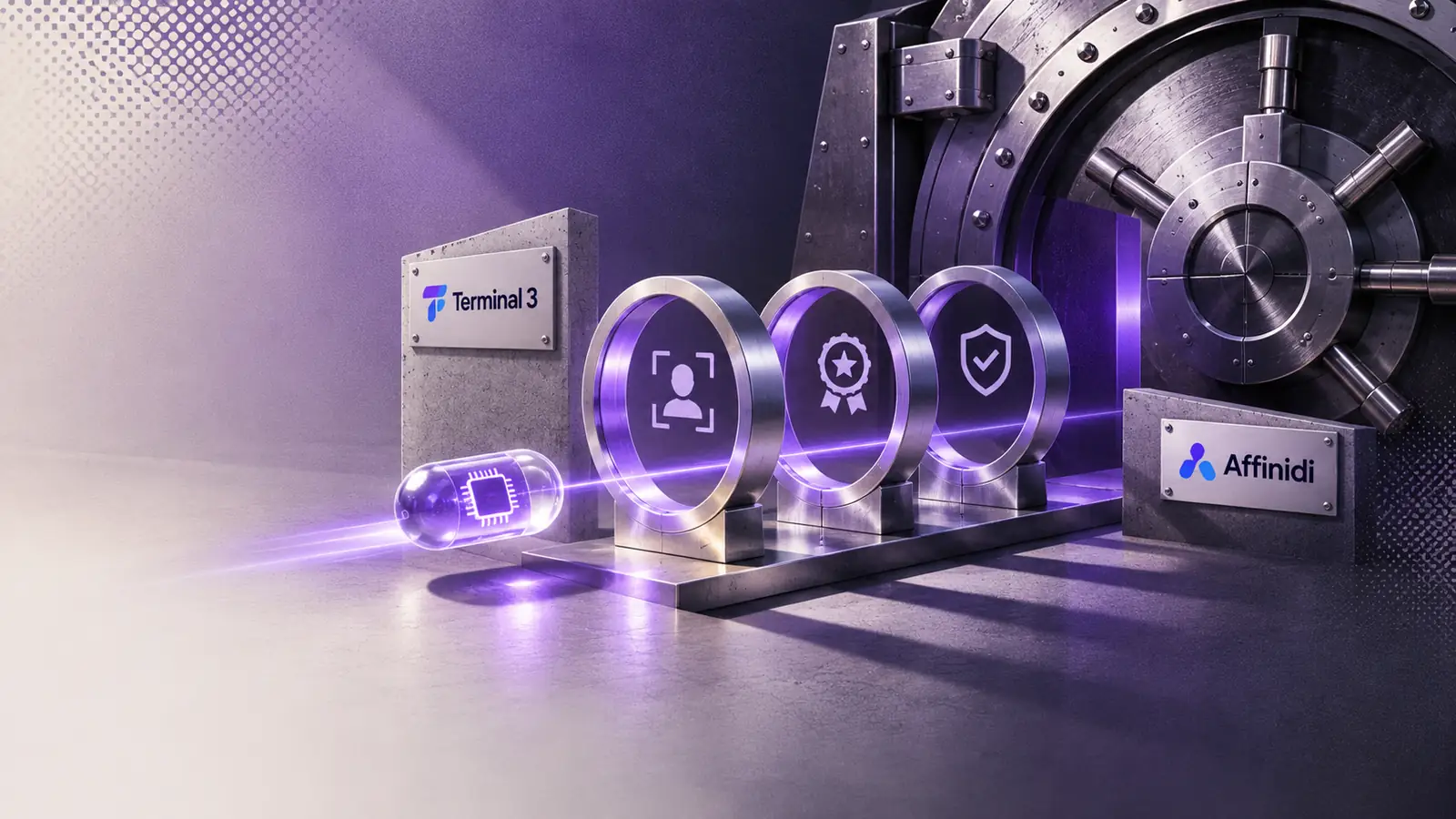
The heart of the bet is called NEAR Intents. Instead of forcing an agent to hold tokens on a specific chain or to use bridges, the system lets it declare what it wants to achieve and leaves solvers to find the best route across the various blockchains. For an agent that buys compute on one chain, settles a payment on another and stores data on a third, this abstraction is everything.
Dynamic resharding is coming to NEAR.
— NEAR Protocol (@NEARProtocol) May 20, 2026
The upcoming network upgrade will enable the protocol to add shards automatically as demand grows.
This delivers on NEAR's founding vision of building the world's most scalable blockchain protocol at the highest level of performance 🧵 pic.twitter.com/jQU3UC95FY
The numbers are there: Intents has passed $20 billion in all-time volume, and a mechanism called the fee switch uses the fees it generates to buy back NEAR on the open market, creating a loop between network usage and demand for the token. Concrete products are growing around it, such as Trezu's Confidential Treasuries for private payments and treasury management across more than 35 chains, and the automatic anonymization of sensitive data before a prompt reaches models such as Claude, ChatGPT or Gemini.
It is the same dynamic we have seen elsewhere: value shifting toward the layer that routes, not just the one that produces, as in the case of Sakana and model orchestration, and the same logic of decentralized AI infrastructure that drives projects such as Bittensor.
A tokenomics decision also helps make the whole thing sustainable. With the Halving Upgrade at the end of 2025, NEAR cut its maximum annual inflation rate in half, from about 5% to 2.5%, on a supply that is now fully in circulation.
Maximum inflation cut in half
NEAR's maximum annual inflation rate after the Q4 2025 Halving Upgrade. Source: NEAR
What about the risks?
This calls for the usual cool head. The technology is real, but the token has already run up and has already given a lot back. The resharding announcement in May had sent NEAR up almost 30% in a single day, above $2. Then, in June, came the cold shower.
Arthur Hayes, co-founder of BitMEX, sold out of his entire position on June 7, citing profit-taking and macro risks. On-chain investigator ZachXBT questioned the timing, suggesting that the exit followed his own public endorsements. The price dropped sharply, and in any case remains far below its all-time high of $20.44 from January 2022. It is proof that, today, NEAR still moves a great deal on influencer sentiment.
Then there is the biggest issue of all: the agent economy that would justify more than 70 shards does not yet exist at that scale. It is a bet on the future, part of the same wave that is pushing even Bitcoin miners to reinvent themselves as AI companies.
NEAR is building serious rails for a machine-to-machine market that is still in its infancy. The “currency of agents” is a thesis, not a result. The indicator to watch over the coming quarters is not the next tweet from a big name, but the real volume on Intents and the number of agents actually transacting on the network. If that market arrives, the infrastructure will already be in place to welcome it. If it does not, these will be rails leading to an empty station.
This article is for informational purposes only and does not constitute financial or investment advice. Crypto-assets are high risk and you may lose part or all of the capital you invest.