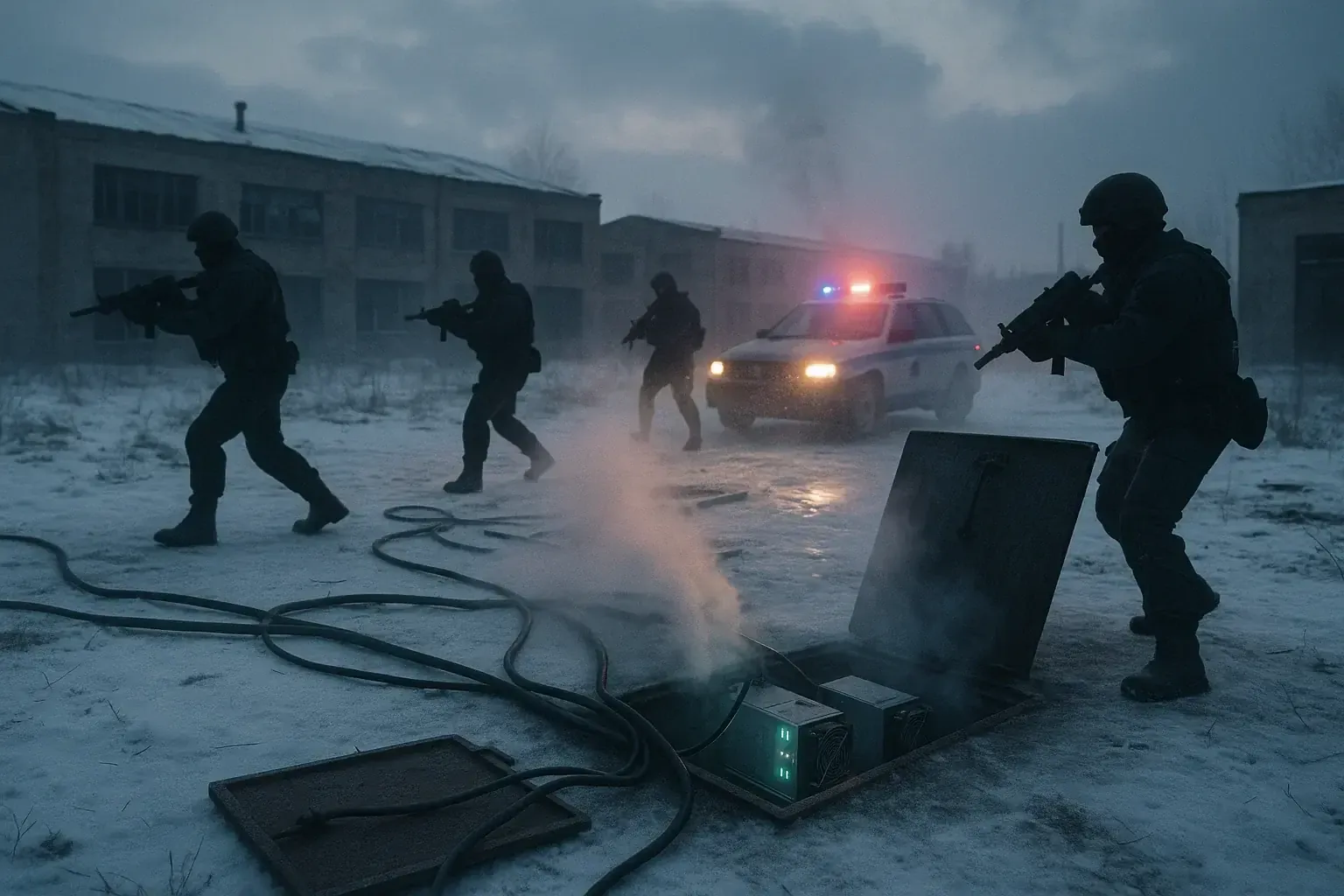

Russian law enforcement agencies, in cooperation with energy companies, have uncovered the largest illegal cryptocurrency mining scheme in the country's history, based on the use of stolen electricity. According to various local and international publications, the damage caused by the criminal group's activities has exceeded USD 4 million in recent months alone.
The illegal mining farms operated in different regions of Russia, from industrial areas in the Urals to sparsely populated areas of Siberia. All plants were connected to electricity grids by bypassing meters. Special cables hidden underground and technical solutions designed to make illegal connections difficult to detect were used. The equipment was located in abandoned hangars, warehouses and in the areas of former factories.
Searches, arrests, and consequences: a case that could change mining regulations in Russia
During the searches, over 5,000 units of Bitcoin mining equipment were seized. In particular, these were specialised ASIC devices operating 24 hours a day with high power consumption. The power companies had previously detected large surges in the grid load, but had failed to identify the cause before an in-depth inspection began.
The investigation started with reports from local energy operators and complaints from citizens about frequent power outages. An analysis of power circuits revealed unauthorised connections, leading FSB and the Ministry of the Interior to intervene. In some cases, the miners had connected directly to substations, causing direct damage to infrastructure and risks to other users.
There are more than 30 suspects, including the alleged organisers of the criminal scheme. Investigators believe the groups acted in a coordinated manner, with access to technical information about power lines, and may have received help from infiltrators. Criminal proceedings have been opened for electricity theft, fraud and illegal entrepreneurship.
Energy experts say this case should be a signal to reform mining control in the country. Although the mining of cryptocurrencies is not banned in Russia, the absence of clear regulation and low electricity tariffs encourage the growth of the underground sector.
The State Duma is already discussing new bills to tighten the rules for miners. It is proposed to introduce mandatory registration of mining farms, a specific licence, and tools to monitor energy consumption in real time.
According to analysts, the actions of fraudsters not only undermine the economy and the security of energy systems, but also bring legal participants in the crypto market into disrepute. The unmasking of this scheme could represent a turning point in the shaping of future cryptocurrency regulation policy in Russia.