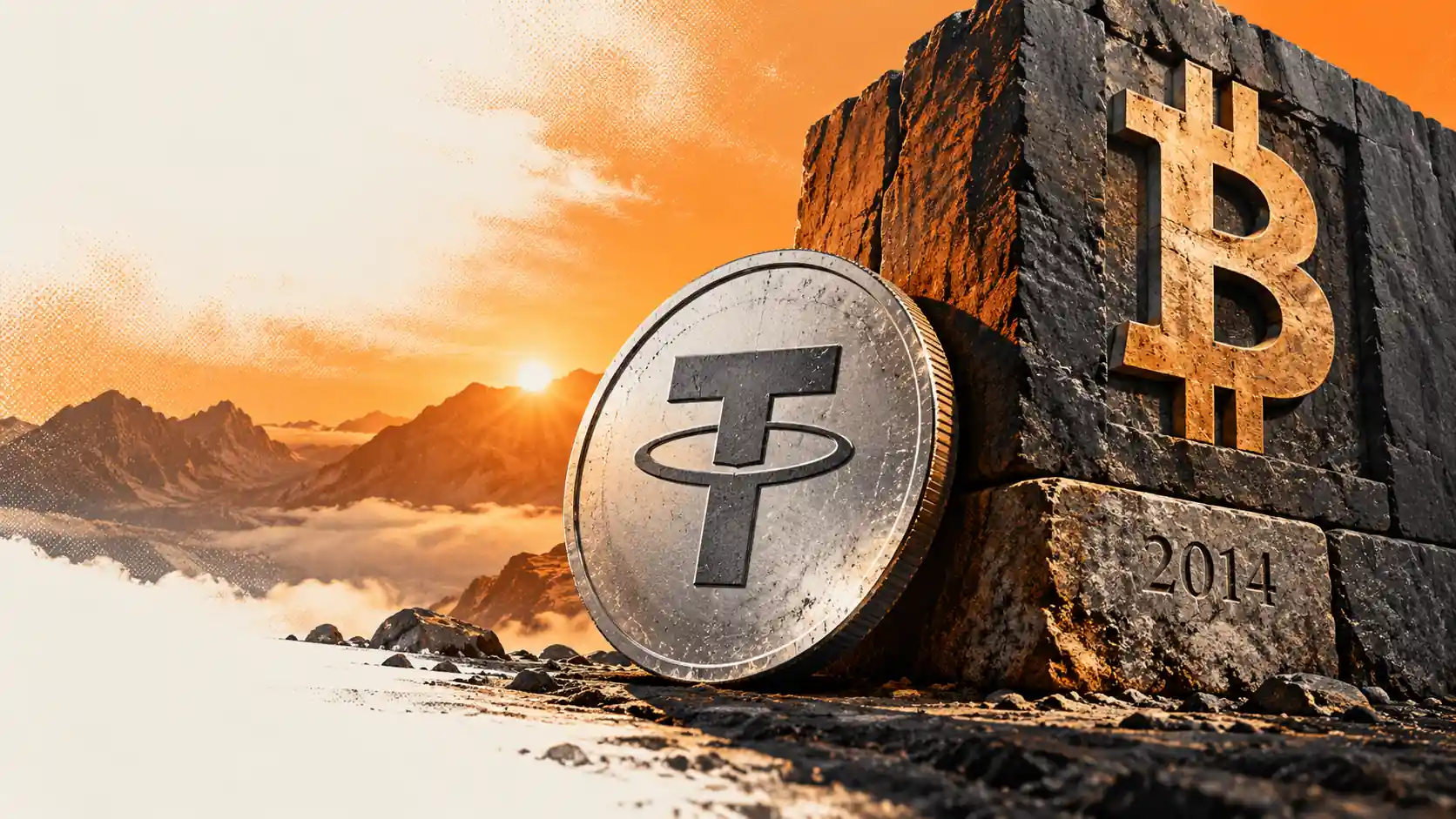
The world's largest stablecoin is coming home. Twelve years after being born on Bitcoin and then leaving, USDT is returning to the network where it debuted. The timing makes one thing clear: this isn't nostalgia. It's a calculated strategic move.
While USDT is being pushed out of Europe's regulated rails on one side, Tether is choosing to dig deeper into the most neutral and censorship-resistant infrastructure that exists.
TL;DR: Tether will issue USDT natively on Bitcoin via the RGB protocol v0.11.1, with commercial launch expected as early as July 2026. The move targets Tron's dominance in stablecoin settlement, offering Lightning-speed transfers with no separate fee token required.
What Happened
Tether will issue USDT natively on Bitcoin through the RGB protocol, version v0.11.1, with software firm UTEXO leading the commercial launch. The rollout is expected within weeks, possibly as early as July. This is a homecoming: USDT was born on Bitcoin in 2014 via the Omni protocol, then migrated to Ethereum and Tron in search of faster and cheaper transactions.
According to Tether's transparency data from 2026, roughly 85% of USDT supply currently lives on those two networks, with Bitcoin's share now negligible. As UTEXO's co-founder stated in a post covered by Bitcoin Magazine, “for the first time in eight or nine years, USDT is coming home.”
Where USDT Lives Today
Estimated supply distribution by network. Bitcoin's share is currently negligible. Source: Tether transparency data, 2026
- Tron: ~48%
- Ethereum: ~37%
- Other networks: ~15%
What RGB Is and Why It Matters
The technical core of this story sits here. RGB combines a technique called client-side validation with the Lightning Network: most transaction data stays off-chain, and Bitcoin only records a minimal cryptographic commitment for final settlement. The result is fast, cheap, and private transfers, anchored to Bitcoin's security, and crucially without needing a separate token to pay fees. No more buying TRX just to move dollars.
One detail worth highlighting: RGB was formalized in 2016 by Italian developer Riccardo Casatta together with Giacomo Zucco, and the acronym originally stood for “Riccardo Giacomo Bitcoin.” A protocol with European roots that's now bringing the world's most-used stablecoin back to its origin chain.
 Juan Galt
Why Now: The Strategy Behind the Return
The timing is no accident, and it's the most interesting part of this story. In the same weeks that Tether is being pushed off Europe's regulated rails, with Revolut delisting USDT because Tether did not seek MiCA authorization, the company is choosing to embed itself more deeply in the permissionless and private infrastructure of Bitcoin.
A two-speed stablecoin world is now taking concrete shape. On one side: compliant euro-denominated tokens on regulated platforms. On the other: USDT strengthening its position on censorship-resistant rails, where RGB's privacy becomes a feature rather than a liability. Shut out of the front door, USDT is reinforcing the side entrance.
The Stakes: Challenging Tron for Volume
The real prize is Tron, which has dominated stablecoin settlement for years, particularly in remittances across developing markets. USDT on Bitcoin offers Bitcoin-grade security, Lightning-speed settlement, RGB privacy, and no fee token to purchase separately.
Realism is warranted, though. A superior protocol doesn't guarantee adoption. Tron is deeply embedded in the exchange flows, payment services, and remittance corridors that millions of people already rely on, and migration costs are real. What decides the outcome won't be the better whitepaper but which wallets and exchanges adopt the standard first. There's also an internal competition to factor in: this is Tether's second attempt at a Bitcoin presence, following the Taproot Assets integration from March, which means two rival standards already coexist.
Beyond the technical details, the larger meaning is clear. For a decade, the stablecoin story ran away from Bitcoin, toward faster and more programmable networks. USDT's return is a bet that Bitcoin's security and neutrality now matter more than raw speed, especially for a token that increasingly operates outside the regulated system. Whether it works comes down to adoption. Symbolically, the fact that the world's most-used digital form of the dollar is returning to Bitcoin signals where the permissionless economy believes the safest ground lies. The underlying references are verifiable in the official documentation of RGB and Tether.