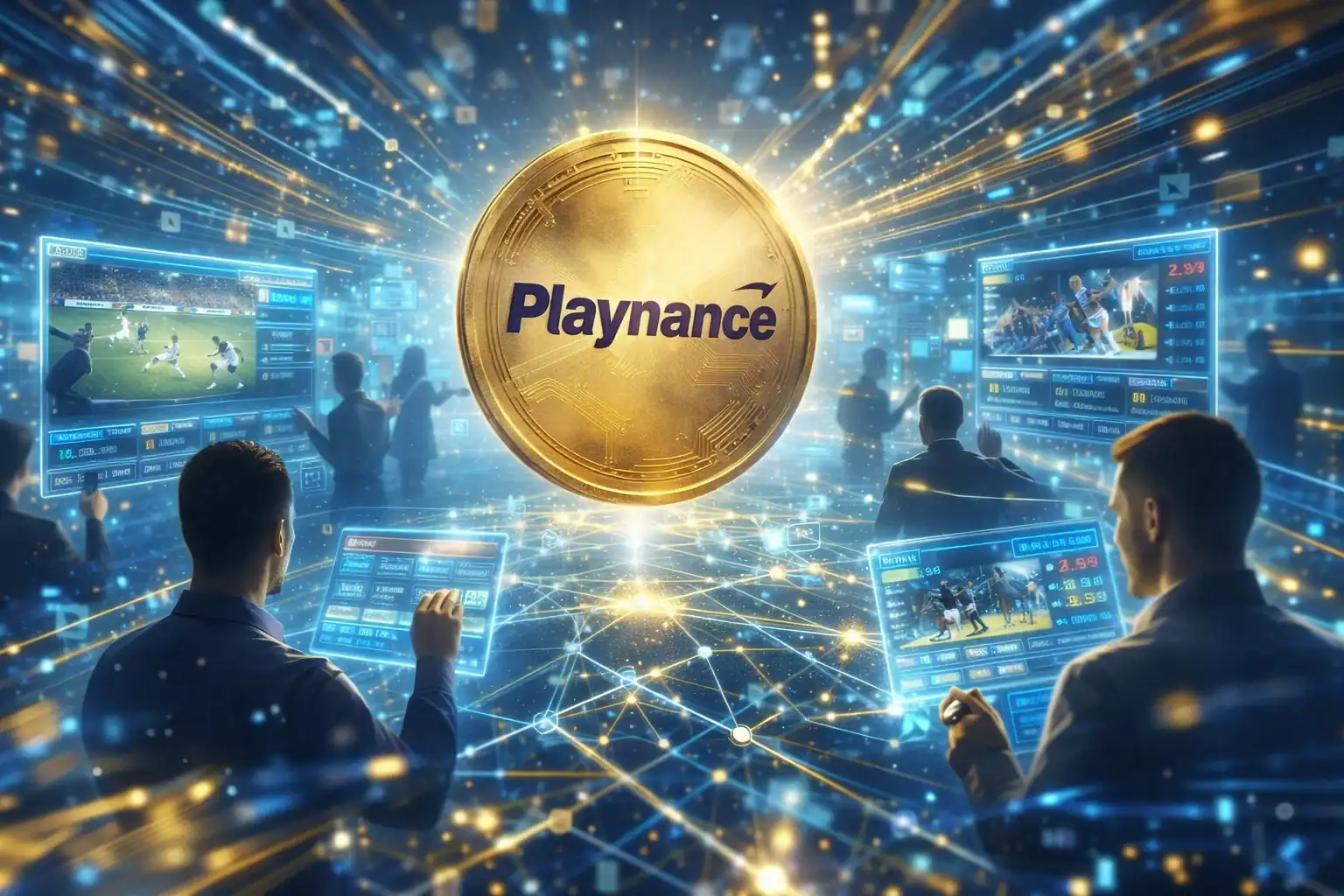

On March 18, 2026, Playnance reached a significant milestone with the official launch of its G Coin token. Unlike many projects that arrive on the market backed by little more than future promises, Playnance positions G Coin as the utility layer for an entertainment ecosystem that is already fully operational and growing.
A Token Sale Anchored to a Live Ecosystem
The long-awaited token generation event and broader market debut of G Coin are now a reality. Playnance makes a strong case that its token is not launching into an adoption vacuum — it is being introduced into an ecosystem that already boasts significant numbers: over 200,000 holders (203,732 according to the official tracker) and as many as 13 billion G Coin tokens already distributed during the presale phase.
G Coin is designed as the settlement and utility token for the entire Playnance infrastructure, which encompasses on-chain gaming, prediction products, and loyalty mechanisms. According to the company, the token already powers over 10,000 on-chain games and covers 2.5 million live sports events per year. Perhaps most striking is that the ecosystem processes an average of 1.5 million on-chain transactions per day — a volume that speaks to the activity already taking place.
What Investors Are Actually Buying
The critical point for anyone considering participation is understanding the nature of G Coin. Playnance is categorical: this is a utility token, explicitly not a security, not a payment token, and not a share in company profits.
The project's whitepaper makes clear that G Coin is used to unlock in-game features, rewards, loyalty programs, missions, premium functions, and promotional access within the ecosystem. It is equally explicit that holders do not receive equity stakes, dividends, governance rights, or redemption rights from the issuer.
One important nuance for today's launch: the whitepaper specifies that G Coin was already available through authorised sales interfaces within the Playnance ecosystem prior to this date. The current public offering is structured as a continuous offering with no predetermined end date.
For direct purchases, accepted payment methods include euros and US dollars via on-ramp providers such as Wert.io and Onramper, as well as a broad range of cryptocurrencies: BTC, ETH, POL, USDT, USDC, SOL, ADA, DOGE, SHIB, TON, and others.
Supply, Vesting, and Token Distribution
On the distribution side, Playnance has established clear rules. Tokens sold during the presale are delivered immediately and are not subject to vesting. Non-professional buyers purchasing directly from the issuer are entitled to a 14-day withdrawal period, provided the tokens have not already been used within the ecosystem. This right does not apply to purchases made on third-party exchanges or to tokens already spent in gameplay or missions.
After long and intense work, we're proud of what the $GCOIN community has achieved 💎
— Playnance (@Playnance_) March 19, 2026
Behind this moment - countless hours of focus, execution, and building 🫡
And today, we're seeing the results!
✦ A successful CEX launch - and this is only the beginning.
Bigger things… pic.twitter.com/Kwfd9QFKNu
Supply, Vesting and Token Distribution
On tokenomics, the total supply is fixed at 77 billion G Coin, with 54 billion allocated for minting during the token sale. Unsold tokens at the time of the token generation event will be subject to a 12-month cliff, followed by a 24-month linear vesting schedule. A notable mechanism applies to tokens lost during gameplay: these will be locked for 12 months before re-entering circulation. This lock-based model is at the heart of Playnance's supply strategy, favouring time-based release schedules over permanent burns or unlimited issuance.
The Long-Term Bet
The real question for G Coin is whether its concrete utility will translate into sustained demand once broader market trading begins. Playnance is betting that a token tied to active gameplay, sports interaction, and on-chain settlement has a more compelling story than yet another speculative launch without a product behind it.
If the company can convert its already active user base into consistent token usage, G Coin could enter the market with traction well above the presale average. However, the whitepaper is explicit about the limits: this is a utility token with no ownership rights, no guaranteed value, and no promise of financial return. European investors should note that under the EU's MiCA framework — now in full effect — utility tokens of this nature are not considered financial instruments, and consumer protections vary by jurisdiction.