


AI agents can handle tasks while you sleep. The reality in 2026 is more nuanced than the hype suggests. According to Zapier's State of Agentic AI report, 72% of companies already have at least one AI agent running. Most of them, though, are copilots, not autonomous replacements. That distinction carries real financial consequences for freelancers and small businesses.
TL;DR: 72% of companies have an AI agent deployed, per Zapier, but only 31% have one in full production, according to S&P Global and McKinsey. Gartner warns that over 40% of agentic AI projects will be cancelled by 2027 due to runaway costs and weak governance.
What Is an AI Agent, and Can It Replace You?
An AI agent is not a chatbot waiting for your next command. It runs a continuous loop: plan, act, observe the result, correct, repeat until the goal is reached. You give it an objective, not a single instruction. In practice, the vast majority of tools on the market today still operate as copilots under human supervision. They perform well on repetitive, multi-step tasks like data extraction, ticket routing, and first drafts of client outreach. On the judgement calls that matter, you're still deciding.
The Adoption Paradox: Many Pilots, Few in Production
Functionally, this is where 2026 gets interesting. Adoption looks enormous on paper, but the ground truth is rougher. Gartner estimates that over 40% of agentic AI projects will be cancelled before the end of 2027, citing out-of-control costs, unclear value, and inadequate risk controls. Only 31% of companies have an agent genuinely running in production, per S&P Global and McKinsey data. The rest are still experimenting. When a project does work, the median payback period sits at 5.1 months.
AI Agent Adoption Status Among Companies
AI Agent Adoption Status Among Companies (%)
Source: Zapier, State of Agentic AI · 2026
Gemini Embedding 2: A Native Multimodal Embedding Model from Gemini 🚀
— Mojtaba Seyedhosseini (@mseyed) May 27, 2026
Today, we're sharing the @GoogleDeepMind white paper for GE 2, our first native multimodal embedding model. Whether it's text, audio, video, or image, GE 2 provides a unified representation of the input. pic.twitter.com/B8NPRK2Gf4
From Chatbot to Colleague: What Changed in 2026
Two years ago these were glorified chatbots. Today they handle payments. At Google I/O in May 2026, Google unveiled Gemini Spark, a general-purpose agent capable of reasoning across connected apps and acting on your behalf within the boundaries you set. Separately, systems that execute autonomous payments up to user-defined limits are already live, including the x402 integration that lets AI agents pay independently. For a freelancer or small business owner, the shift is tangible: no more juggling ten browser tabs to complete one workflow.

What to Do Now, and What to Avoid
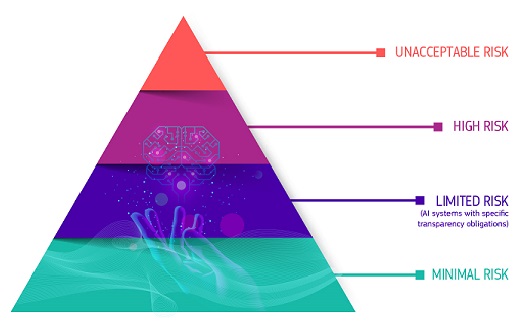
Don't rush. For anyone without a dedicated IT team, the smart entry point is to start with deterministic workflows where AI handles only specific steps, rather than handing full control to an autonomous bot on day one. Pick a measurable, repetitive process, define clear boundaries around what the agent can touch and what requires your approval, and measure the return in weeks, not promises. Governance matters here: the EU AI Act introduces escalating compliance obligations for high-risk systems. Governance is what separates the 31% that see a return from the 40% that shut projects down.

Who Has the Head Start
In practice, one number tells the story. In May 2026, Coinbase cut 660 employees, 14% of its workforce, and CEO Brian Armstrong tied the decision directly to the AI revolution, as reported by Bloomberg. This isn't an isolated case. Agents don't arrive to complement teams where processes are already messy and unquantifiable. They land where workflows are repeatable and measurable. The real question for 2026 isn't whether to adopt AI agents. It's which tasks to delegate without losing oversight. Those who work that out first, methodically, start with an advantage that compounds over time.