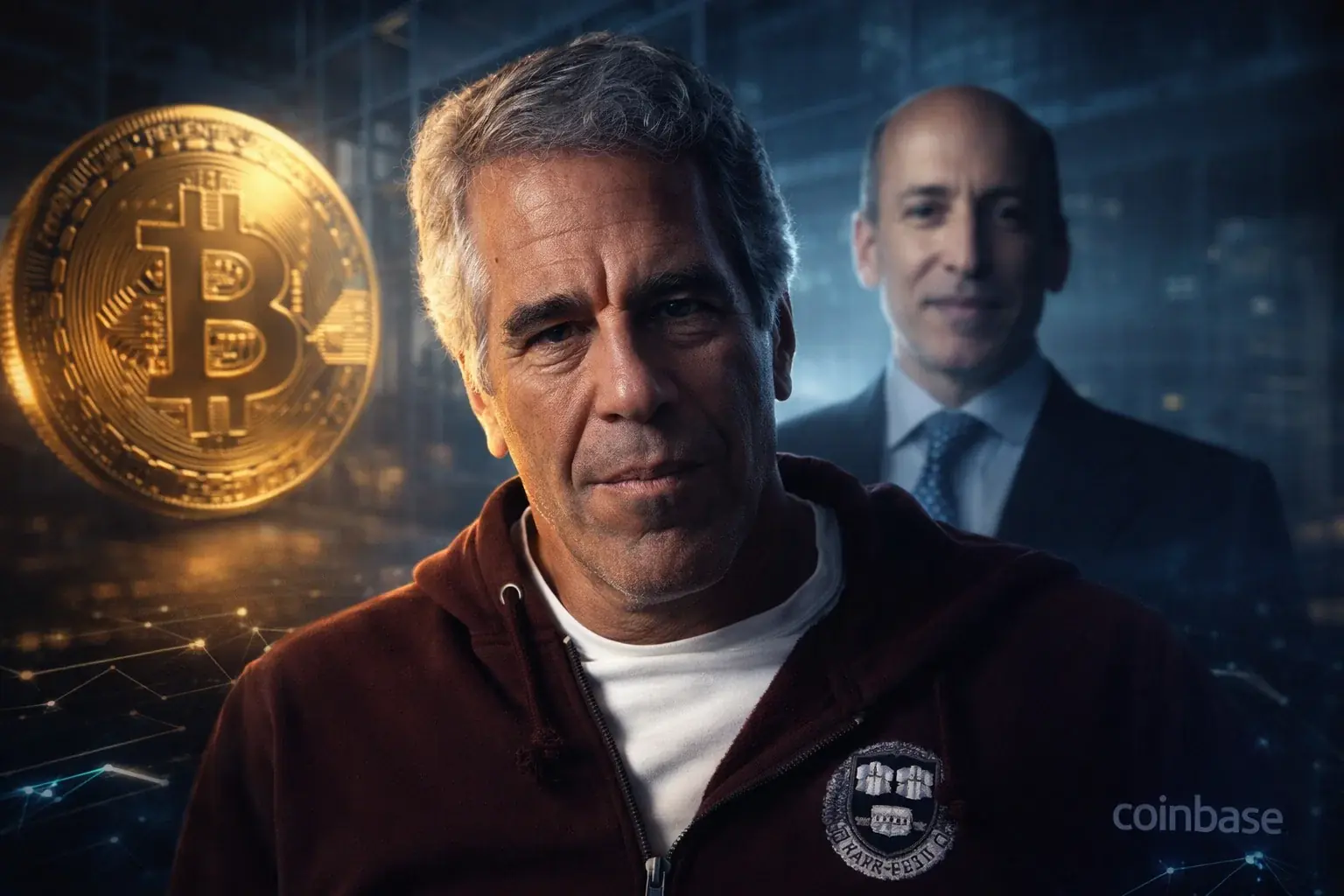

The analysis of confidential files relating to Jeffrey Epstein continues to yield surprises, this time shifting the focus from the international jet-set to the corridors of technological innovation. The latest documents to emerge offer unprecedented insight into the late financier's near-obsessive interest in cryptocurrencies and his attempts to network with key political and academic leaders in the field.

The connection with Gary Gensler and MIT
At the heart of the new documents are some email exchanges dating back to May 2018. In these messages, Epstein informed former Treasury Secretary Lawrence Summers that Gary Gensler would be arriving "early" because he was eager to discuss "digital currencies".
Summers, who knew Gensler from his government service days, described him in the replies as a "pretty smart" man.
Gensler then played a central role in the drafting of Biden's Executive Order 14067, which authorised the US government to pursue a CBDC (central bank digital currency) while adopting a whole-of-government approach to crack down on cryptocurrencies through the SEC, CFTC, Treasury, IRS and other agencies, affirmed one user on X.
Jeffrey Epstein met with Gary Gensler before Gensler became SEC Chair to discuss digital currencies.
- Aaron Day (@AaronRDay) February 16, 2026
Gensler went on to play a central role in drafting Biden's Executive Order 14067, which authorised the U.S. government to pursue a CBDC while taking a whole-of-government... pic.twitter.com/nureBt2yFa
At the time, Gensler was a professor at the Massachusetts Institute of Technology (MIT), where he taught pioneering courses on blockchain and digital finance. Although the files do not independently confirm whether a direct meeting between the two ever took place, the messages suggest that Epstein considered Gensler a key interlocutor in academic and political circles.
In another internal communication, Epstein explicitly stated that he would be "with Gary Gensler on cryptos tomorrow", reflecting his effort to credit himself to figures who would later shape the regulatory future of the United States.
Gary Gensler did in fact later become the chairman of the SEC (2021-2025), leading what many call the most aggressive regulatory crackdown in cryptocurrency history.
Funding to Bitcoin pioneers
Epstein's influence in the crypto world was not only relational, but also deeply financial. Department of Justice (DOJ) documents confirm that Epstein donated hundreds of thousands of dollars to MIT's Media Lab.
These funds were partially earmarked for the Digital Currency Initiative, a vital project that supported the developers of Bitcoin Core after the collapse of the Bitcoin Foundation.
Thanks to this funding, some of the key maintainers of Bitcoin's open-source protocol were able to continue their work. This involvement shows how much Epstein was embedded in the very foundations of the technical development of the world's most famous cryptocurrency.
Strategic investments: from Coinbase to Blockstream
In addition to academic support, Epstein acted as a true venture capitalist. Financial records confirm that, back in 2014, Epstein invested $3 million in Coinbase, when the exchange was still in its early stages of growth. He didn't stop there: the financier also acquired stakes in Blockstream, a leading Bitcoin infrastructure company, and maintained a close correspondence with developers, researchers and early-stage venture capitalists.
The "Sharia-compliant" currency project
Among the most peculiar revelations emerges a proposal made by Epstein in 2016. In several emails, the financier suggested the creation of a Sharia-compliant digital currency, modelled on the technical structure of Bitcoin.
This project further underlines his vision of an alternative financial system and his desire to penetrate specific global markets through blockchain technology.
Despite the density of references, the files do not show any direct financial relationship between Epstein and Gary Gensler, nor do they confirm formal collaborations on specific projects.
However, the picture remains of a man who, before his ultimate downfall, had attempted to position himself as a shadow architect in the nascent world of digital currencies, seeking contact with those who, a few years later, would decide their legal fate.