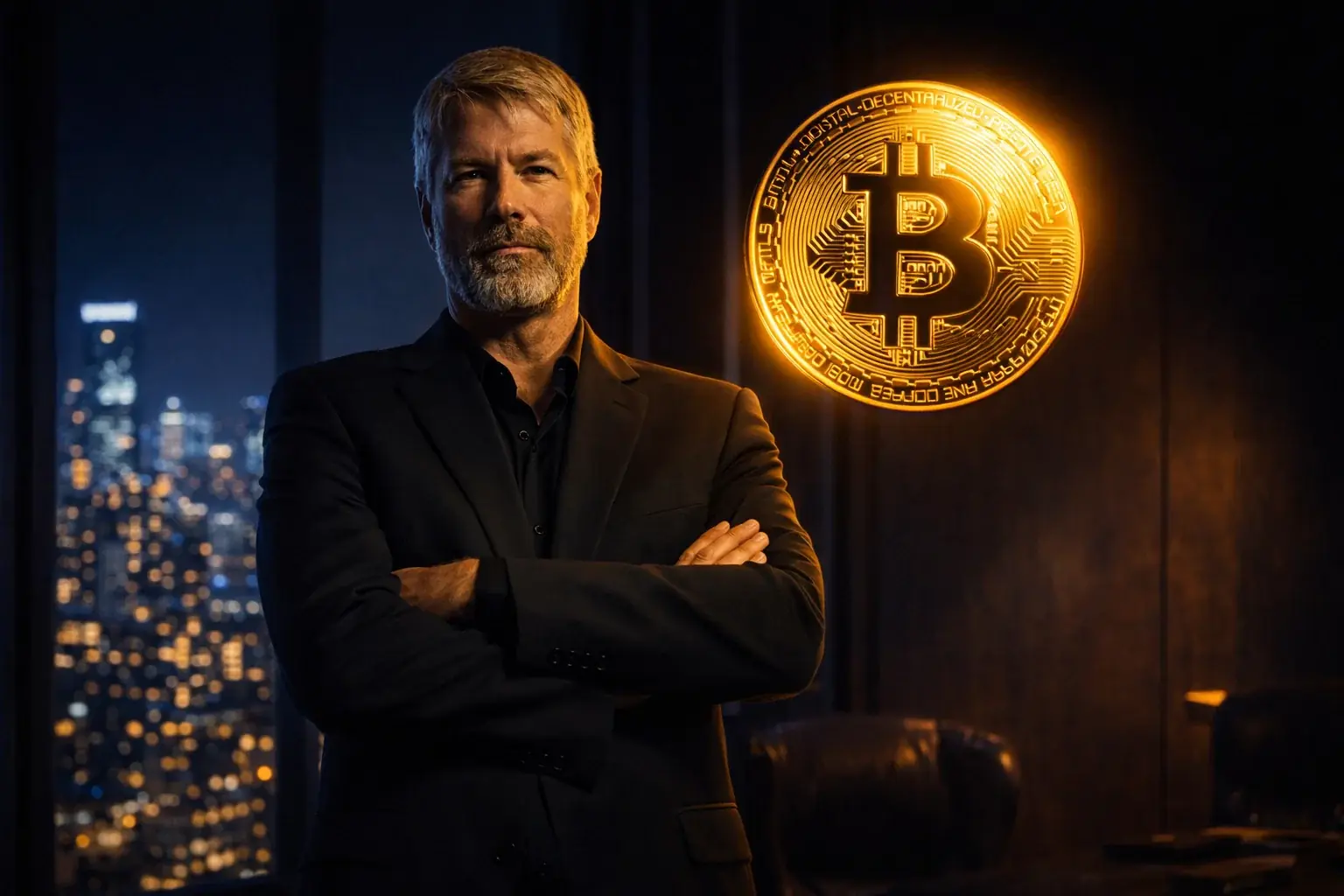
On April 8, 2026, the New York Times published an investigation that the crypto world had been dreading and anticipating in equal measure. The article — more than 12,000 words, written by John Carreyrou, the journalist who brought down Theranos and sent Elizabeth Holmes to prison — names Adam Back as Satoshi Nakamoto, the pseudonymous creator of Bitcoin. Back, a 55-year-old British cryptographer, co-founder and CEO of Blockstream, denied the claim within hours.
Who Is Adam Back — and Why Is He the Strongest Candidate Yet
Back's connection to Bitcoin's origins runs deep. In 1997, he invented Hashcash, a proof-of-work system originally designed to filter email spam. That same technology is cited by name in Satoshi's 2008 Bitcoin white paper. Back was also among the very first people Satoshi contacted by email before Bitcoin's public launch — through the cypherpunk mailing list, the intellectual breeding ground for ideas about digital money, cryptographic privacy, and surveillance resistance.
Carreyrou built his case on a database of 134,308 posts from three cryptographic mailing lists active between 1992 and 2008. He applied comparative stylometry alongside computational linguist Florian Cafiero — the same researcher who helped the NYT identify the authors behind the QAnon movement. Of 12 suspects tested against the Bitcoin white paper, Back emerged as the closest linguistic match.
Cafiero himself, however, called the result "inconclusive." Hal Finney — the first person to receive bitcoin from Satoshi, who died in 2014 — scored nearly as high.
The Linguistic Fingerprints That Point to Back
Statistical inconclusiveness aside, Carreyrou identified a cluster of micro-evidence that he found compelling:
- Both Back and Satoshi consistently use two spaces after a full stop — a habit from pre-digital typing conventions.
- Both mix British and American spelling inconsistently: "optimise" alongside "optimize", "cheque" alongside "check".
- Both confuse "its" and "it's" in the same idiosyncratic pattern.
- Hyphenation is anomalously consistent: "double-spending" with a hyphen, "file sharing" without.
- Carreyrou identified 67 shared syllabification errors between Back's writing and Satoshi's texts — nearly double the count for the second-closest candidate.
Forensic linguist Robert Leonard of Hofstra University described these patterns as "markers of sociolinguistic variation" — essentially writing fingerprints that are extremely difficult to fake or consciously replicate.
There is also the matter of timing. Back essentially disappeared from cryptographic mailing lists during 2008–2011, the period of Satoshi's peak activity. He returned to active posting approximately six weeks after Satoshi's final public communication in April 2011.
Back's Denial: Six Times in Two Hours
Back responded in real time on X, stating plainly:
This story in the NYT was a fascinating read. Here was @adam3us's response earlier this year when I asked how often he fields questions about whether or not he's Satoshi. https://t.co/69KA9xHBUG pic.twitter.com/4mTvzu1i2p
— Alexandra Semenova (@alexandraandnyc) April 8, 2026
"i'm not satoshi, but I was early in laser focus on the positive societal implications of cryptography, online privacy and electronic cash, hence my ~1992 onwards active interest in applied research on ecash, privacy tech on cypherpunks list which led to hashcash and other ideas."
Back argued that any similarities are the natural result of shared intellectual environments — the same readings, the same problems, the same technical jargon. He also pushed back on a supposed slip during an El Salvador interview, which the NYT had flagged as a revealing lapse. "That was a comment on confirmation bias in research, not an autobiographical slip," he said.
During a two-hour interview with Carreyrou, Back denied being Satoshi at least six times. His final statement: "Clearly I'm not Satoshi, that's my position. And it's true as well, for what it's worth."
The Crypto Community Is Not Buying It
Reaction across the industry ranged from skeptical to openly contemptuous. Jameson Lopp, co-founder of Casa and one of Bitcoin's most respected contributors, wrote:
"Satoshi Nakamoto can't be caught with stylometric analysis. Shame on you for painting a huge target on Adam's back with such weak evidence."
Alex Thorn, head of research at Galaxy Digital, was blunter: "Another journo oneshotted by the Satoshi mystery, the New York Times continues to publish garbage."
Nicholas Gregory, a British early Bitcoiner with direct knowledge of Back, told CoinDesk: "I don't believe Adam Back is Satoshi based on my personal interactions. But if he were, we should respect the extraordinary efforts he has made to ensure no one thinks so. In that case, we should honor his clear desire for privacy."
The precedents are not reassuring for the NYT's credibility here. In 2024, an HBO documentary pointed to Canadian developer Peter Todd — he denied it immediately. Before him came Nick Szabo, Hal Finney, and Len Sassaman. None of those theories held up.
Legal, Financial, and Philosophical Stakes
Beyond the identity puzzle, the stakes are enormous. Satoshi's known wallets hold approximately 1.1 million Bitcoin, worth an estimated $70–78 billion at current prices — which would rank the holder as the 26th-wealthiest person on Earth according to Forbes. Those coins have never moved.
If Back were confirmed as Satoshi, the regulatory consequences in the US alone would be severe. The IRS treats Bitcoin as property; the SEC has long scrutinized the crypto ecosystem. A named founder holding such a disproportionate share of total supply would immediately become a legal target. The question — "Is Bitcoin an unregistered securities offering?" — would acquire a human face and a court address.
There is also a philosophical dimension that matters to the network itself. Bitcoin's resilience as a decentralized system rests partly on the absence of an identifiable founder. No hierarchy, no pressure point, no CEO to subpoena. As Back himself wrote: "I think it is good for bitcoin that this is the case, as it helps bitcoin be viewed as a new asset class, the mathematically scarce digital commodity."
Satoshi Nakamoto: The Mysterious Genius Behind Bitcoin
The One Proof That Will Never Come
Only one thing could definitively close this story: a cryptographic signature using the private keys of Satoshi's wallets. Everything else — linguistic analysis, timeline correlations, behavioral inference — is sophisticated circumstantial argument, not proof.
Carreyrou acknowledges as much. His article is not a verdict. It is the most rigorous circumstantial case built to date. But Back's denial, the untouched wallets, and the impossibility of definitive proof leave the mystery exactly where it was on January 3, 2009 — when someone mined the Bitcoin genesis block and embedded a Times headline about bank bailouts into the code.
Seventeen years later, nobody knows. And maybe that's the point.