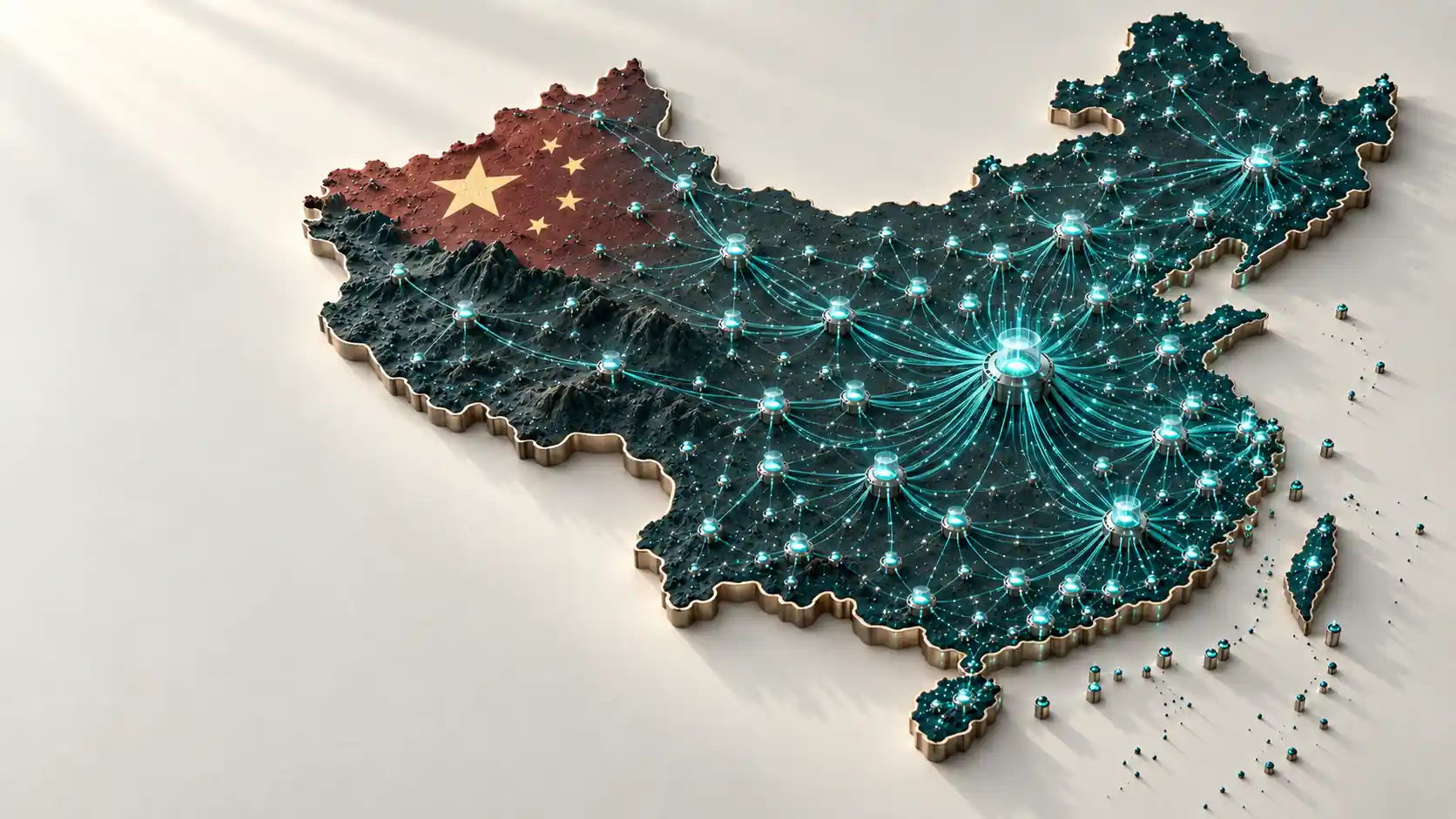


On June 1, 2026, the U.S. Department of Commerce closed a loophole worth billions. Export licenses for advanced AI chips now apply to overseas subsidiaries of China-headquartered companies, including, for example, a Tencent unit operating in Malaysia. A technical clarification on paper, a sharp political signal in practice. Advanced computing has become a strategic resource, not an ordinary commodity.
What Washington Decided and Why
The Bureau of Industry and Security issued guidance to resolve a long-standing grey area: top-tier chips, including Nvidia's Blackwell GPUs, cannot reach entities controlled by Chinese groups even when routed through a third country. Nvidia confirmed it is already operating in compliance with the clarified rules. The story was first reported by Reuters.
The analyst who fired up the debate carries real weight. In a post on X dated May 31, 2026, Chris McGuire, senior fellow at the Council on Foreign Relations, explained that the BIS clarification became necessary precisely because certain export controls were not being enforced on the ground.
NEW: BIS just issued guidance stating that licenses are required for advanced AI chip exports to China-headquartered firms located outside of China (e.g. a Tencent subsidy in Malaysia). The reason they had to issue this statement is BIS' non-enforcement of certain export controls… pic.twitter.com/qtrubV3exw
— Chris McGuire (@ChrisRMcGuire) May 31, 2026
Why the U.S. Restricts AI Chips to China
Functionally, national security is the core rationale. Washington classifies AI semiconductors as a strategic military resource, relevant to autonomous weapons systems and cyber warfare, and wants to slow Chinese access to frontier computing. The policy has deep roots: the first controls date to October 2022, with progressive tightening since. All material risk disclosures are publicly available in Nvidia's filings with the SEC (Nvidia 10-K). For European investors tracking MiCA-regulated AI-adjacent assets, these filings are worth reading.
The Boomerang Effect
This is where the story turns complicated. The controls have protected U.S. technological leadership, but they've also pushed China to build its own semiconductor industry from scratch. According to market forecasts cited by Reuters, China's self-sufficiency rate in AI chips has reached 41% in 2026 and is projected to hit 85% by 2028, with Huawei's Ascend chips as the primary beneficiary of that shift.
For Nvidia, the cost has been severe. Nvidia's share of China's AI accelerator market dropped from 95% to zero, and the roughly $17 billion that China generated in annual revenue has disappeared, as disclosed in Nvidia's SEC filings. In a post on X on June 1, 2026, Reuters China noted that the surprise guidance suggests U.S. best-in-class AI chips may have been reaching Chinese AI firms' overseas subsidiaries, a sign that tighter enforcement, not relaxation, was the right move.
The unexpected guidance suggests that the United States' best AI chips may have been making their way to the subsidiaries of Chinese AI firms. https://t.co/uDBXdy7cwq
, Reuters China (@ReutersChina) June 1, 2026
The number that frames the stakes most starkly comes from Nvidia itself: the company estimates, per its own investor communications, that the Chinese AI accelerator market it has exited is on track toward $50 billion. Jensen Huang put it plainly: walking away from a market the size of China probably makes little strategic sense, and that decision has already started coming back around. Washington sees it differently, and on June 1 raised the wall higher still. Who turns out to be right will be determined by the next generation of chips, not this one.