Every week, search trends confirm the same pattern: “Tether vs USDC” is one of the most searched stablecoin queries among English-speaking crypto users in 2026. And it makes sense. Stablecoins are no longer just a parking spot between trades. They power remittances, DeFi strategies, corporate treasury, and everyday payments. With USDT sitting at roughly $189.5 billion in market cap and USDC at $77.1 billion, according to CoinGecko data from late April 2026, the choice genuinely matters.
TL;DR: USDT leads on liquidity and trading volume, making it the default for active traders and remittances. USDC leads on regulatory compliance and reserve transparency, making it the preferred choice for businesses, institutional users, and anyone operating under MiCA or U.S. frameworks.
SpazioCrypto spent several weeks reviewing official reserve attestations from Circle and Tether, on-chain volume data from CryptoQuant, and community feedback from European crypto forums. Here is what the data actually shows, without the marketing spin.
A Brief History of Two Stablecoins
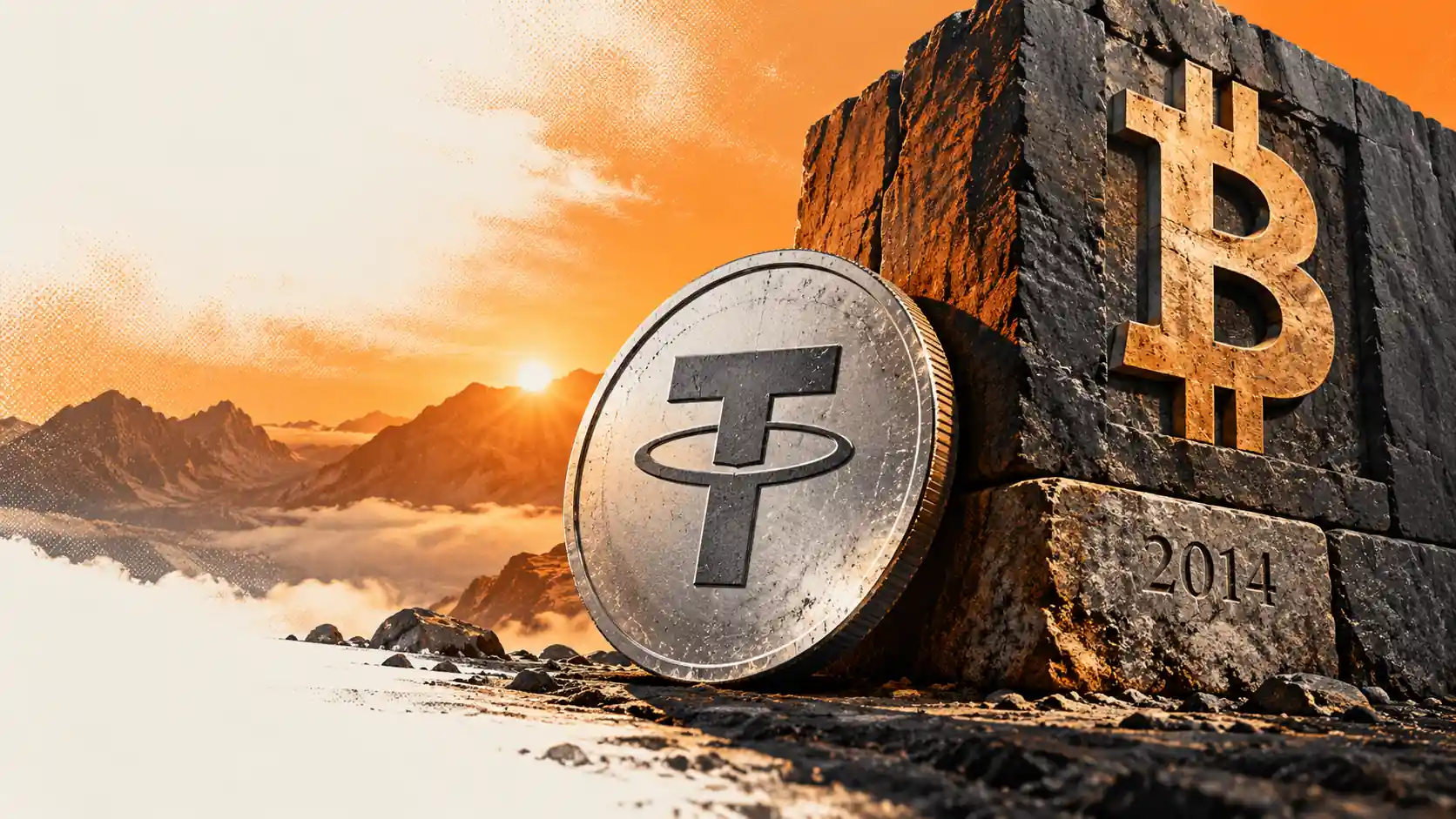
Tether (USDT) launched in 2014 as the first major stablecoin. Its dominance came from being everywhere at once: Ethereum, Tron, Solana, Binance Smart Chain, and virtually every centralized exchange on the planet. For years, ultra-low fees on the Tron network (TRC20) made USDT the default choice for high-volume traders and cross-border remittances across Africa, Asia, and Latin America.
USDC arrived in 2018, created by Circle and Coinbase (Circle is now publicly listed). From day one, Circle positioned USDC as the compliance-first alternative: reserves held exclusively in cash and short-duration U.S. Treasuries, with monthly attestations from Deloitte. Between 2025 and 2026, USDC accelerated sharply. It became fully MiCA-compliant in Europe and GENIUS Act-compliant in the United States. Growth followed: according to Circle's published figures, USDC expanded 72% year-over-year in 2025, compared to 36% for USDT over the same period.
By late April 2026, the market stood as follows:
- USDT: approximately $189.5 billion in circulation, according to CoinGecko
- USDC: approximately $77.1 billion in circulation, with reserves of $77.4 billion (slightly over-collateralized), per Circle's April 2026 attestation
USDT remains the undisputed volume king on centralized exchanges, with daily trading volume running three to five times higher than USDC, per Kaiko data. But USDC is gaining ground fast in institutional finance and real-world payments.
Head to Head: What Actually Changed in 2026
Reserve Transparency
USDC wins this category clearly. Circle publishes monthly attestations conducted by Deloitte. Reserves are held almost entirely in cash and very short-duration U.S. Treasuries. No risky loans, no Bitcoin exposure, no gold. Verifiable and clean.
Tether publishes quarterly attestations conducted by BDO Italia. Reserves break down to roughly 80% U.S. Treasuries and repo agreements, with the remainder in cash, secured loans, Bitcoin, and gold. In March 2026, Tether announced it had engaged a Big Four auditor for a full audit, which is a meaningful step forward. For now, USDC remains the more transparent option for anyone holding stablecoins over months or managing corporate funds.
Regulatory and Legal Risk
In the European Union, USDC is the straightforward compliance choice. Full MiCA conformity means businesses operating under EU law face no regulatory friction when using USDC. USDT carries more regulatory ambiguity in certain EU jurisdictions and is structurally more “offshore” in character. For companies handling cross-border payments to regulated markets, USDC reduces legal exposure materially.
In the United States, USDC's alignment with the GENIUS Act positions it well ahead of any formal stablecoin legislation. USDT has not yet achieved equivalent U.S. regulatory clarity.
Liquidity and Transaction Costs
USDT wins here, and it is not close. More trading pairs, deeper order books, easier entry and exit even at large position sizes. On the Tron network (TRC20), transferring $10,000 USDT costs a few cents and settles in roughly three seconds. That speed and cost profile makes USDT near-unbeatable for high-volume trading and remittances into emerging markets.
USDC performs well on Ethereum, Solana, and Base, but its Tron presence is thinner and fees can run higher. For users whose primary workflow sits on Tron-based corridors, USDT is the practical answer.
On-Chain Volume and Real-World Use
The Q1 2026 data from CryptoQuant contains a genuine surprise: USDC surpassed USDT in on-chain transaction volume, posting $2.55 trillion against USDT's $1.49 trillion. This gap signals that USDC is being used more heavily for real payments, corporate treasury management, and structured DeFi, while USDT continues to dominate speculative trading and high-frequency retail transactions.
Peg Stability
Both stablecoins have held their dollar peg tightly, with deviations below 0.1% in nearly all market conditions. USDC has a slightly cleaner track record during stress events (the 2023 and 2025 market dislocations, for instance), but in 2026 neither coin has caused concern.
When to Use USDT and When to Use USDC
Functionally, choose USDT if:
- You trade actively on Binance, Bybit, OKX, or any major centralized exchange
- You send remittances to emerging markets (Tron's cost and speed are hard to beat)
- You need maximum liquidity and the lowest possible transaction fees
- You operate at large volumes and need fast exits from the market
Choose USDC if:
- You run a business or work with European or U.S. clients under regulated frameworks
- You want full confidence in reserve transparency and regulatory standing
- You use stablecoins for medium-to-long-term treasury management
- You care about institutional integration: Stripe, Visa, and BlackRock all integrate USDC into their payment or settlement infrastructure
Many experienced traders simply hold both. USDT for daily trading activity, USDC for the portion of the portfolio that represents serious capital or funds held over longer time horizons. It's a practical split that avoids forcing a binary choice.
The Real Risk: Regulatory Exposure
The question of which stablecoin might “fail” is probably the wrong frame. Both issuers hold reserves that exceed circulating supply, and both reported strong profits in 2026. Tether reported approximately $1 billion in profit for Q1 2026 alone, per its published quarterly results. The risk is not solvency.
The actual risk is regulatory. If the EU or the U.S. moves toward tighter stablecoin legislation, USDT could lose market access faster than USDC, which is already positioned as the compliant option. On the other side, users relying exclusively on USDC in markets with thin liquidity pay more in fees and encounter more slippage. Neither coin is without trade-offs.
No Single Winner Exists in 2026
The Tether vs USDC debate in 2026 is not a battle between good and bad actors. It is a tension between liquidity and trust. USDT is the street-level choice, the one that moves markets and settles trades around the clock. USDC is the institutionally preferred option that banks, payment processors, and regulators are building around.
For most users, the practical framework looks like this:
- Active trader: USDT
- Business or compliance-focused user: USDC, or a deliberate mix
- Seeking the benefits of both: use each stablecoin for its strongest use case
The perfect stablecoin doesn't exist yet. But in 2026, the information is available to make a deliberate choice rather than defaulting to whatever is listed first on a given exchange. Watch Circle's next Deloitte attestation (due June 2026) and Tether's announced Big Four audit result for the clearest signals on where reserve quality is heading.