

It is not wild price fluctuations, but the complexity of the tax system that is pushing Japanese investors out of the cryptocurrency market. A survey conducted in November by the financial planning platform 400F, which involved 894 participants nationwide, showed that administrative burdens are the main obstacle to participation in the digital asset sector.
 株式会社400F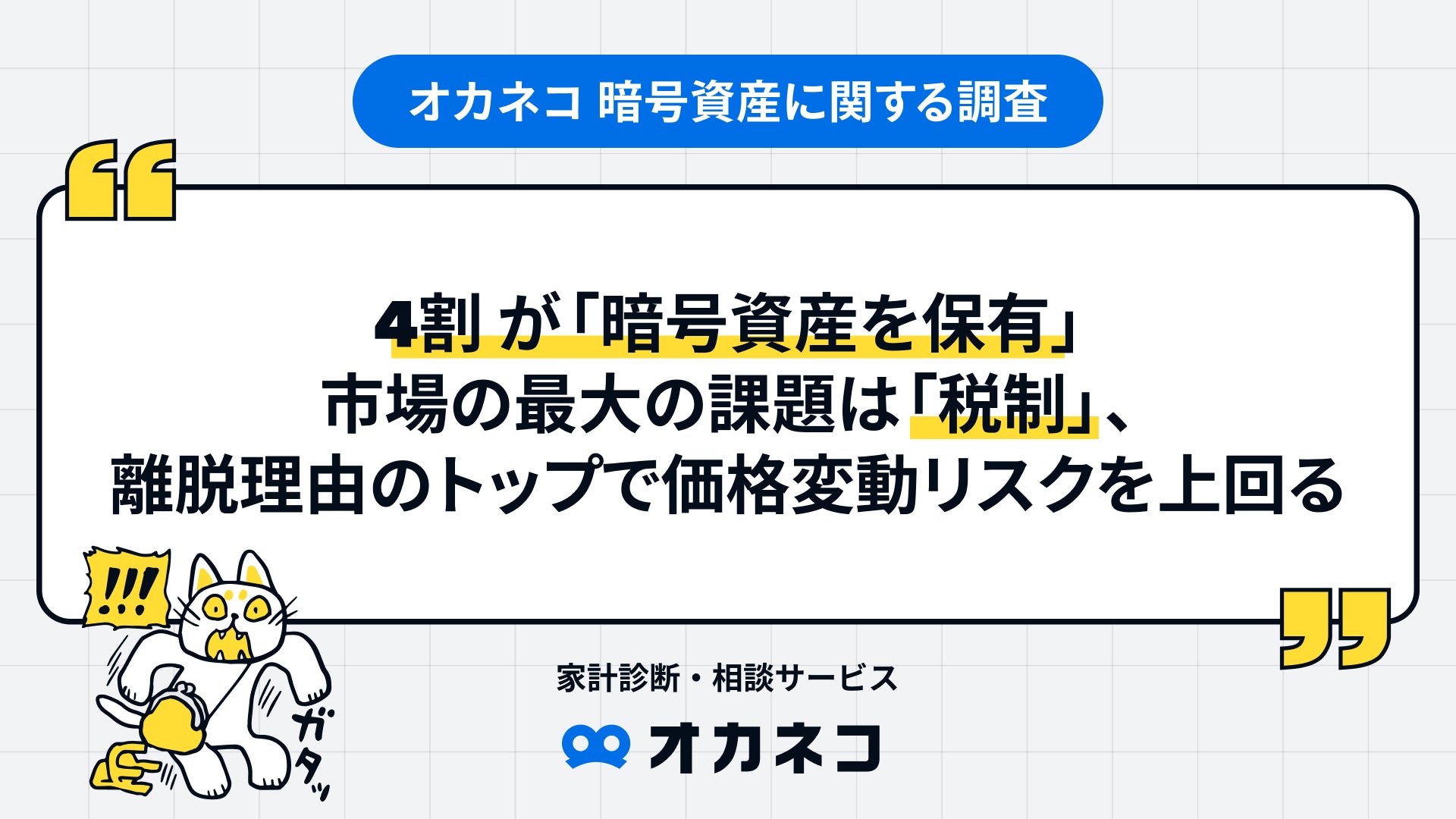
Among former cryptocurrency holders, 22.2% cited difficulties with the tax system as their primary reason for leaving, surpassing concern over price volatility, cited by 19.4% of respondents.
High Taxes and Administrative Burdens
In Japan, gains from cryptocurrencies are currently classified as 'miscellaneous income' and are subject to a tax rate that, when local taxes are added in, can reach 55%. Investors are obliged to track every single transaction, calculate yen-denominated gains or losses, and report this annually.
For current holders of digital assets, tax complexity (60%) is almost as much of a challenge as volatility (61.4%). This administrative burden is particularly burdensome for those accustomed to the simplicity of traditional tax-advantaged investment accounts such as NISA and iDeCo. Although 62.7% of investors say they are investing for long-term wealth creation, red tape seems to cloud the potential benefits.
Demands for Reform and Growth Potential
The survey found a widespread desire for greater regulatory clarity. The majority of respondents (70.6%) describe themselves as neutral in terms of risk appetite; nevertheless, some 40% of these neutral investors say they would be willing to take on more risk in the crypto sector if Japanese regulators were to clarify their tax approach.
This demand is reinforced by recent rumours that the Japanese Financial Services Agency (FSA) intends to reclassify crypto as a standard financial product and reduce the maximum tax rate to 20 per cent. Such changes could unlock greater market growth in one of the world's largest economies.
With regard to information, respondents rely almost evenly on specialised or official media (63%) and social platforms or influencers (58.9%).
The results suggest that Japanese investors' future involvement in cryptocurrencies will depend more on regulatory reforms and administrative procedures than on price dynamics alone.