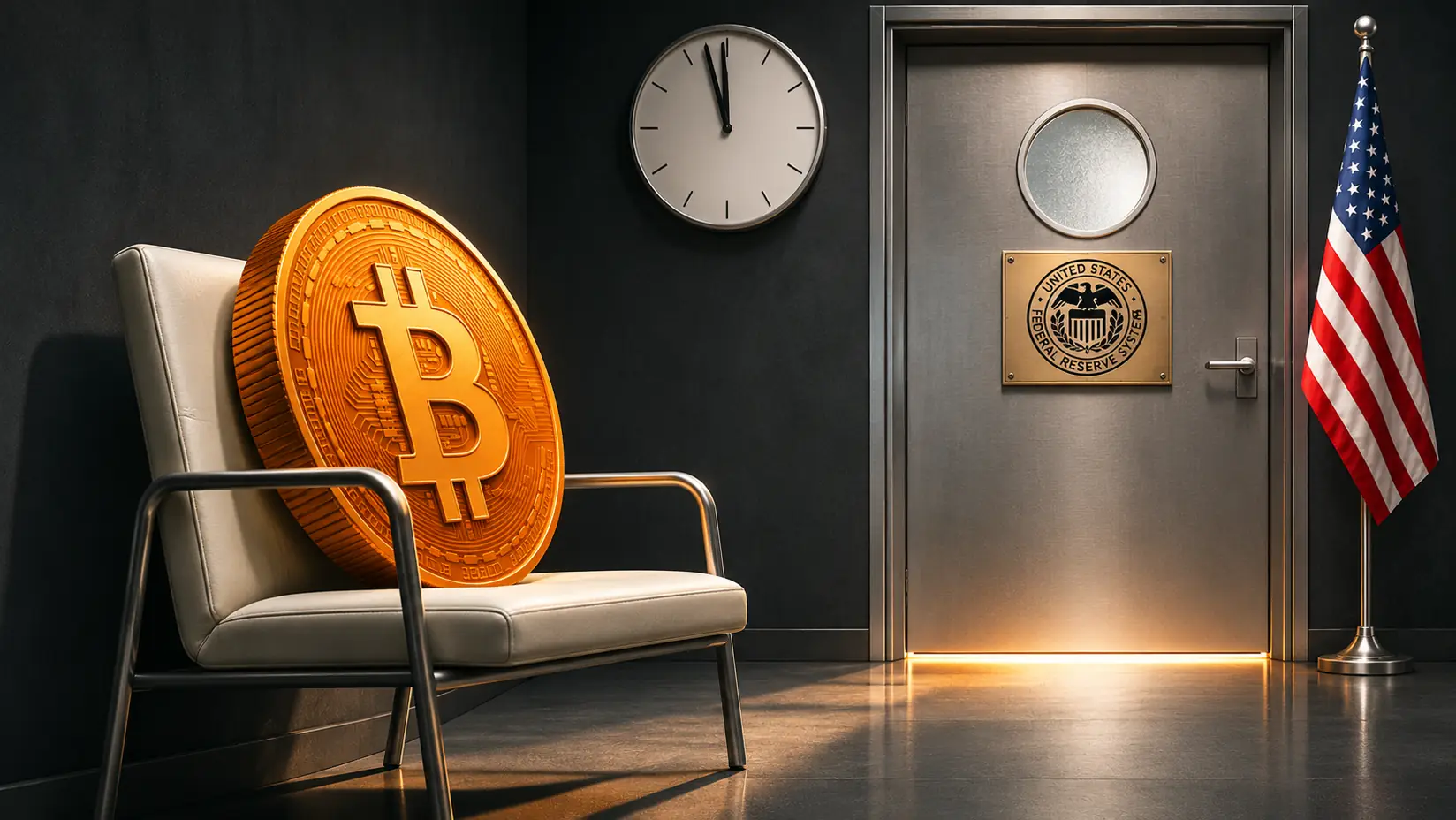


On Friday, May 15, Jerome Powell steps down as chair of the Federal Reserve. Kevin Warsh takes his place. Almost. The Senate confirmed Warsh to the Fed board on May 12 by a 51-45 vote, but his appointment as Chairman requires a separate second vote, expected on Wednesday or Thursday this week. Polymarket had the odds at 93.5% before the board vote. The crypto market has already made up its mind. Warsh has described Bitcoin as “the new gold for anyone under forty” and said the asset “does not concern him at all,” in sharp contrast with Powell’s guarded approach to digital assets over the past eight years. A Warsh Fed will not be the same Fed.
Who is Kevin Warsh, and what does he have to do with crypto
Warsh is 56, comes from Morgan Stanley and has already sat on the Fed board, from 2006 to 2011, when he was the youngest governor ever appointed in the institution’s history. His second appointment comes courtesy of Trump, who picked him on March 4, 2026 to succeed Powell. The financial disclosure filings lodged with the Office of Government Ethics showed stakes in more than 20 crypto-related entities: from Bitwise as a crypto index manager, to Basis for stablecoins, all the way to indirect exposure to Bitcoin infrastructure, layer-2s, DeFi and tokenized payment networks. He has pledged to divest most of them, but the picture is clear. The Fed has never been led by anyone this familiar with digital assets.
What changes for crypto if Warsh becomes Chair of the Federal Reserve?
It depends on which Warsh takes the seat. The Bitcoin-bullish Warsh raises hopes of lighter rules for bank custody of crypto, faster implementation of the Clarity Act currently in markup, and a less hostile stance toward stablecoins. The Warsh who is hawkish on inflation is another story. During his first stint at the Fed he criticized the expansionary monetary policy that followed 2008. His recent comments pushed the odds of a rate hike in 2026 up to 27% on Polymarket. Higher rates mean less liquidity, and less liquidity has historically squeezed crypto markets. Where these two versions of Warsh strike a balance is the variable that matters.
Powell leaves the chair on Friday, May 15, but remains on the Fed board until 2028, amid a federal investigation into the renovation of the central bank’s headquarters. Trump will therefore not immediately have an aligned majority on the board to speed up any rate cuts. US inflation hit 3.8% in April 2026, the highest reading in almost three years, driven in part by energy prices tied to the conflict in Iran. Warsh inherits a complicated macroeconomic backdrop. For anyone holding Bitcoin as a store of value amid regulatory uncertainty in Italy, the direction the Fed takes over the next twelve months carries as much weight as any update on the Clarity Act.