


Russia is the world's second-largest Bitcoin mining nation, trailing only the United States, accounting for nearly one-fifth of the entire global hashrate according to Hashrate Index. Yet this mining superpower has just decided to ban the activity in its most important region. Starting August 15, extracting cryptocurrencies in Moscow and the surrounding area will be illegal until 2032.
The reason is neither ideological nor political, and that is precisely what makes it interesting. This is an electricity problem, plain and simple. It tells a story of a tension that will increasingly define the sector's future: the escalating battle between mining's insatiable energy appetite and the needs of everyone else.
Russia will ban crypto mining from 15 August 2026 until 31 December 2032 in Moscow, Moscow Region, eight border districts of the Kursk Region and Lgov. The decision expands restrictions already applied in 13 energy-constrained regions, reflecting mining's high electricity demand.
— Belgian-Luxembourg Chamber of Commerce in Russia (@CCBLR_Office) August 1, 2026
What Russia Actually Decided
The facts are contained in official decree number 936, signed by Prime Minister Mikhail Mishustin on July 25. The measure bans mining of all cryptocurrencies, and even simple participation in collective mining pools, in Moscow, the entire Moscow Oblast, and several districts of the Kursk region. The ban takes effect on August 15, 2026, and remains in force until the end of 2032, over six years in total.
This isn't a sudden shock; it's the extension of a strategy already underway. Russia had already imposed similar restrictions in other energy-strained regions, including Buryatia and several Caucasus republics. The striking novelty is the inclusion of Moscow itself, the country's political and economic heart, signaling that the problem has grown serious enough to reach the capital.
The Real Reason: The Grid Can't Cope
Here lies the core of the issue, and it's a lesson that reaches far beyond Russia. Bitcoin mining, the process by which powerful computers compete to validate transactions and earn new coins, is enormously energy-hungry. Those machines run around the clock, consuming quantities of electricity comparable to entire cities.
 Hashrate Index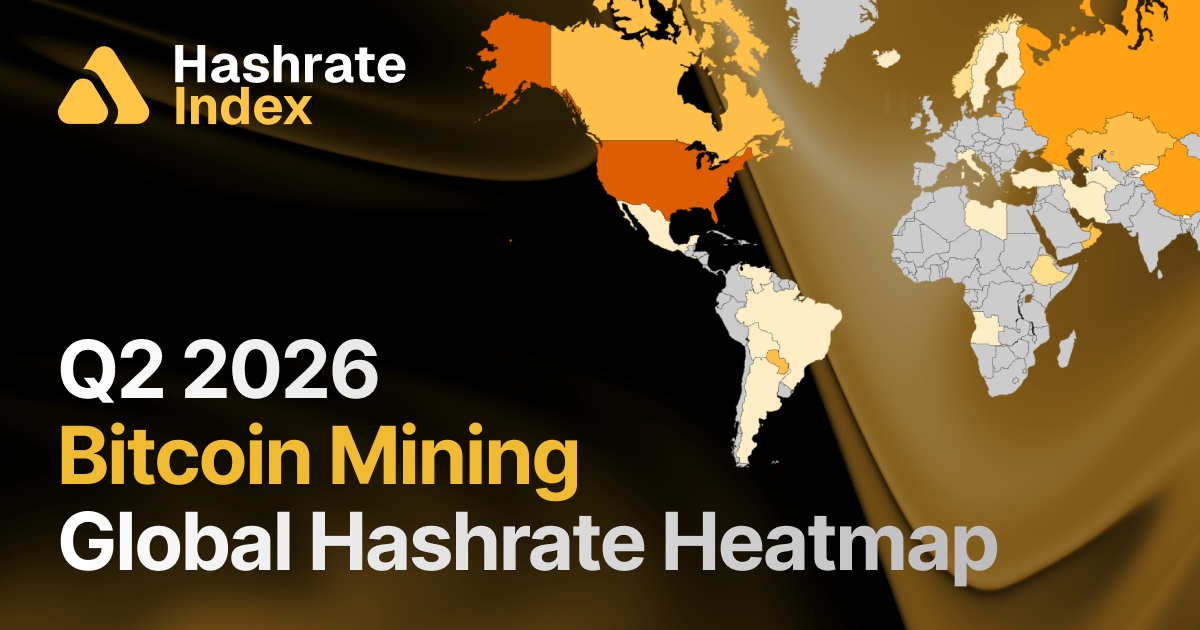
In the Moscow region alone, mining activity absorbs approximately one gigawatt of power, according to official estimates cited by Russia's Ministry of Energy, the equivalent of a large metropolis's entire electricity demand. The Ministry warned without ambiguity that this demand, concentrated in ultra-high-consumption facilities, puts severe stress on the grid and risks disrupting supply for all other users, from households to factories. Faced with a choice between feeding bitcoin farms or keeping the grid stable for citizens and businesses, the government chose the grid. A pragmatic call, not an attack on crypto.
The Russian Ban in Numbers
Moscow limits mining to protect the power grid. Sources: Russian government, Hashrate Index, Interfax
- 16.9% of global hashrate: Russia's estimated total share, per Hashrate Index, not just the portion directly affected by the ban.
- Approx. 1 gigawatt: mining's draw on Moscow's electricity system, according to Russia's regional Energy Ministry.
- Aug 15, 2026 to Dec 31, 2032: the ban period covering Moscow, the Moscow Oblast, and designated Kursk districts.
The Ripple Effect on the Bitcoin Network
This local decision carries global consequences, which is exactly why every investor should pay attention. The Bitcoin network's total computing power, the hashrate, is a key security indicator: the higher it is, the more robust and attack-resistant the network becomes. Pulling a chunk of Russian capacity out of the equation affects that total directly.
The timing is sensitive. According to Hashrate Index Q2 2026 data, global computing power had already been declining for two consecutive quarters, falling roughly 12% from its late-2025 peak. Miner profit margins have compressed, and many operators are under real pressure. The Russian ban will push some of that capacity to relocate, toward the United States, Kazakhstan, and Central Asia, redrawing once again the geographic map of where bitcoin is “born.” For the most efficient operators in other countries, paradoxically, this could open a window.
The Underlying Tension: Crypto Versus Energy
Beyond the Russian case, this episode illuminates one of the sector's deepest and most unresolved conflicts. Bitcoin mining requires enormous quantities of energy to function. That's structural, not a fixable flaw. This puts it on a collision course with two growing priorities worldwide: grid stability and the energy transition.
Russia chooses to restrict it in order to protect the grid. Other countries, by contrast, court miners by offering surplus or renewable energy as an investment draw. The result is a global map in constant motion, where mining migrates toward the places that welcome it and retreats from those that push it away. It's an ongoing negotiation between crypto's electricity demands and national energy policy, and Moscow's case is the latest chapter, not the last.
The Bigger Picture
The Russian decision is a sharp reminder of a truth that gets overlooked: cryptocurrencies, however digital and apparently weightless, rest on a very concrete physical infrastructure made of machines, cables, and above all, electricity. That infrastructure competes for real, finite resources with the rest of society.
The future of mining, then, will not be decided only in markets or in code. It will be decided in power plants and energy ministries around the world. The challenge for the sector is to demonstrate that it can coexist with the energy needs of the communities where it operates, perhaps by using otherwise wasted power or accelerating toward renewables. A technology that strains the grid of a major capital will find more and more doors closed. Moscow's lesson is unambiguous: in an era of constrained energy, mining must earn its place. Those who want to understand how the underlying network functions can read our guide on how a blockchain works.