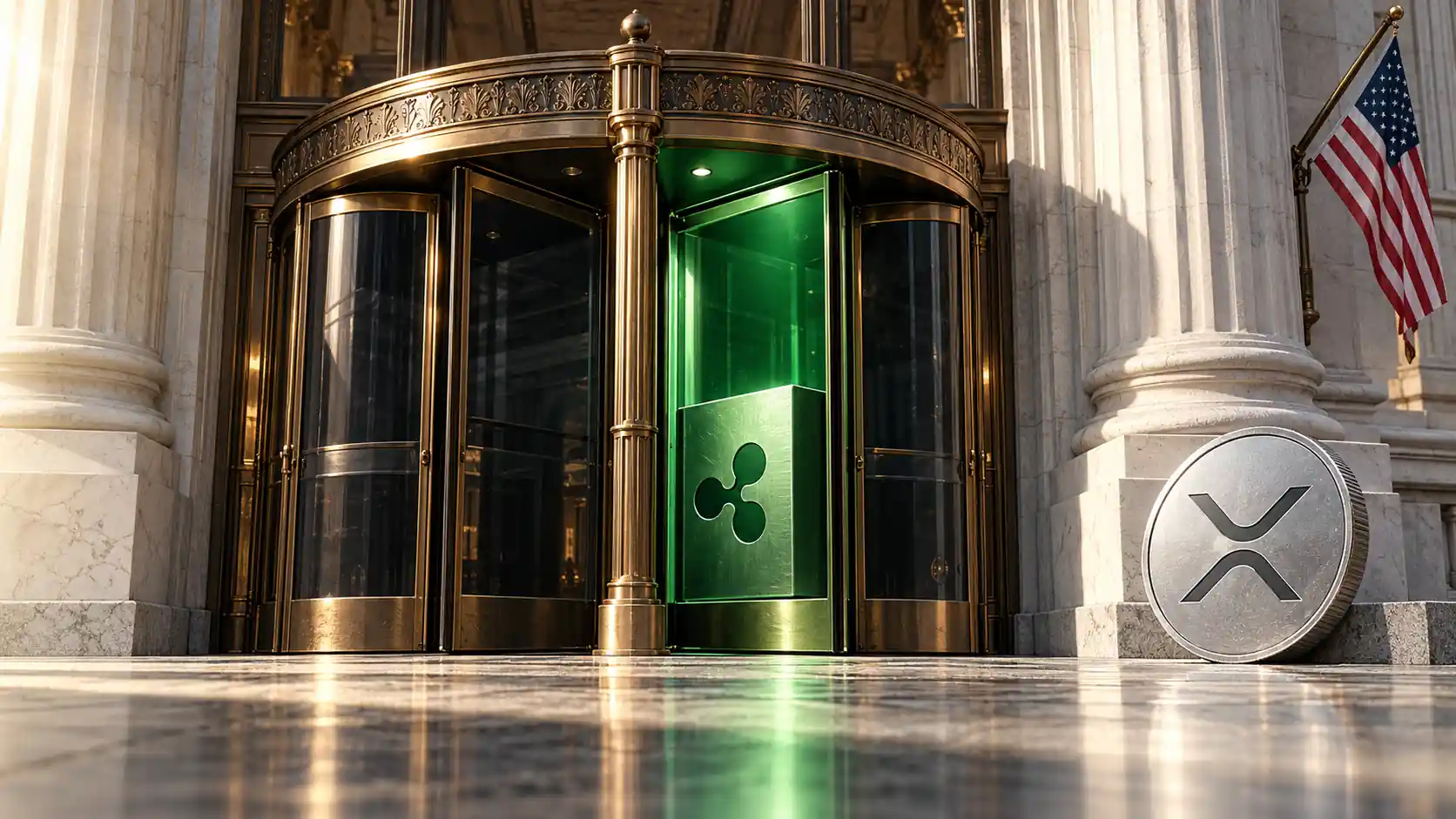


Staking ETFs mark the first time a crypto fund doesn't just track a price: it earns a yield and distributes it to investors. BlackRock's iShares Staked Ethereum Trust (ETHB) holds real ETH, stakes the majority of it, and pays monthly cash distributions, making Ethereum an income-generating asset inside a standard brokerage account.
Understanding how this works matters beyond ETHB itself. The model is already spreading to Solana, Cardano, and Polkadot, and the yield it promises is not without cost.
TL;DR: ETHB by BlackRock holds ETH and stakes up to 95% of it, paying investors roughly 82% of staking rewards monthly. A March 2026 SEC/CFTC clarification made the structure possible for U.S.-regulated funds.
What Is a Staking ETF?
A staking ETF is an exchange-traded fund that holds a proof-of-stake cryptocurrency and locks most of it into the network's validation process. In return, the network pays rewards, which the fund then distributes to shareholders as monthly cash. ETHB is the first BlackRock crypto product to generate a native yield.
In practice, ETHB custodies real ETH and stakes between 70% and 95% of those holdings through institutional validators including Coinbase Prime, Figment, Galaxy, and Attestant. The Ethereum network currently pays approximately 3.1% annually on staked ETH, per Ethereum Foundation data, and that flow reaches investors each month. The mechanism mirrors that of validator nodes, but packaged as a security you can buy through any standard broker.
BlackRock has launched a new Ethereum ETF: iShares Staked Ethereum Trust ETF (ETHB).
— Yahoo Finance (@YahooFinance) March 16, 2026
It's designed to give investors more exposure to cryptocurrency. pic.twitter.com/PxVJN8uqs9
How It Became Possible
The regulatory unlock came in March 2026, when the SEC and CFTC issued a joint clarification stating that protocol staking of a commodity-classified asset like ETH does not trigger securities registration requirements. That single ruling opened the door: a U.S.-regulated ETF could now capture staking yield and pass it to investors.
ETHB wasn't the absolute first staking product. Grayscale and others had launched earlier vehicles. But when BlackRock moves, the category moves with it. The firm manages over $130 billion in crypto products and, according to Bloomberg data, captured 95% of sector inflows in 2025. This isn't just another fund launch.
Who Collects the Staking Yield
Distribution of staking rewards in an ETF like ETHB. Source: product documents, 2026
- Distributed to investors: 82%
- Staking fee retained by manager: 18%
From Asset You Hold to Asset That Pays You
This is the structural shift. A Bitcoin ETF tracks a price. An Ethereum staking ETF tracks a price and pays a coupon. Ethereum stops being something you wait on and becomes something that works for you, inside a wrapper your pension account or broker can buy without a seed phrase, without running a validator, without an exchange account.
The productive asset thesis, the same logic driving corporate treasuries to accumulate staked ETH, now reaches the ordinary investor's brokerage account. A native network yield, packaged with the convenience of a traditional security. That's a genuinely new category.
 Boaz Sobrado
The Template for Every Other Chain
BlackRock built the blueprint that every proof-of-stake network will follow. Staking ETFs on Solana are already trading, with yields reported around 7% annually, and filings for Cardano and Polkadot vehicles are sitting before the SEC. Fidelity, Franklin Templeton, Invesco, and VanEck are all launching their own versions.
The principle is straightforward: when the world's largest asset manager validates a structure, the rest of the industry adopts it. We're not watching a single fund. We're watching the opening of an entire product category that combines price exposure with staking yield, a combination that didn't exist in regulated form until March 2026.
The Price of Convenience: Real Risks
The yield isn't free. The first cost is the cut: investors receive approximately 82% of staking rewards, while the manager retains the rest as a fee. Someone who stakes independently keeps 100% of the rewards.
The second risk is slashing. A validator that behaves incorrectly loses part of its staked ETH. Slashing events are rare (just 474 cases in Ethereum's entire history, per Ethereum Foundation records), but the probability is not zero. Third is liquidity: staked ETH carries activation and withdrawal queues, so the fund keeps a portion liquid for redemptions. In stress conditions, that buffer matters. Custody risk and smart contract exposure round out the picture.
Convenience here is real and so is its cost. The question for any investor is concrete: is 82% of staking rewards, plus the new risk layer, a better deal than running your own validator? The full details remain verifiable in filings on the SEC website and in the official Ethereum documentation. Investors weighing the trade-off should read both before committing capital.