

The SEC has approved the first spot Solana ETF from a major Wall Street bank. On paper, that's the kind of news that should push a token's price sharply higher. Instead, Solana finished the day in the red, the worst performer among the top ten crypto assets, according to CoinGecko data.
It's the same paradox we've seen play out with XRP and Ethereum. This time, though, one structural detail changes the conversation entirely. This isn't just another crypto ETF.
What the SEC Actually Approved
NYSE Arca approved the listing of Morgan Stanley's Solana fund, trading under the ticker MSOL, pending a final certification that will set the official launch date. The registrations became automatically effective under securities law, and on the same day Morgan Stanley also received clearance for its parallel Ethereum product, ticker MSSE.
Two features set MSOL apart from every crypto ETF that came before it. First, the fee: 0.14% annually, among the lowest in the U.S. crypto ETF space, per SEC filings published in 2026. Second, and more significant, MSOL is a staking ETF: the fund deploys up to 100% of its SOL holdings to generate network rewards, passing approximately 95% of those earnings back to investors.
Morgan Stanley Solana ETF (MSOL): Key Facts
Product characteristics. Source: SEC filings, 2026
- Ticker and exchange: MSOL, listed on NYSE Arca.
- Annual fee: 0.14%, one of the lowest in the sector.
- Staking: up to 100% of SOL deployed, with 95% of rewards passed to investors.
- Custody: Bank of New York Mellon and Coinbase.
Why Staking Changes Everything
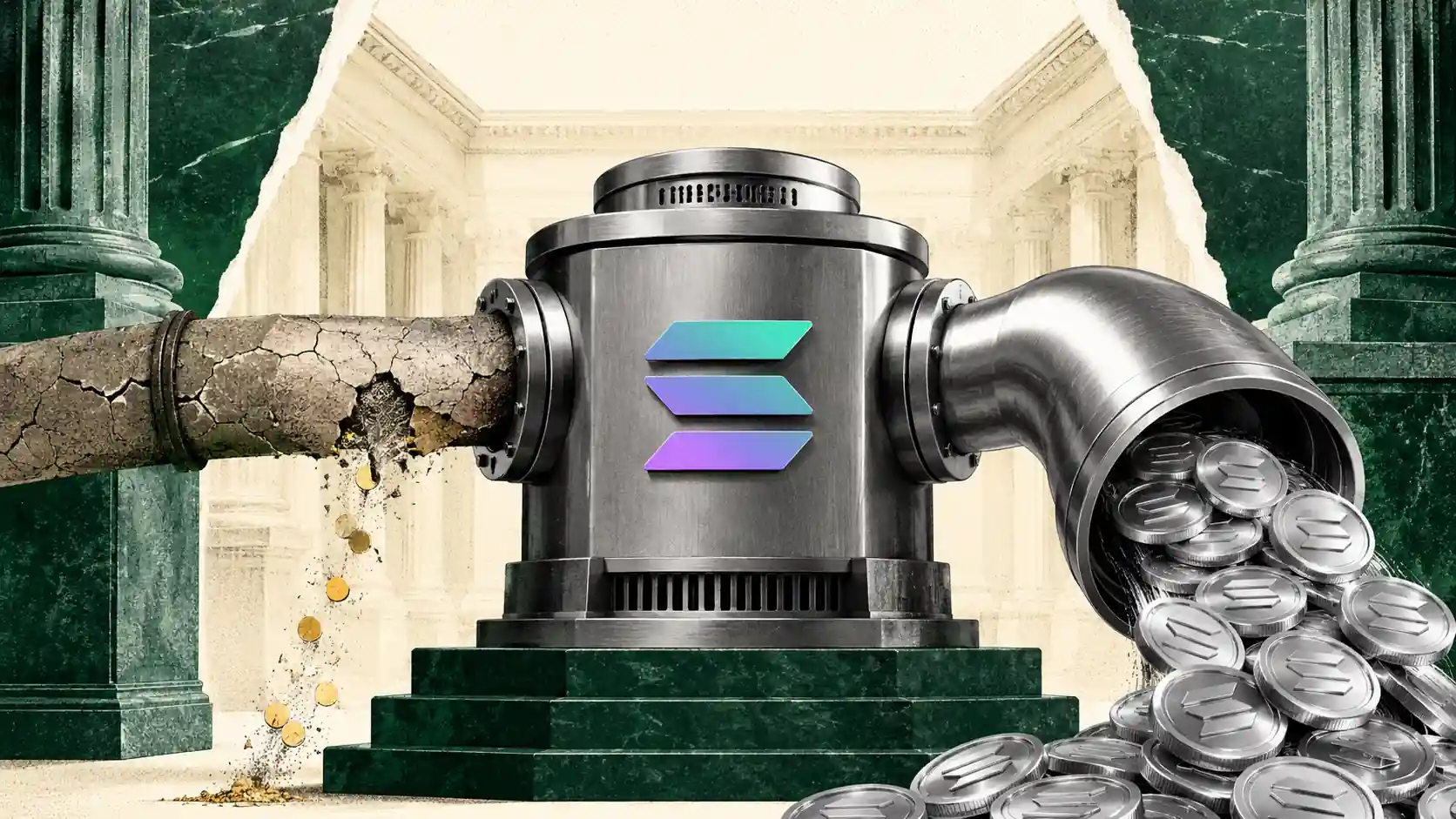
This is the real story, and it deserves a clear explanation. A standard crypto ETF holds a digital asset and hopes its price rises. A staking ETF does something structurally different: it puts the asset to work and generates a periodic yield, in the same way a bond pays a coupon.
That's the transformation from a speculative asset to a productive one. For a pension fund, an institutional portfolio manager, or a registered investment adviser, the distinction matters enormously. They can justify the allocation not merely as a bet on price appreciation, but as a yield-generating position. It bridges the gap between crypto markets and the logic of income-seeking capital, the kind of capital that runs on distribution schedules, not price charts. Notably, this staking mechanism is something Ethereum's ETF market had been lacking, and here it arrives simultaneously on both assets.
Why Did SOL Fall on the News?
It's a fair question, and it deserves a straight answer. In the short run, Solana's price isn't driven by a single product approval. It's driven by forces far larger than any one ETF filing. The day was rough across the board: according to CoinGlass data, roughly $280 million in leveraged positions were liquidated across crypto markets, pressured by two converging macro factors. The Federal Reserve's July 28-29 meeting is approaching, with rate expectations shifting hawkish. Oil prices are elevated, feeding renewed inflation concerns.
When the macro tide goes out, it takes everything with it. Positive asset-specific news gets drowned out by broad market fear. We've documented this pattern repeatedly: institutional infrastructure builds the structural case for an asset, but short-term price action responds to sentiment, not fundamentals.
Good News, Price Down: Two Different Timelines
What drives Solana across different time horizons
- Long term: the staking ETF opens the door to institutional capital and income-seeking investors.
- Short term: price follows the Fed, oil, and macro fear, all of which dominated today.
The Competitive Picture
There's a dimension here that goes beyond the product itself: the identity of the issuer. Morgan Stanley is one of the largest investment banks on the planet. Its decision to bring Solana to its clients is a legitimacy signal that's hard to overstate. It means SOL enters retirement accounts, advisory platforms. Brokerage portfolios, channels that typically can't hold tokens directly or access external exchanges.
This fits a broader pattern we've been tracking: traditional brokers becoming the primary on-ramp for crypto exposure. TradFi isn't debating whether crypto is legitimate anymore. It's building the distribution infrastructure to sell it, and doing so by carefully selecting which assets beyond Bitcoin and Ether deserve shelf space.
The Bigger Picture
The real story isn't today's price move, which will be forgotten within weeks. The story is that 2026 is adding a decisive layer to crypto's normalization. After ETFs that simply hold a static asset, we now have ETFs that make the asset productive, converting crypto into income-generating instruments wrapped in the most familiar financial packaging available to retail and institutional investors alike.
For Solana, as for Ethereum, this means the gap between the value the network actually produces and the price of its token now has a new structural bridge. That bridge won't shrink overnight, and probably not this month either, because the macro storm still needs to pass. But when yield-seeking capital can finally access these assets inside a regulated account at scale, the demand profile will look fundamentally different from what it is today. Readers who want to understand the underlying valuation mechanics can start with our guide on how to read a crypto asset's real value. The full filings remain publicly available on the SEC website and the NYSE portal.