

There is a paradox defining Ethereum in 2026, and it is the most instructive story in the entire market. The token trades around $1,800, far from its highs, in a year investors will remember as disappointing. Yet right above that network, the one the market seems to have forgotten, the infrastructure of tomorrow's finance is being built.
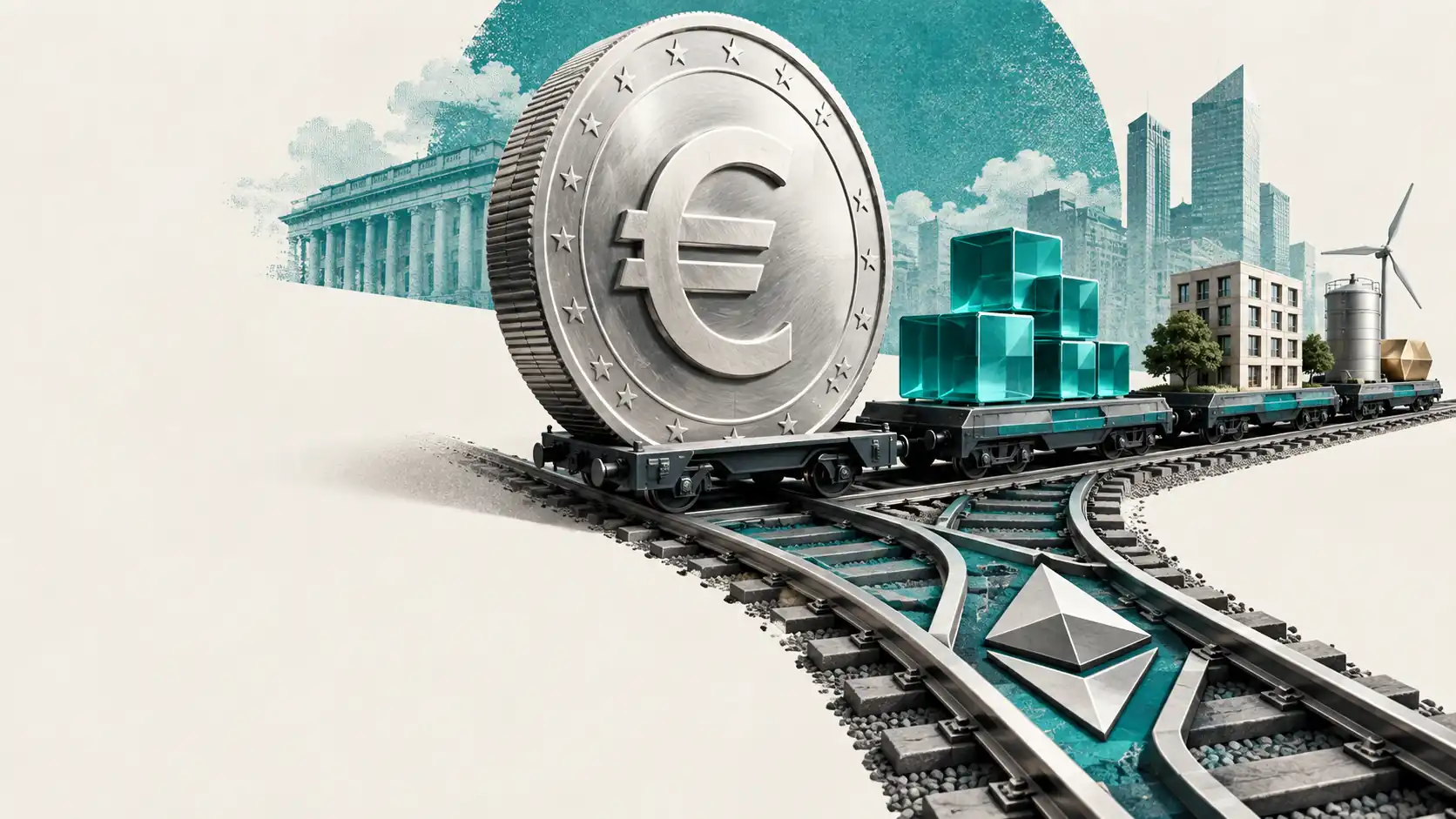
The uncomfortable truth: Ethereum has stopped being a price bet and become a railway. And railways, as a rule, are not what shines. They are what everything else runs on.
The Price That Disappoints
Start with the facts. ETH trades around $1,800, having fallen to an annual low of $1,510 in late June, and sits enormously distant from the nearly $5,000 it touched in 2025. It has been a rough year: ETF flows swinging in both directions, weak technical momentum, and even major banks have revised their estimates downward, with Citi cutting its twelve-month price target from $3,175 to $2,240, according to a Bloomberg report.
If you only look at the chart, the story is grim. But the chart is the least interesting part of this picture. Because while speculators were leaving, the biggest operators in the world were arriving.
What Is Being Built on the Network
This is where the picture flips. On July 16, a tokenization pilot launched around a $1.3 billion fund using a yen-denominated stablecoin for instant settlement on Ethereum. This is not an isolated case. SBI Holdings, a Japanese financial group with roughly $230 billion in assets under management, and the network itself now host a growing line of institutional initiatives. In July, EthLabs also debuted, a dedicated effort to guide banks and asset managers into the ecosystem.
The thread is clear. When a bank wants to tokenize a fund, when a major institution wants to settle in stablecoins, when an asset manager wants to bring real-world assets on-chain, the network chosen is almost always Ethereum. Not because of hype, but for the most boring and most powerful reason that exists: it has the deepest liquidity, the most battle-tested security, and the broadest tooling available. Tokenized finance is picking its railway, and this is it.
Why the Price Has Not Caught Up Yet
The honest question is: if all of this is being built on Ethereum, why isn't the token rising? The answer is the same one that applies to XRP and Solana, and it must be stated plainly: network activity does not automatically translate into token demand. A bank tokenizing a fund on Ethereum is not required to buy ETH, and the value it generates does not flow mechanically into the token price.
Weak macro conditions and unstable flows have added to the pressure, though something has shifted recently. Spot ETH ETFs just closed their first positive week after eight consecutive weeks of outflows, recording $84 million in net inflows, according to data tracked by CoinGlass. Staking matters here too, because it changes the fundamental nature of the asset: investors who stake ETH earn a yield regardless of price, creating a category of patient, yield-compensated demand that is less sensitive to drawdowns. It's a slow floor, but it is a floor.
The Missing Catalyst
The bridge between the winning network and the waiting token has a name: staking ETFs. An ETF that simply holds ETH is one thing. An ETF that stakes it and passes the yield through to investors is another entirely, transforming Ethereum from passive exposure into a coupon-paying asset. That is the kind of product that could give institutions a concrete reason to buy the token, not just use the network underneath it.
If and when that bridge is completed, the gap between fundamentals and price could start to close. But it remains an anticipated catalyst, not a certain one, and Ethereum has already shown that good news here tends to mature slowly.
The Bigger Picture
The bet on Ethereum in 2026 is not “the price will return to its highs.” It is subtler and deeper: if global finance is genuinely shifting on-chain, as the DTCC pilots and the growing roster of institutional initiatives suggest, then owning the railway that train runs on carries real value, sooner or later.
The token can lag for months, because price and network activity run on different clocks. But the question that matters for anyone with a long horizon is not where ETH will be next month. It is a single, sharper one: when will the infrastructure built on top of Ethereum become so large and so profitable that the price of the railway itself can no longer ignore it? The answer is not in today's chart. It lives in the quiet line of institutions that are, without fanfare, laying the tracks. This is not financial advice, but an assessment of where construction activity is heading. Data points remain verifiable via RWA.xyz and official documentation from the Ethereum Foundation.