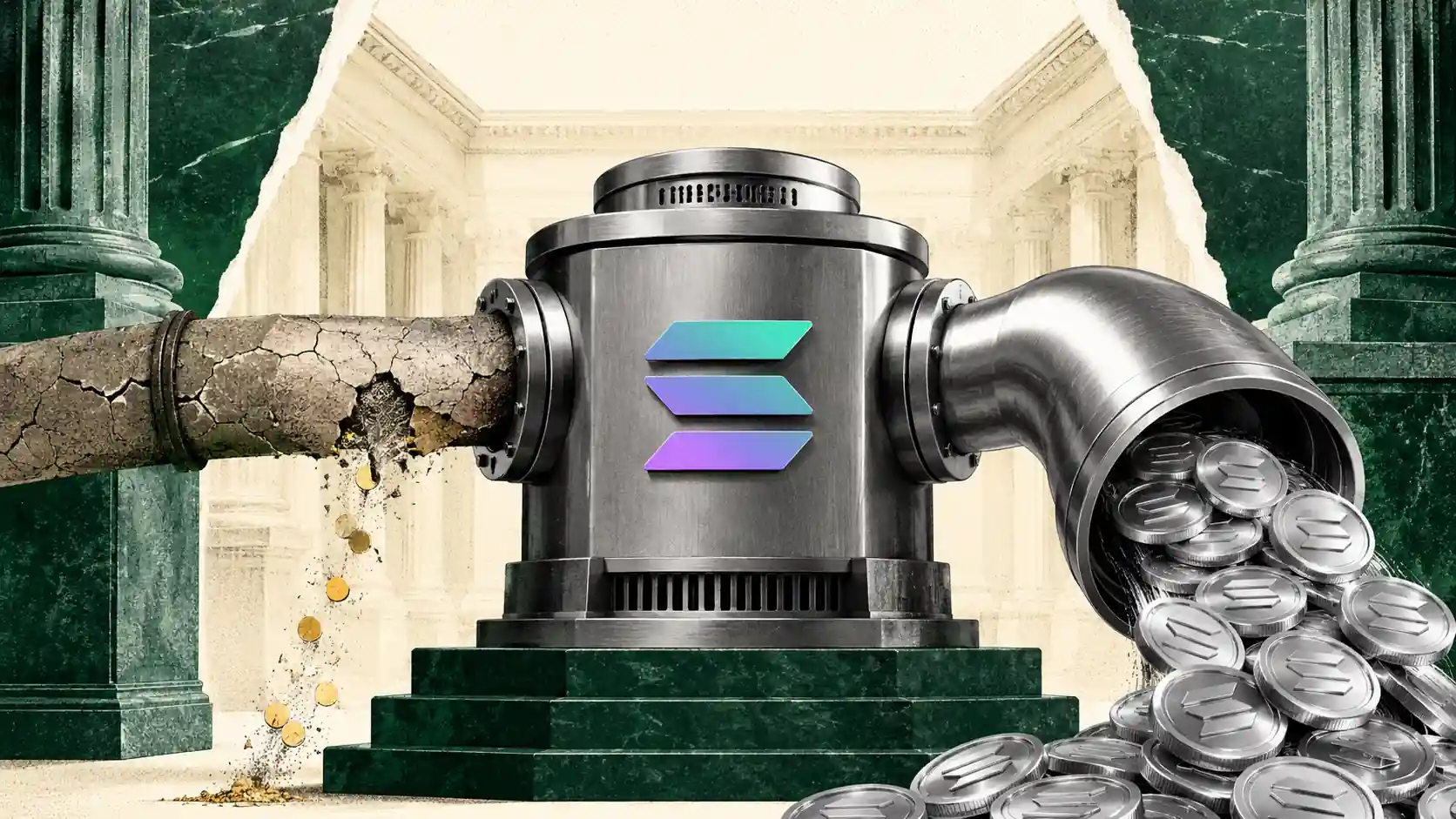


Six Ethereum researchers, including a prominent Ethereum Foundation contributor, have proposed cutting staking rewards to protect the network's decentralization. The draft proposal, called the “Tapered Issuance Burn” (EIP-8361), would progressively reduce annual staking yields as more ETH gets locked up. At current staking levels, yields would fall from roughly 2.6% to 1.2%, according to the proposal's authors. Critics, including Aave founder Stani Kulechov, warn the cure could be worse than the disease.
TL;DR: EIP-8361 would cut Ethereum staking yields from 2.6% to 1.2% today, and to zero if 50% of all ETH is ever staked. Supporters say it protects decentralization; critics say it drives away institutions and hurts solo stakers most.
What the Tapered Issuance Burn Actually Does
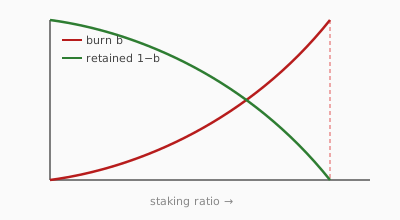
The mechanics are easier to follow than the name suggests. Right now, validators who lock their ETH to help secure the Ethereum network earn an annual staking reward that sits around 2.6%, per data from the proposal authors. EIP-8361 would introduce a valve: the more ETH staked across the network, the larger the fraction of validator rewards that gets “burned” (permanently removed from circulation) rather than paid out.
The math is stark. At today's staking participation rate, that burn mechanism would slice the effective yield roughly in half, from about 2.6% to 1.2%. Push staking participation to 50% of all ETH in existence and the reward drops to zero. The authors describe it as a minimal, market-driven fix that removes the economic incentive to stake beyond a healthy threshold.
My thoughts on Ethereum staking yield axing https://t.co/J9Taoyiio3
— Stani (@StaniKulechov) August 4, 2026
tl;dr Save ETH staking.
Why Researchers Are Worried About Centralization
The concern driving the proposal is real. ETH staking participation recently hit an all-time high, surpassing one-third of total circulating supply, per on-chain data tracked by Glassnode. That sounds healthy until you look at who's doing the staking. The bulk of that participation comes not from individual validators running home nodes, but from large exchanges, liquid staking platforms, and specialized custodians pooling vast amounts of ETH.
Researchers fear this concentration threatens Ethereum's core promise of being a distributed, permissionless system. When a small number of entities control a majority of stake, the network becomes more vulnerable to coordinated pressure, regulatory targeting, or coordinated attacks. One data point crystallized the alarm: a single publicly traded company recently accumulated close to 5% of all circulating ETH. The proposal is directly aimed at making that kind of accumulation economically unattractive. It's the same centralization dynamic that surfaces in debates around restaking and its systemic risks.
Why Critics Are Alarmed
The pushback is just as substantive. Aave founder Stani Kulechov, in a post on X on August 4, 2026, argued that Ethereum “shouldn't be punished for its own growth.” Two objections stand out.
First, lower and less predictable yields make ETH less attractive as a yield-bearing asset for institutional allocators. Traditional finance players, from asset managers to treasuries, had been drawn to ETH staking partly because a roughly 2-3% annualized return is a legible, comparable figure. Cut it, and the investment case weakens at precisely the moment institutional interest was growing.
Second, and more perversely, the proposal could hurt the people it's meant to protect. Solo stakers, individuals running their own validator nodes, already operate on thin margins. Squeeze yields further and many will find it economically unviable to continue. They exit. Large custodial platforms, with their economies of scale, absorb the lower returns far more easily and stay. The result: fewer small validators, more dominance by the exact large entities the researchers wanted to check. The remedy risks worsening the condition.
Ethereum's Core Dilemma
Two values in conflict, no painless choice
- For: Capping excessive staking growth defends decentralization, Ethereum's founding principle.
- Against: Lower yields push institutions away and may punish solo validators more than the large operators they're meant to curb.
A Decision Far From Made
One thing worth stating clearly: this is still a draft. EIP-8361 was published for community discussion on August 4, 2026, by six authors including @pintail_xyz, @jdetychey, @dapplion, @Pa7x1, and @ladislaus0x, in a post on X and via a pull request to the ethereum/EIPs GitHub repository. It has not been approved, and there's no guarantee it makes it into any upcoming network upgrade.
One of the sharpest practical criticisms is about timing. The proposal landed just days before a significant technical deadline, leaving what many in the community consider far too narrow a window for reviewing a change of this magnitude. Rewriting the monetary policy of a network whose staked assets are worth tens of billions of dollars is not something most developers want to rush. The debate is likely to extend well past the immediate calendar pressure.
🚨 New EIP: Tapered Issuance Burn
, Jerome de Tychey 🦇🔊 (@jdetychey) August 4, 2026
We just submitted an EIP to ethereum/EIPs: a minimal, market-driven fix to Ethereum's issuance policy removing the incentive for stake growth beyond 50% of ETH supply.
EIP-8361 by @pintail_xyz, @jdetychey, @dapplion, @pa7x1, @ladislaus0x &… pic.twitter.com/g1uzWPycQ4
The Bigger Question Ethereum Is Asking Itself
Step back from the technical detail and the debate reveals something more fundamental. Ethereum is, again, trying to govern itself without a central authority, balancing values that pull in opposite directions. Decentralization is its founding ideal. Economic attractiveness is what brings capital, users, and developers. Maximizing one can erode the other, and finding equilibrium is genuinely hard.

Behind what looks like a dry argument over percentages lies an almost philosophical question: what does Ethereum want to be? A yield-bearing financial asset competing for global capital flows, or a decentralized infrastructure that holds to its principles even at the cost of lower returns? Neither answer is obviously right. How the community manages this tension, coordinating toward a shared outcome with no one in charge, will say a great deal about its maturity as a governance system. For readers who want to understand the underlying mechanics, our guide on how a blockchain works covers the fundamentals.
 ethereum
Watch the ethereum/EIPs GitHub repository and the AllCoreDevs call schedule over the coming weeks. If EIP-8361 gains traction there, it will be the clearest signal yet of which direction Ethereum's community wants to resolve a tension that won't disappear regardless of how this particular proposal ends.