

The biggest financial infrastructure story of the week carries no flashy logo and no token surging on a chart. The DTCC, the largely invisible plumbing that settles over $114 trillion in U.S. securities annually, according to the organization's own disclosures, has just executed its first live trades of tokenized stocks and Treasury bonds on a blockchain. The hidden machinery of Wall Street is moving on-chain, and it's changing the system at the layer most people never see.
To understand why this matters, you need to understand what the DTCC actually does. That's where the story gets both technical and genuinely fascinating.
What Happened on July 15
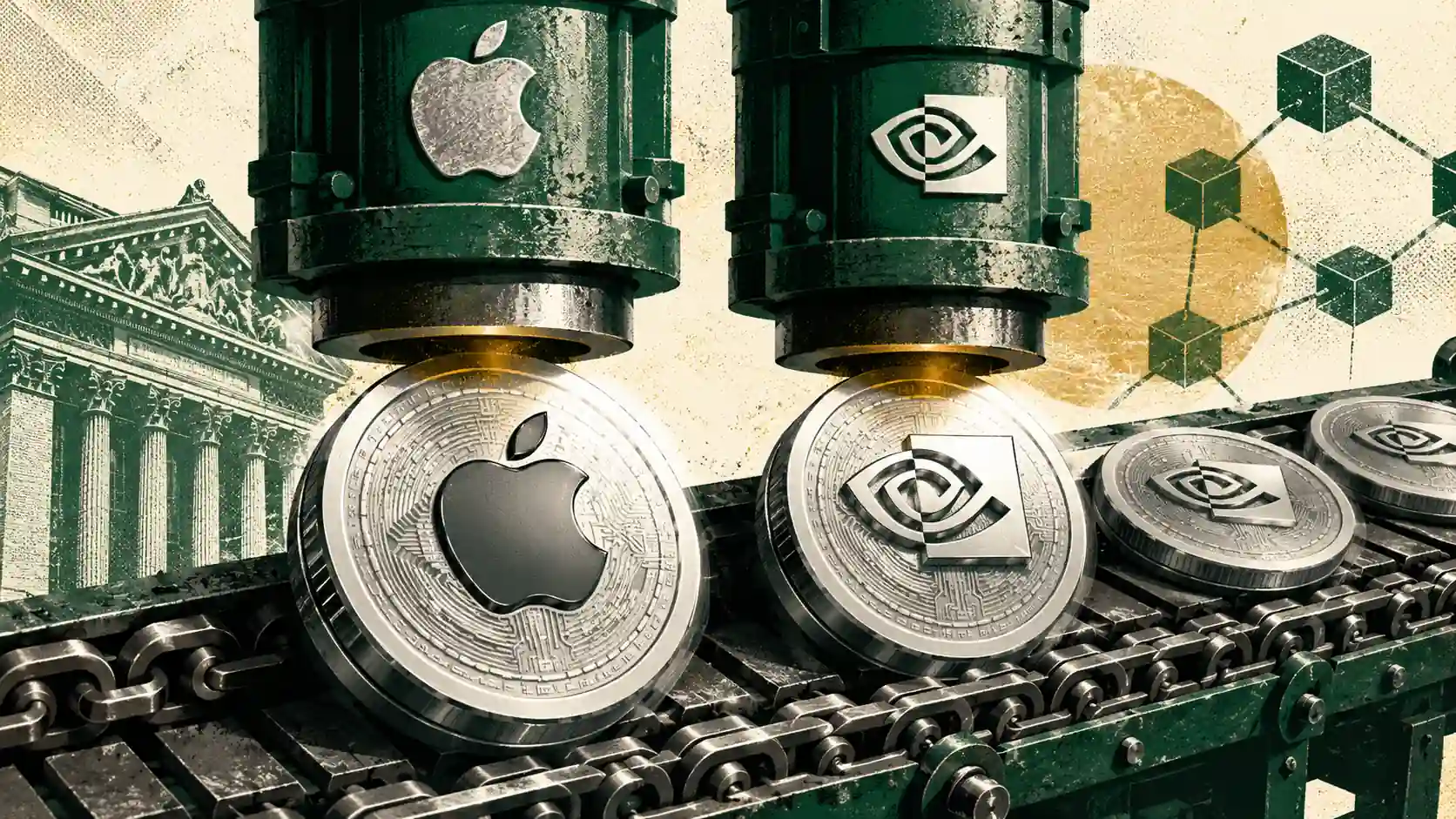
On July 15, the Depository Trust and Clearing Corporation processed its first production trades using tokenized versions of assets it already holds in custody: Russell 1000 equities (the thousand largest U.S.-listed companies by market cap), major-index ETFs, and U.S. Treasury securities. The organization itself described the event, in an official press release, as its largest tokenization milestone in production, measured by asset breadth, use cases, and participating institutions.
The participant list speaks volumes. Over 30 institutions joined the exercise, including BlackRock, JPMorgan, Goldman Sachs, Vanguard, NYSE, Nasdaq, CME Group, and State Street, with Chainlink providing the cross-chain interoperability layer. This was not a sandbox simulation. It was real, regulated activity made possible by an SEC no-action letter issued in December 2025, which opens a three-year window for this type of on-chain settlement.
Why the DTCC Changes the Tokenization Conversation
Here lies the distinction that separates this announcement from months of tokenization press releases. Until now, most tokenized equities in the market have been synthetic: a company creates a token that tracks the price of a stock, but actual legal ownership remains entirely separate. The DTCC inverts that model. It tokenizes securities already held in its own custody, so the token carries genuine legal title, identical in standing to a traditionally held share.
That difference is enormous. The DTCC is the central registry where, at the end of every trading day, nearly every U.S. security is deposited and settled. It's the deepest and most trusted layer of the entire financial machine. When that layer places assets on blockchain rails, you're not tokenizing a copy of something. You're moving the original. The service runs on the DTCC's ComposerX platform, which mints, manages, and settles these tokenized representations.
What Changes Operationally
The advantage isn't speculative. It's operational. Today, settling a securities trade takes one full business day (the T+1 standard the SEC only moved to in May 2024), requiring a chain of intermediaries to pass confirmation messages back and forth. On tokenized rails, that same trade can settle near-instantly, with collateral, repo operations, and equity movements all handled in a single shared format, available around the clock.
DTCC President Frank La Salla described the operation, in public remarks reported by Reuters, as a successful bridge between traditional finance and decentralized finance. In plain terms: the technologies born in the crypto world are quietly becoming the settlement infrastructure of Wall Street, running under the hood where the public rarely looks but where the largest sums of money actually move.
What This Is Not Yet
Precision matters here. This is a limited production phase, not a full commercial launch. Real but small volumes are stress-testing the system ahead of a planned full commercial rollout in October 2026. The model is hybrid and opt-in: existing operators can participate while remaining inside the current regulatory framework. And there's a structural reality that anyone arriving from the crypto world should see clearly: this is centralized tokenization, with a single trusted issuer at the center, the philosophical opposite of the permissionless decentralization that defined blockchain's origins.
But that's precisely what makes it powerful to traditional institutions. Banks and asset managers don't adopt technology for ideological reasons. They adopt it when it demonstrably cuts costs and reduces settlement risk. The DTCC gives them blockchain rails without asking them to abandon the central registry they've trusted for decades.
The Bigger Picture for Investors and the Industry
This is the moment when tokenization stops being a narrative and becomes infrastructure. For years, real-world asset (RWA) tokenization was a story told through press releases and pilot programs. Today, the operational core of the U.S. financial system is putting it into production, with the largest names in global finance at the table. The movement isn't isolated, either: according to CoinGecko data, tokenized RWA markets have grown sharply through 2025, Solana now dominates tokenized equities on the retail side, Nasdaq is developing its own parallel system, and the DTCC has now brought the deepest settlement layer of all on-chain.
The lesson, for anyone looking beyond short-term price action, is that the real crypto story of 2026 isn't a token rally. It's the quiet migration of crypto-native technologies into the foundational plumbing of global finance. Whoever owns those rails will hold something far more consequential than any individual coin. Primary sources are available on the DTCC's official website and in SEC filings and releases. The October 2026 commercial launch date and the scope of future participating institutions are the two metrics worth watching closely from here.