


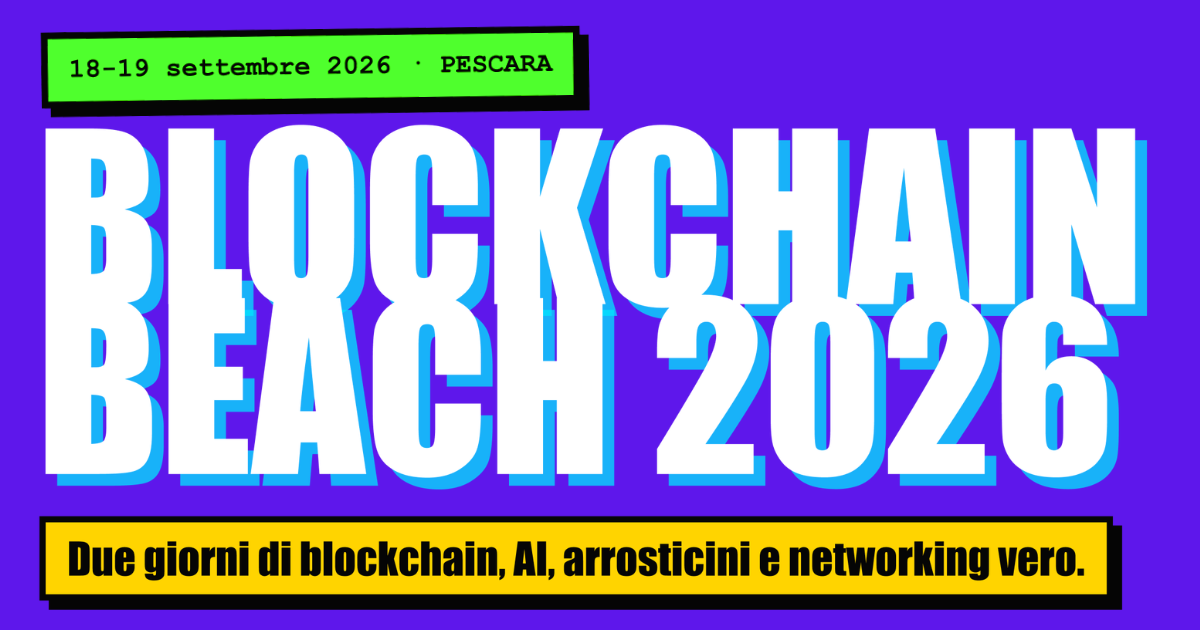
A format born on the beach at Pescara is becoming a European model. Blockchain Beach, the Italian event that combines blockchain, AI, and Web3 education with an informal seaside atmosphere, has been recognized as a best practice by the European Commission and will become part of a project funded by the Erasmus+ programme.
This is not simply a certificate of recognition. It marks the shift from a local experience to a method replicable across the continent.
What Is EU #BB
The project is called EU #BB: Enhancing Youth Education in Blockchain, AI and Web3 through International Exchange, funded under the Cooperation Partnerships in Youth line (KA220-YOU) of Erasmus+. It runs for 24 months, starting in September 2026 and closing in August 2028, with partners from four countries: Italy, Spain, Cyprus, and Belgium, each playing a distinct role across research, education, and youth network management.
Leading the Italian component is Officina DeFi, the first Italian association dedicated to decentralised finance and the organiser of Blockchain Beach, bringing its format and field-tested experience to the partnership.
EU #BB fits into a well-established European trend: in recent years the Erasmus+ programme has funded several partnerships focused on blockchain training and digital skills, reflecting a structural interest from EU institutions in closing the sector’s skills gap. What sets this project apart is its approach: not just classroom instruction, but an experiential format with pilot editions on location and international exchanges between young people.
What the Project Involves
Activities run on three tracks. The first is a Europe-wide research effort to build a competency framework for young people covering blockchain, artificial intelligence, and Web3. The second is the creation of a Digital Hub: a multilingual platform in English, Greek, Spanish, and Italian, designed as a central reference point for content, training, and community building.
The third track, and the most tangible, consists of international exchanges and pilot editions of the format. After an initial exchange phase hosted in Italy, where European partners will attend the Italian editions, the Italian team will support the organisation of pilot stops in Spain and Cyprus, coordinated respectively by the Chambers of Commerce of Girona and Paphos. The stated goal is not to export an event, but to transfer a method.

Why Blockchain Beach
The choice of this format as a scalable model has a clear rationale. Blockchain Beach has built its reputation on quality, accessible education, with speakers selected for expertise rather than sponsorship, and an event open to everyone. Add to that measurable growth: from around 50 participants at the first pilot edition to more than 400 at the most recent one, according to Officina DeFi data.
It is precisely this combination of content rigour and the ability to engage a broad audience that made the project a compelling case study for expansion through an international cooperation partnership.
What Will Remain
The project is designed to leave a concrete legacy. At the end of the 24 months, a Framework for Action will be produced: a toolkit that anyone in any European country can use to replicate the model. The Digital Hub will also remain active after the project closes, sharing resources and keeping the continental community alive.
For the broader European Web3 ecosystem, the signal matters. When a format born at a local level is recognised and financed by the EU as a model worth exporting, it says something specific: the Italian innovation scene can do more than participate. It can set the standard. That is the direction the country’s crypto community is moving, determined to turn home-grown experiences into international reference points worth watching.