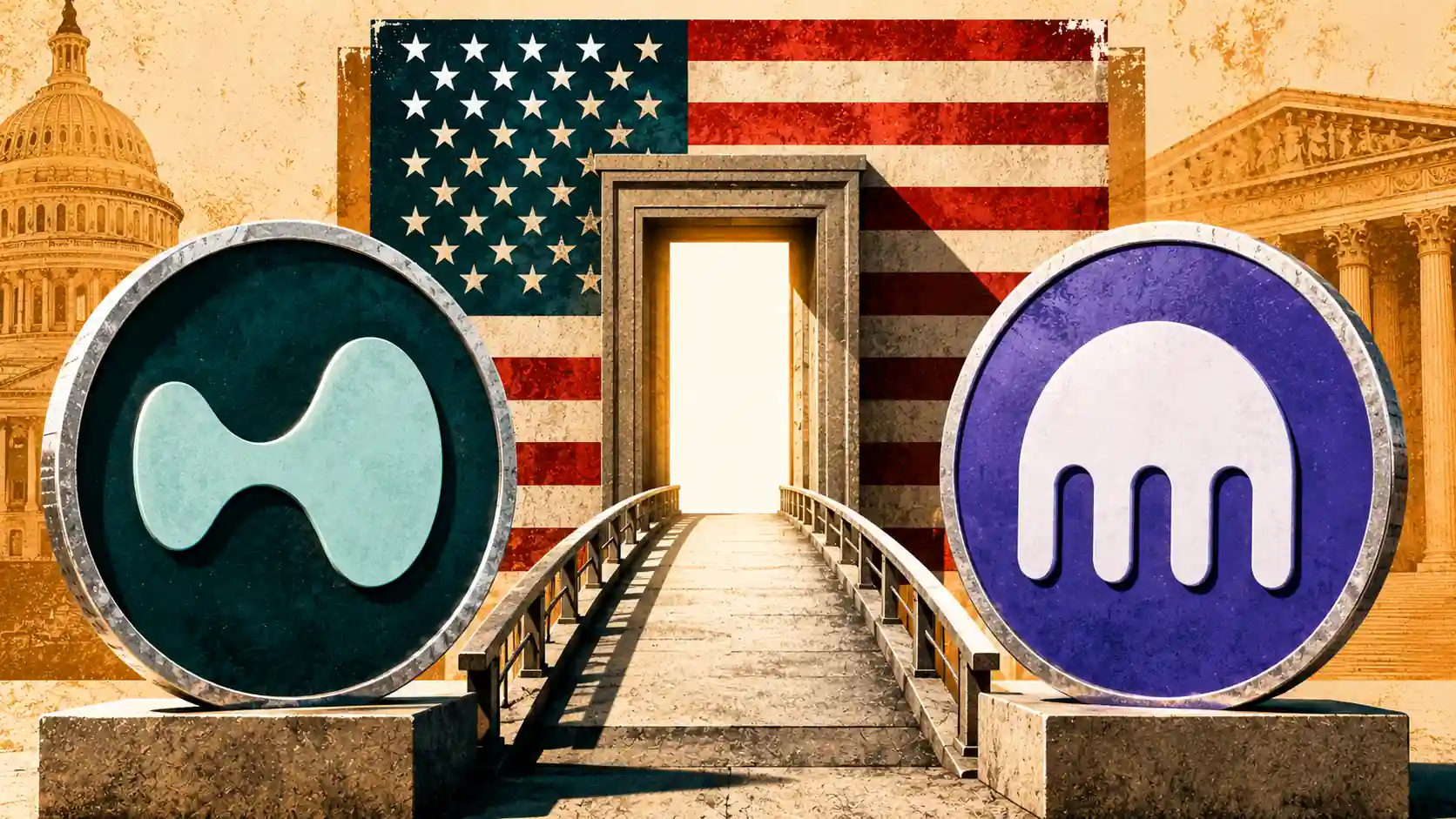
A single sentence from the White House sent Hyperliquid's token HYPE up nearly 20% in a matter of hours. During a meeting with tech and crypto industry leaders, President Donald Trump stated that the chairman of the Commodity Futures Trading Commission (CFTC) is actively working to bring Hyperliquid, the leading decentralized derivatives platform, into legal operation in the United States. Markets responded immediately and euphorically. But there's a significant gap between a presidential signal and a regulated, operational exchange.
This is potentially important news, but it deserves careful handling. What was actually said differs considerably from what the market wanted to hear. Between a political statement and a platform genuinely operating under US rules lies a long, uncertain road. Here's what happened, why it matters. What still needs to fall into place before any of this becomes reality.
What Trump Actually Said
Start with the precise words, because precision matters enormously here. At the meeting, Trump said he understood that the CFTC chairman is “working to bring Hyperliquid to the United States in a fully compliant and legal way,” adding “he's working very hard on it, we'd really love to see it happen.” That is a statement of intent and direction. It is not an announcement of a done deal.
This distinction can't be overstated. Trump didn't describe what a US-compliant version of Hyperliquid would look like, what authorizations would be required, or that the CFTC has approved anything at all. He simply signaled that a possibility is being explored. To understand why even that signal ignited such enthusiasm, you need to understand what Hyperliquid is and why it has stayed out of the US market until now.
Why Hyperliquid Matters
Hyperliquid is the dominant decentralized platform for perpetual futures: contracts that let traders speculate on an asset's price without an expiry date. The market for these instruments is enormous and extremely popular globally. There's one catch, though. Hyperliquid has blocked US users, keeping them out precisely because of the regulatory uncertainty surrounding these products under American law.
That's the crux. The United States is the world's largest and deepest derivatives market. If Hyperliquid could operate legally there, it would gain access to a vast pool of potential customers and capital, with a significant impact on its entire ecosystem. No wonder a mere hint of that possibility sent HYPE up roughly 17-20% in a single day, according to CoinGecko data, and pushed shares of publicly listed companies tied to the platform even higher. The market's enthusiasm, as we'll see, is running well ahead of regulatory reality.
Perpetual futures' unique funding mechanism and lack of expiry have made the product popular offshore, where limited regulations apply.
— Mike Selig (@ChairmanSelig) June 15, 2026
Under my chairmanship, the @CFTC is bringing perpetuals onshore under a robust regulatory framework.
More form my conversation on… pic.twitter.com/J7UGlaBDvE
Hyperliquid and the US: What We Know
Announcement vs. reality. Source: The Block, Bloomberg, 2026
- The statement: Trump says the CFTC is working to bring Hyperliquid to the US “in a compliant and legal way.”
- The reaction: HYPE rose approximately 17-20% in 24 hours; related equities climbed even more.
- The reality check: This is a direction, not an approval. Formal CFTC registration would be required, and powerful incumbents are pushing back.
Announcement Is Not Approval
Here's where serious analysis parts ways with headline euphoria. For Hyperliquid to operate legally in the United States, the platform would almost certainly need formal registration with the CFTC, bringing with it a full suite of compliance obligations and regulatory oversight. That process takes time, and its outcome is far from guaranteed.
There's also organized opposition. Some of America's major traditional exchanges, including derivatives giants CME and ICE, as reported by Bloomberg, have raised concerns. They worry that platforms like Hyperliquid could be susceptible to price manipulation, and they're pushing for decentralized venues to face the same rigorous rules that govern their own operations. That's a concrete resistance from some of the most powerful players in US finance. This story also sits within a bigger regulatory picture: at the same meeting, Trump urged Congress to pass the CLARITY Act, the broad crypto framework legislation, and the SEC has simultaneously been unveiling its own new crypto rules. The Hyperliquid question is one piece of a much larger regulatory puzzle.
The Bigger Picture
Beyond the price swing and the moment's excitement, this episode matters for what it represents at a systemic level. Hyperliquid has become a symbol of a deeper trend reshaping finance: the convergence of decentralized financial infrastructure, built outside traditional rules, with regulated markets. The prospect of traditional assets trading around the clock on blockchain infrastructure is genuinely powerful, and that's the real stake here.
For anyone watching closely, there are two lessons. First, caution is warranted. Price moves triggered by a single sentence, however authoritative, are inherently volatile and speculative. Betting on the outcome of a regulatory process that remains entirely undefined is a risky proposition. Second, the structural signal is real and shouldn't be dismissed. US authorities are seriously exploring how to integrate decentralized infrastructure into their financial system rather than leaving it offshore. If this path reaches its destination, it would represent one of the most significant instances of DeFi meeting regulated finance ever seen. But between today's “we're working on it” and a fully operational, compliant platform tomorrow, the road is long and full of obstacles. The market, as it so often does, has already traveled the entire journey in its imagination. To understand these instruments better, read our guide on decentralized exchanges.