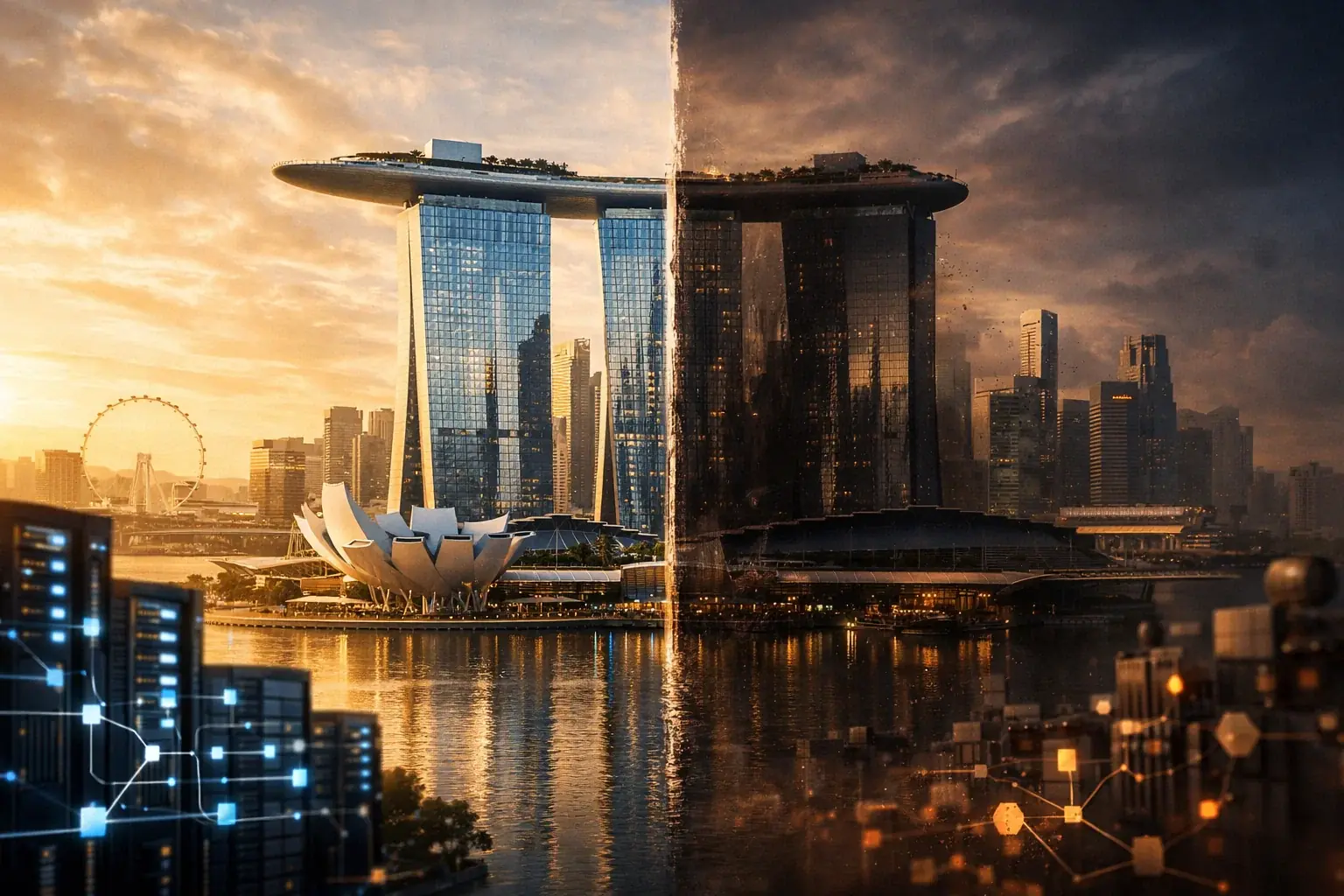

In recent months, Chinese-language social media has been flooded with catastrophic posts about Singapore's future. Amidst images of Christmas decorations deemed "poor" on Orchard Road and rumours of big brands fleeing Marina Bay Sands, a sardonic nickname has emerged: "洗钱坡" (Xǐqiánpō), or the "recycling escarpment", a pun on the city's Mandarin name.
And yet, scratching beneath the surface of the viral narrative, the data tell of an opposite reality: that of a nation that is not collapsing, but implementing a drastic and conscious strategic 'reset'.
中国消费降级见多了,但新加坡降级,你见过吗?
- 林晚晚的猫 (@linwanwan823) January 4, 2026
晚晚我一个观察:
新加坡金沙,80亿美金砸出来的国家门面,
今年圣诞新年第一次没拿到顶奢品牌赞助。
往年这是什么场面?Dior、Chanel、Hermès加价抢位,谁出价高谁上。今年没人玩这套游戏了。...
The myth of the luxury escape
Contrary to all predictions of decline, Euromonitor International data project Singapore's luxury market to grow by 7-9% in 2025, reaching a value of S$13.9 billion Singaporean dollars. A performance that surpasses that of giants such as China, Japan and South Korea.
The accusation that big brands are abandoning the centre is belied by the facts: in July 2025, Chanel opened a temporary 900-square-metre boutique at Marina Bay Sands, waiting for its flagship store to be completely renovated for a grand re-opening in 2027. This is not the behaviour of a brand in retreat, but that of an investor aiming for the long term.
From the 2019 migration to “cleaning house”
To understand this transformation one has to go back to 2019, when Hong Kong's instability prompted 23% of local companies to consider relocation, with nine out of ten choosing Singapore. Since then, assets under management in the city-state have doubled to USD 4 trillion.
However, this massive influx has also brought with it speculative capital and risks of illegality. The 'Fujian Gang' scandal of 2023, laundering USD 2.3 billion, marked a point of no return. The government's response has been fiercely pragmatic: prefer stability to unbridled growth.
The crackdown on crypto and the new order
The cryptocurrency sector, once a beacon for runaway Chinese exchanges (such as Binance and Bybit), has undergone a regulatory metamorphosis. The new DTSP licensing regime, which came into effect on 30 June 2025, did not provide transition periods, forcing companies to operate under strict institutional standards or leave.
While Bitget and Bybit have moved some staff to Dubai or Hong Kong, giants such as Coinbase, Crypto.com and Circle have chosen to remain under the new MPI licences. Singapore has chosen to be a hub for regulated finance, not a free port for speculation.
The strength of residents
The real revolution, however, is internal. While admissions of new foreign millionaires dropped by 54% (from 3,500 in 2024 to 1,600 in 2025) and taxes on foreign real estate purchases (ABSD) jumped to 60%, the domestic market held up.
Singapore now has 242,400 millionaire residents. The average household income has risen for five consecutive years, and today, locals account for two-thirds of prime real estate transactions. The narrowing price gap between the centre and the suburbs (down to 4-6%, the lowest since 2000) indicates a healthier market that is less dependent on foreign volatility.
Conclusion: Restructuring, not decline
What we are witnessing is not Singapore's demise, but its evolution towards a "de-risking" model. As suggested by a user on X, the phenomenon is not a downgrade of consumption, but a restructuring of it.
Singapore is sacrificing the volumes of speculative capital and unregulated crypto industry to build a more solid, transparent and domestic wealth-related economic base. The city-state is not closing its doors: it is simply changing hosts, ensuring that those who remain respect the new house rules.