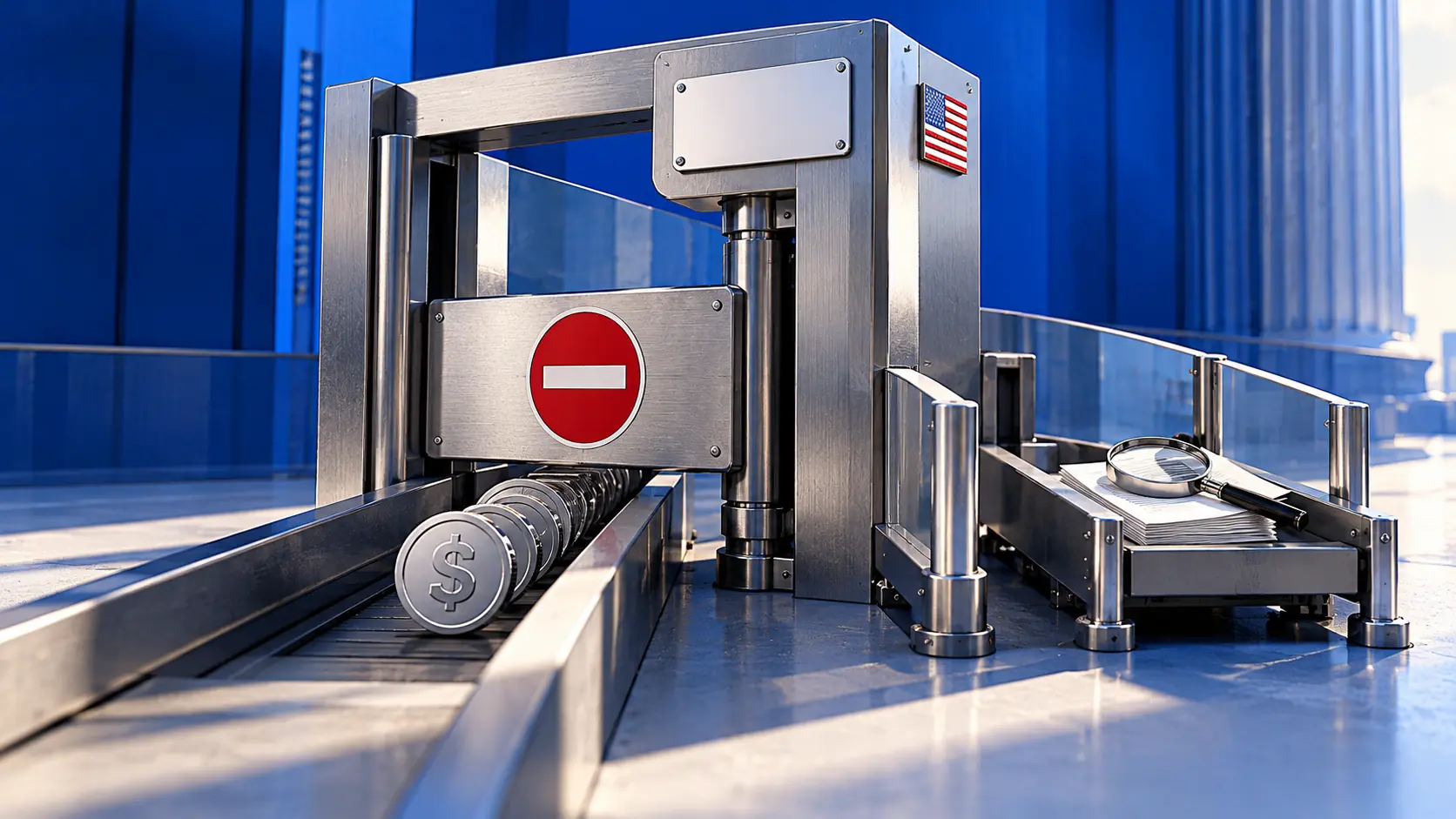
In 2026, something happened that had not occurred in fifteen years of market data: Bitcoin and gold, the two assets the world buys to hedge against uncertainty, are the only two major asset classes in the red, while equities of every kind are climbing. According to CoinGecko data, Bitcoin is down roughly 27% year-to-date, gold off around 3%. And yet this is precisely the year Italy chose to raise taxes on crypto. It’s a genuine policy paradox, and it’s worth examining clearly, because it reveals a country that regulates with sophistication while taxing with hostility, both at once.
What Changes for Crypto Investors From January 2026
From January 1, 2026, Italy’s substitute tax rate on crypto capital gains rises from 26% to 33%, under the 2025 Budget Law (Legge di Bilancio 2025). The old €2,000 exemption threshold has also been abolished, meaning gains are taxed from the very first euro.
One point that almost everyone gets wrong: the 33% rate applies to income accrued from 2026 onward, which investors will declare in their 2027 tax filing. Gains realised in 2025 are still taxed at 26%. The direction is set, though, and it aligns crypto with the treatment of other speculative financial income in Italy. For the Italian tax authority, the Agenzia delle Entrate, digital assets are now a permanent, fully taxed category.
The Paradox in Three Layers
The first layer is the timing: taxes go up precisely as the asset loses value. Anyone who bought near the peak and sells today pays a higher rate on a gain that, in many cases, no longer exists.
The second layer is total reporting transparency. Every crypto holding must be declared in the Quadro RW section of the Italian tax return, with no minimum threshold, a 0.2% annual wealth tax on holdings, and penalties ranging from 3% to 15% per year for any omission. The Anglo-Saxon logic of “a cold wallet offline doesn’t exist until I sell” simply does not apply in Italy: the reporting obligation is absolute, including for self-custody wallets. SpazioCrypto covers this in detail in the guide on how to store cryptocurrencies.
The third layer arrives with DAC8: from January 1, 2026, transaction data flows automatically from all European CASPs (Crypto-Asset Service Providers) to the Agenzia delle Entrate. The Italian tax authority will see everything. The window of opacity closes for good.
Italy’s Crypto Tax Rate: A Legislative History
Substitute tax rate on crypto capital gains. Source: Budget Laws 2023, 2025, 2026
The Hidden Carve-Out: Where Italy Offers a Discount
Here is the detail almost no one connects, and it flips the entire reading. The 2026 Budget Law introduces exactly one exception to the 33% rate: capital gains on MiCAR-compliant euro-denominated stablecoins, specifically e-money tokens such as EURC, remain taxed at 26%. Dollar stablecoins like USDT and USDC do not qualify for the lower rate.
This is industrial policy dressed up as a tax provision. Italy penalises speculation while rewarding regulated European financial infrastructure, precisely the infrastructure that banks are building, such as the first on-chain euro issued by Crédit Agricole. If you look only at the headline rate, you see a tax hike. Read between the lines and you see a direction: Italy wants crypto inside the European regulatory perimeter, not outside it.
What This Means for Investors Across Europe
The operational conclusion is clear. The Italian framework is no longer a grey zone where investors navigate by guesswork. It is a defined, transparent, and strict system, with a single preferential lane pointing toward regulated euro-denominated instruments. For crypto investors anywhere in Europe watching how MiCA member states translate regulation into tax policy, Italy is an early case study.
The real debate, then, is not about complaining over the rate but understanding the framework and acting ahead of it: documenting acquisition costs carefully, evaluating the step-up election at 18% (rideterminazione), declaring everything, and identifying the opportunities opening up around regulated European assets. These are exactly the practical questions that will be debated at the Sicily Crypto Summit, where European regulation and regional innovation will take centre stage. Authoritative references remain available on the Agenzia delle Entrate website and on the portal of the Ministry of Economy and Finance.
Frequently asked questions
How much tax do you pay on crypto in 2026 in Italy?
From January 1, 2026 the substitute tax rate on crypto capital gains in Italy rises from 26% to 33%, as set by the 2025 Budget Law, and the €2,000 exemption threshold is abolished: gains are taxed from the first euro. The 33% applies to income accrued from 2026, to be declared in 2027; gains from 2025 are still taxed at 26%.
Do you have to declare crypto in Italy even if you don't sell?
Yes. Every crypto asset must be declared in the Quadro RW form with no minimum threshold, including self-custody holdings (cold wallets included), with a 0.2% wealth tax and penalties from 3% to 15% for each year of missed declaration.
Are there exceptions to the 33% rate?
Only one: capital gains on euro-denominated stablecoins compliant with MiCAR, such as EURC e-money tokens, remain taxed at 26%. Dollar stablecoins like USDT and USDC do not qualify for the discount.
Can the Italian tax authority see crypto held on exchanges?
Yes. Under the DAC8 directive, from January 1, 2026 data flows automatically from European CASPs (crypto-asset service providers) to Italy's Agenzia delle Entrate: the window of opacity closes for good.