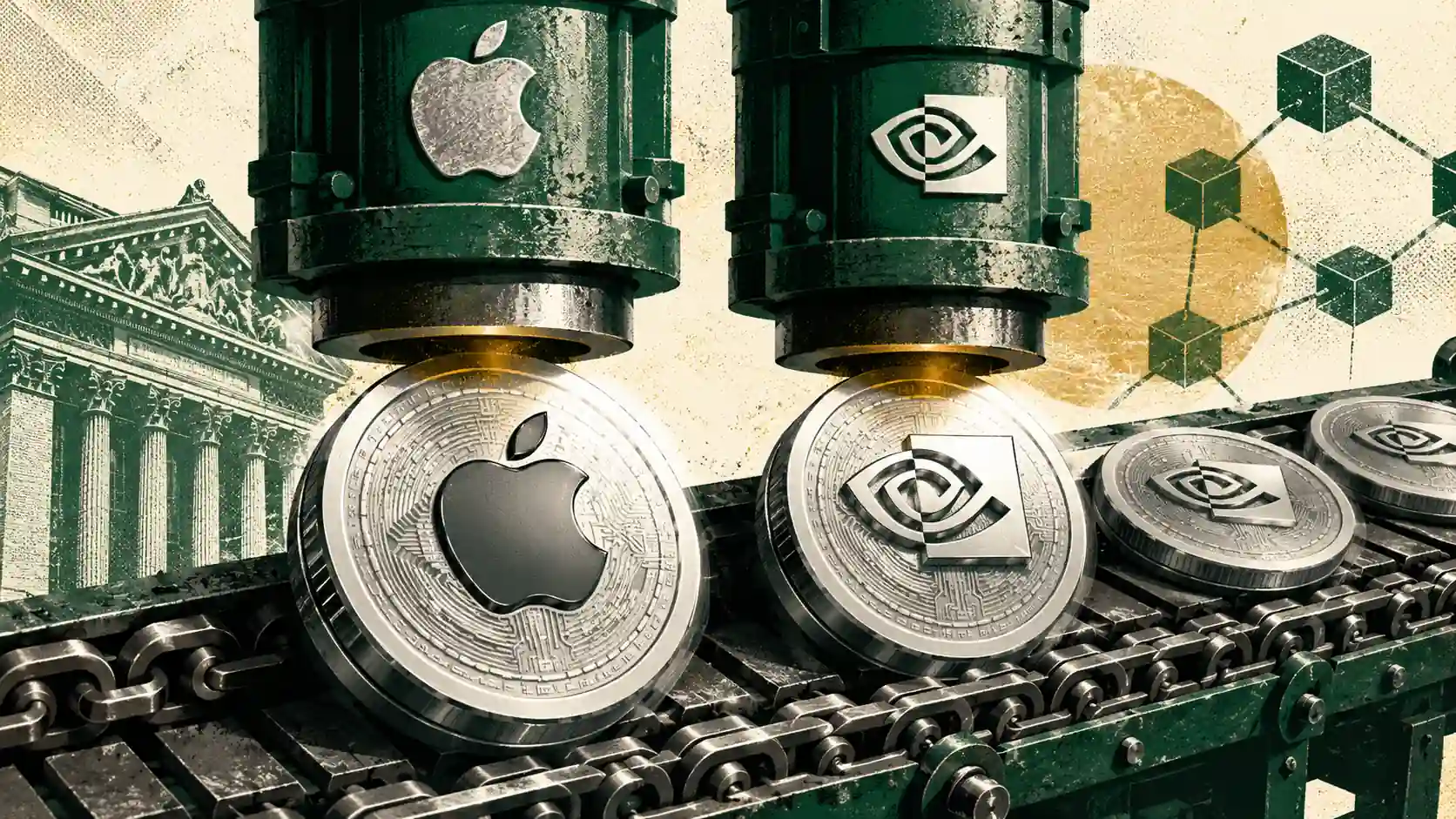


Until now, tokenized stocks meant American stocks. Tesla, Nvidia, Apple on a blockchain, and not much else. That changes today: Payward, Kraken's parent company, is bringing Hong Kong-listed equities on-chain, with British, European and South Korean securities to follow.
The phrase Payward used to announce it is the sharpest summary of the ambition: the largest asset class not yet tokenized is the rest of the world. It's worth unpacking what genuinely changes, and where the promise collides with reality.
What Kraken and GTN Actually Announced
Payward, the company that controls the Kraken exchange and develops the xStocks platform, has formed a partnership with GTN, a Dubai-based fintech connected to more than 90 global markets. GTN will handle execution, custody and registration of the securities sitting behind the tokens, enabling the offering to expand well beyond U.S. borders.
The rollout starts with Hong Kong-listed equities, then moves to UK stocks, other European securities and South Korean shares, each step subject to the necessary regulatory approvals. The partnership also opens the door to asset classes beyond equities, including bonds and ETFs, and to an offering aimed at GTN's institutional clients.
From 60 Tokens to 500+ in One Year
Number of tokenized securities available on the platform. Source: Payward, 2026
Over $35 billion in total volume and nearly 200,000 holders, according to Payward figures.
Why Geography Has Always Been the Real Barrier
The logic behind this move becomes clear when you think about a saver in Brazil, Nigeria or Indonesia who wants to buy a stock listed in Hong Kong. Today that person needs a local broker that covers that market, separate accounts, currency conversion, trading hours and a stack of regulatory hurdles. For most people, practically speaking, that stock simply doesn't exist.
A token replicating the same share, by contrast, buys from an app in seconds with no time-zone constraints. It's the same principle that made U.S. markets accessible to the world, now applied to everywhere else. Tokenization here isn't a buzzword: it's the only infrastructure that makes it economically viable to move tiny fractions of foreign securities across borders.
A Crowded Race, Two Very Different Playbooks
This is not an isolated move, and that's what makes the moment significant. Robinhood has extended its tokenized-stock offering beyond Europe, Coinbase has announced its own equity tokens, the DTCC has started testing infrastructure for tokenized securities, and both Nasdaq and the New York Stock Exchange have launched their own initiatives.
Two competing models are now visible, and the distinction matters more than almost anything else in this space, because it determines what a buyer actually owns.
Two Models Running the Same Race
Two opposing approaches to bringing equities on-chain
- Third-party issuer model: an external entity issues tokens backed one-to-one by custodied shares. Fast to launch, accessible globally.
- Issuer-controlled model: the listed company itself issues the tokenized version, retaining full shareholder rights. Slower to implement, more legally robust.
The next several years will be defined by which of these two models prevails.
That distinction is the one readers should keep front of mind, because it determines what a buyer genuinely owns when they purchase a tokenized share.
The Fine Print: Geography Still Matters
Some honesty is required here, because the marketing slogan is sharper than the reality. These tokens are not registered with any local financial markets regulator, and they're issued by a company incorporated in Jersey. They are not shares. They are instruments that replicate share value, backed by real securities held with a custodian whose assets are structurally separate from the issuer's balance sheet.
There's a telling paradox in the rollout: the product is not available to U.S. residents, nor to residents of the UK, Canada or Australia. In other words, British equities will be tokenized, but British investors won't be able to buy them. Geography becomes irrelevant for market access, but stays decisive for product access. Anyone evaluating these instruments should read carefully about what they're buying, who is issuing it, and what protections exist if something goes wrong, exactly as they would when reading any technical document in crypto.
The Bigger Picture for 2026
Taken together, 2026 is delivering a consistent signal from multiple directions. The core of the U.S. settlement system is testing tokenized securities, a single blockchain now concentrates nearly all tokenized equity volume, and issuers are pushing outside the U.S. perimeter to capture Asian and European markets.
The technology proof-of-concept phase is over. The contest now is about rules: who will have the right to issue the digital version of a share, and what protections will buyers hold. That question is far less exciting than a rising price, but it's the one that decides whether tokenized finance becomes serious infrastructure or a parallel market with fewer guarantees. The primary references remain verifiable on the official xStocks documentation and on data from RWA.xyz.