


Ethereum activated Clear Signing on May 12, 2026, replacing unreadable hexadecimal strings in transaction prompts with plain-language text. Ledger, Trezor, and MetaMask integrated the standard on day one. For the first time, users can genuinely understand what they are authorizing before they sign.
That shift matters more than it might seem. According to Scam Sniffer data, crypto phishing scams targeting digital signatures stole $6.27 million from 4,741 victims in Q1 2026, a 207% increase over Q4 2025. The common thread: users signing transactions they could not read. Clear Signing addresses that directly.
What Changed Before, and What Is Different Now
Key figures
- Crypto scams via digital signature Q1 2026: $6.27 million (source: Scam Sniffer)
- Phishing signature victims Q1 2026: 4,741 users
- Increase vs Q4 2025: +207%
- Wallets already integrated with Clear Signing: Ledger, Trezor, MetaMask
Before Clear Signing, a signature request on a hardware wallet like Ledger displayed a hexadecimal string such as 0x095ea7b3000000.... Virtually no ordinary user can parse that. Phishing operations knew it well: they presented an innocuous-looking transaction in the web interface, knowing the wallet would only show unrecognizable hex, and the user would sign without knowing what was being authorized. Often these were unlimited approvals on malicious contracts, letting attackers drain a wallet at a later moment.
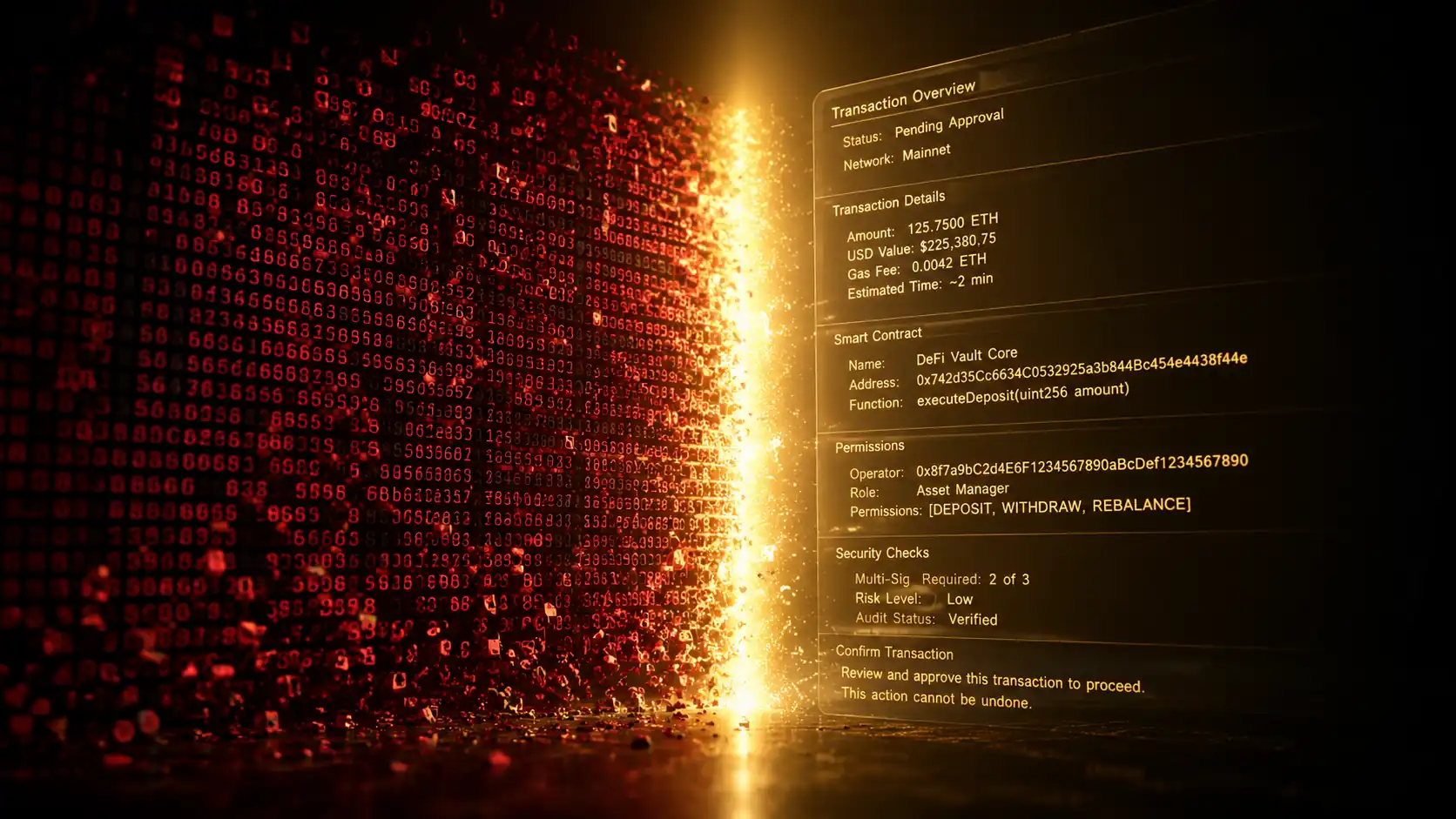
With Clear Signing, the same wallet now displays: “Approve USDC spending: unlimited, to contract 0x1a2b...” with the verified protocol name and the amount in readable form. Anyone tracking crypto wallet security knows this single change meaningfully raises the cost of a blind-approval attack. It does not eliminate the risk: scams adapt. But fooling an attentive user gets harder.
An account linked to the Ethereum Foundation previewed the standard on X: see recent @ethereum posts on Clear Signing.
Ethereal news weekly #24
— Ethereal news (@EtherealnewsHQ) May 22, 2026
🎟 @EFDevcon Devcon 8 early bird tickets
🧑💻 @ApeFramework ApeWorX collective: nonprofit for Python dev tooling
🧪 @ethPandaOps glamsterdam-devnet-4 launchedhttps://t.co/O0HUJ8dGKu
How Crypto Scams Break Down by Attack Vector in 2026
Functionally, distribution of crypto scams by attack vector, Q1 2026 (estimated %)
Source: Scam Sniffer, Chainalysis, SpazioCrypto analysis, May 2026
Distribution of crypto scams by attack vector, Q1 2026 (estimated %)
Source: Scam Sniffer · Chainalysis · SpazioCrypto analysis · May 2026
The chart explains why Clear Signing is the priority response. Blind signing and signature phishing account for roughly 38% of documented scams in Q1 2026, per Scam Sniffer and Chainalysis figures. It is not the most sophisticated attack vector, but it scales efficiently: a single clone site with a malicious contract can hit thousands of users without any of them understanding what they approved. Wallet poisoning (inserting lookalike addresses into transaction history) ranks second.
Does Clear Signing Actually Solve Blind Signing?
Not entirely. Three concrete limitations remain even with Clear Signing active. First: it works only if the dApp being used has correctly implemented the metadata the wallet needs to interpret the transaction in plain language. Less maintained dApps, or those built quickly, may still display incomplete data. Second: it does not protect against advanced social engineering, where the user is convinced they are using a legitimate app even when the wallet displays the transaction correctly. Third: the Ethereum Foundation has published the technical specifications, but adoption across DeFi protocols takes time and code updates.
The core principle for anyone following SpazioCrypto’s wallet security guide stays unchanged: never sign a transaction you don’t understand, regardless of how trustworthy the interface looks. Clear Signing makes it easier to understand what you are signing. It does not replace judgment.


The most discussed case in recent weeks is documented by on-chain investigator ZachXBT: G. Love lost 5.92 BTC (approximately $420,000) on April 11, 2026, after downloading a fake copy of Ledger Live from the Mac App Store. The funds were traced to KuCoin. Clear Signing would not have helped there: the attack vector was the app itself, not an unreadable transaction signature. For hardware wallet users, the rule is unchanged: download software only from the manufacturer’s official website, never from an app store or third-party link.
Ledger suffered two data breaches in 2025 and 2026 (April 2025 and January 2026, the latter via payment processor Global-e), with names and contact details of roughly one million customers exposed. That data fuels personalized phishing campaigns that Clear Signing cannot intercept. If you receive an email with your name, your address, and a message that appears to come from Ledger, your defense is your own skepticism, not your wallet. SpazioCrypto monitors active threat alerts from PeckShield and CertiK for the crypto security sector. Clear Signing is a real improvement, long overdue. The next milestone is standardizing amount-limited approvals, a feature still absent from most DeFi interfaces. Anyone signing an “unlimited approve” in 2026 still does so at their own risk, even with Clear Signing active.