Claudio Cuccovillo wanted to buy a PlayStation with his crypto. It didn’t go smoothly. “The money was mine, but the permission structure said otherwise,” recalls the founder of Genghis, the platform behind the Crypto Livability Index. That personal frustration produced a data point relevant to every European, and to Italy in particular: on the continent, the bottleneck isn’t buying crypto, it’s spending it on real goods and services.
It’s an uncomfortable picture, arriving in a country that has, on paper, done almost everything right.
7th Globally for Infrastructure, 31st for Need
The Crypto Livability Index measures something different from the standard adoption rankings. It doesn’t count buyers; it asks where you can actually live on crypto: receive your salary in crypto, hold it, pay a utility bill with it. The index covers 79 countries across five pillars and 22 sub-indicators, with data updated to December 31, 2025, according to Genghis research.

On this grid Italy ranks seventh in the world for technical capability, the so-called rails: accessible exchanges, functioning on- and off-ramps, a spending pillar that scores the maximum in the dataset. But the index then applies what Genghis calls the need multiplier, which weights technical capacity by how much the population genuinely needs crypto: inflation, unbanked adults, remittances, capital controls, sanctions. That’s where Italy drops to 31st place, falling 24 positions.
The reason is a single number. Italy’s need score is 0.04, per the Crypto Livability Index dataset. Inflation sits at 2.7%, roughly 14% of adults lack a bank account. There are zero capital controls or sanctions. “A stable country ranks lower because crypto there is an option, not a necessity,” Cuccovillo explained in the report. “The infrastructure is excellent, but nobody depends on it to live.” That’s not a flaw in the index. The index is working exactly as designed.
Near-identical technical capacity to Argentina, half the real-world use
Technical capacity (raw score) vs. livability (score x100). Source: Crypto Livability Index, Genghis, dataset CC BY 4.0
“Owning Is Not Living”
To understand the paradox, look at who leads the rankings: Argentina, El Salvador, Ukraine, Nigeria, Turkey, Venezuela. Countries where, as Cuccovillo puts it bluntly in the Genghis report, “the currency or the banks have betrayed people: crypto is the plan A, not an investment.”
Italy is the exact opposite. Here crypto is a choice, not a survival tool. That’s good news for the country’s stability, but it’s also the ceiling on adoption. Owning is not living is the report’s central distinction: you can hold crypto without it changing a single detail of your daily life. Industry estimates suggest roughly one in six Italians holds crypto assets, yet ownership remains largely a wealth-management stance, far removed from day-to-day spending.
The Rails Exist. The Reason to Use Them Doesn’t.
Italy’s infrastructure story is real, not theoretical. The spending pillar in the Genghis dataset scores the maximum. On the ground, the signals are concrete: Rovereto’s Bitcoin Valley, with its merchant network accepting Bitcoin payments, is the most-cited Italian example of grassroots crypto adoption, and the country’s crypto ATM network continues to grow.
The banking system is moving too, and precision matters here because headlines often oversimplify. Intesa Sanpaolo purchased eleven Bitcoin in January 2025 and built a crypto exposure that grew from roughly $96 million at end-2025 to approximately $235 million by March 2026, declared as proprietary trading and channeled largely through ETFs, as SpazioCrypto documented in its coverage of the $235 million Bitcoin, Ethereum and XRP position. UniCredit took a different path: it placed a certificate linked to the iShares Bitcoin Trust for institutional clients and joined the European banking consortium working on a MiCA-compliant euro stablecoin. Neither approach involves holding Bitcoin directly on the balance sheet in the traditional sense, but both signal the same shift: Italian banks are moving from observation to operation.
 Genghis
The picture, then, is of latent capacity waiting for a use case. The contrast with countries at the bottom of the rankings makes this concrete: Cuba and Lebanon have the highest need scores in the entire index, yet they don’t reach the top because broken rails cap their score. “Italy is the inverse,” Cuccovillo notes in the report. “Cuba needs years of infrastructure work. Italy just needs one daily use case that makes crypto more convenient than the alternative.”
The Tax Hike Targets Exactly the Weak Point
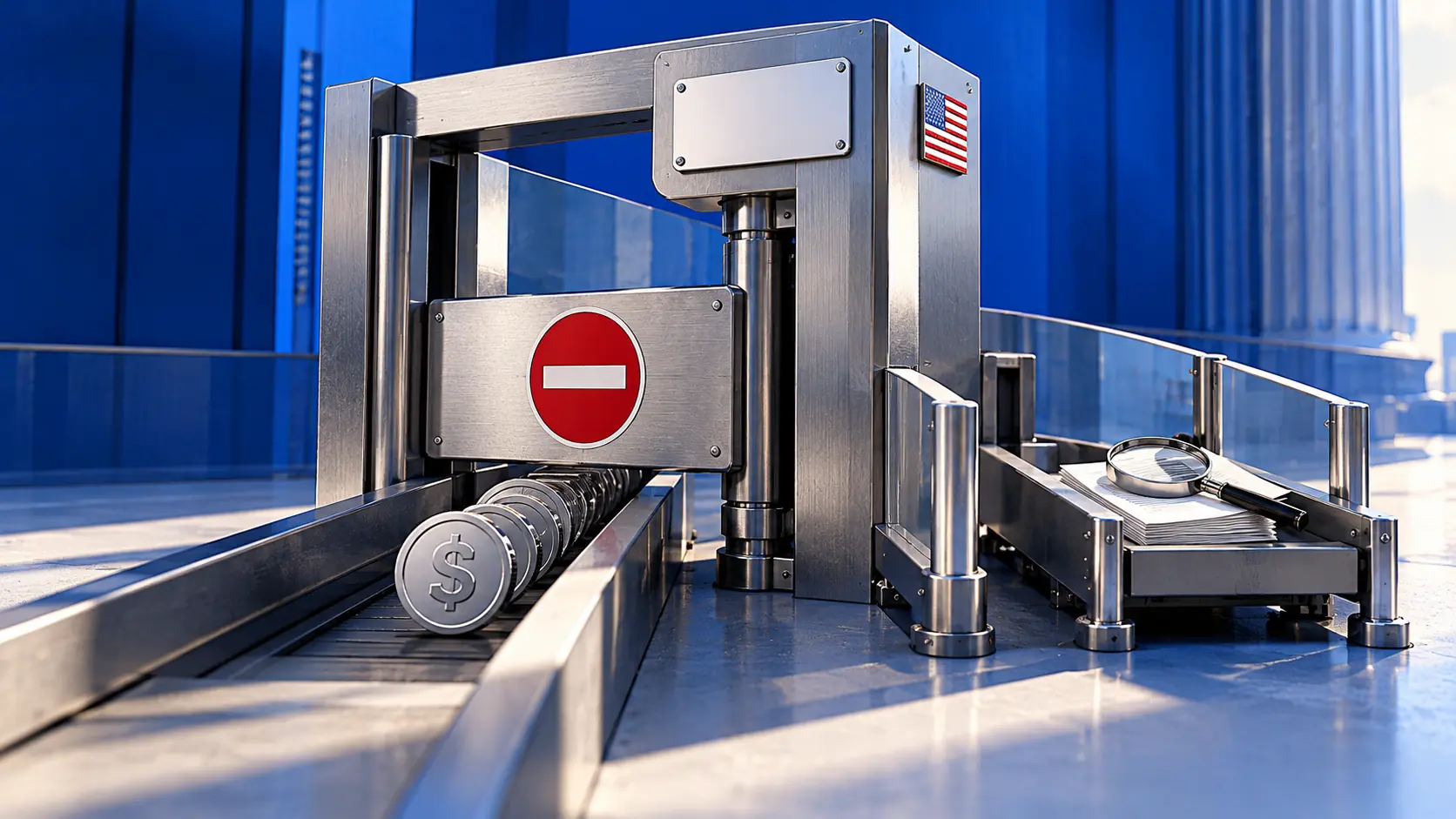
This is where Italy’s story gets sharper. From January 1, 2026, the capital gains tax on crypto assets rose from 26% to 33%, with the elimination of the 2,000-euro tax-free threshold and a single carve-out at the lower 26% rate for MiCAR-compliant euro-denominated EMTs. SpazioCrypto covered the mechanics in depth in its analysis of the Italian fiscal paradox. The key point here is precise: Italy is raising the levy on exactly the variable that is already structurally compressed.
The change doesn’t touch the infrastructure, which is excellent. It squeezes the one lever that was already weak: everyday demand. The risk is that a measure designed to raise revenue ends up further suppressing current use, pushing crypto further into the role of a declarable asset and further away from a spendable instrument. One direction gets rewarded: regulated, euro-denominated tools.
What Would Actually Move the Needle
Asked how you unlock a market like this, Cuccovillo points to three concrete things, as set out in the Genghis report. First: daily spending occasions, because right now “spendability stops at the wall of utility bills: you can buy the gadget, you can’t pay the electricity.” Second: retail products built by the banks that already hold Bitcoin on their balance sheets, so that banking rails and crypto rails converge rather than run in parallel. Third: the segments where regulation already rewards current use, such as euro EMTs, which shift crypto “from a declarable asset to a payment instrument.”
There’s a single thread running through all three. “The infrastructure is there,” Cuccovillo told the Genghis report team. “What’s missing is the reason to use it every day.”
Italy, at the end of it all, has built a seven-lane highway. The road isn’t the problem. Almost nobody has somewhere to go yet, and now there’s a toll. This is one of the perspectives SpazioCrypto will bring to the Sicily Crypto Summit, where the role of Southern Europe and EU regulation will be at the center of debate.
Data sourced from the Crypto Livability Index by Genghis, open dataset under CC BY 4.0 license. Full source and dataset: genghis.pro/crypto-livability-index