
Initial launch reaches two million customers
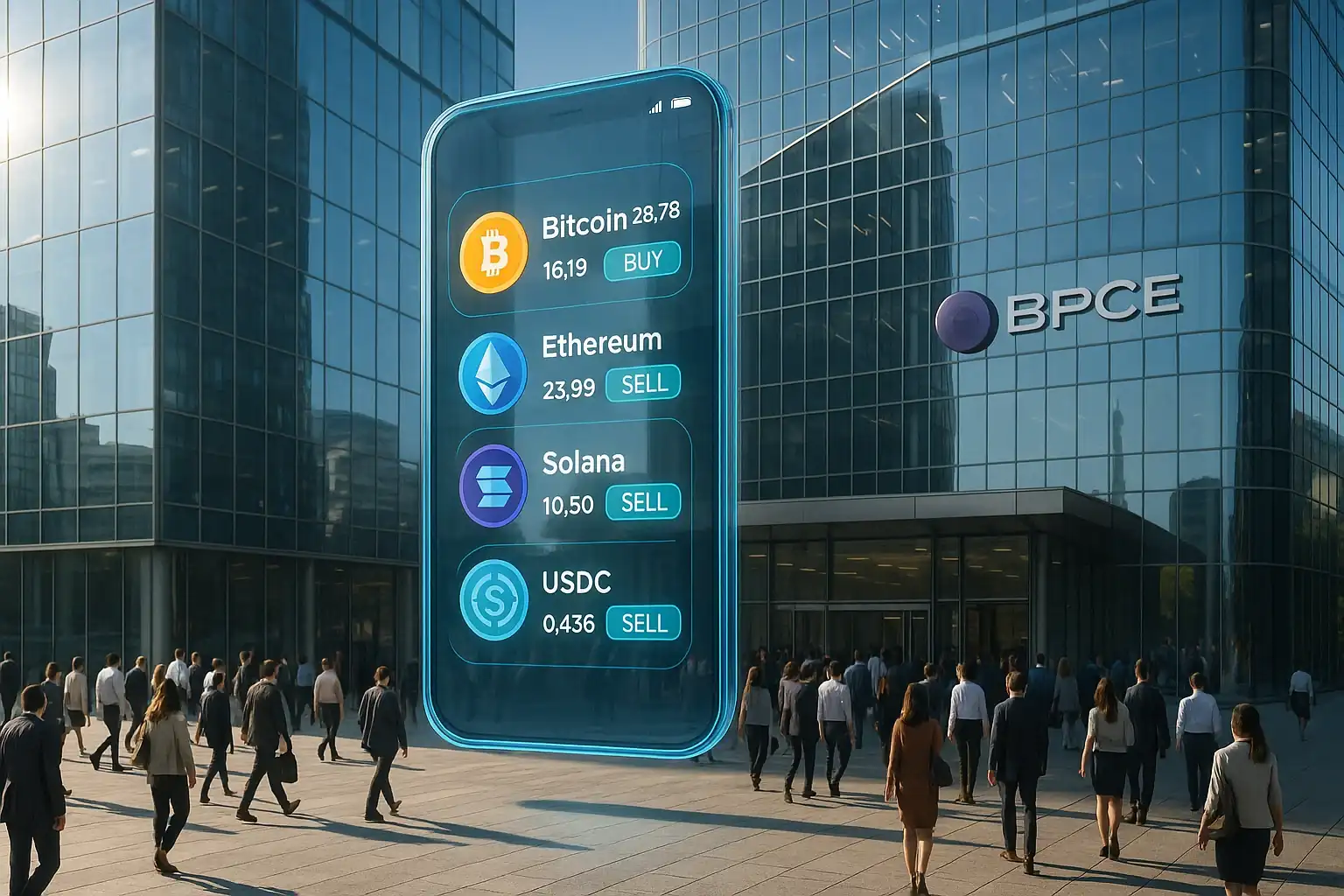
The French banking sector is entering a new phase. BPCE, one of the country's largest financial groups, has begun allowing retail customers to buy and sell cryptocurrencies directly from its banking apps.
The service supports Bitcoin, Ether, Solana and the USDC stablecoin, marking one of the most significant steps by a traditional European bank in the digital asset sector.
The launch is limited to four regional networks, including Banque Populaire Île-de-France and Caisse d'Épargne Provence-Alpes-Côte d'Azur. Together, they represent some two million customers who can now open a dedicated digital asset account and trade directly from the app.
🔴 EXCLUSIVE @@TheBigWhale_: BPCE now lets customers buy crypto assets.
- Raphaël Bloch 🐳 (@Raph_Bloch) December 6, 2025
Starting this Monday, the French bank's customers will be able to purchase BTC, ETH, SOL, and USDC: https://t.co/J2C4UnWi68@GroupeBPCE, one of Europe's leading banks, is rolling out this service in a first... pic.twitter.com/3olRgVoot4
Each digital asset account carries a monthly fee of €2.99, and each transaction carries a 1.5 per cent commission with a minimum of €1. The service is operated by Hexarq, BPCE's crypto subsidiary, which handles accounts, custody and infrastructure.
BPCE plans to expand the service across its network by 2026, but only after monitoring demand, user experience and regulatory developments. The phased approach allows the group to grow cautiously by collecting real-time data on adoption.
Banks take action as fintech competition increases
The decision reflects the pressure from fintech platforms that have already captured millions of cryptocurrency-curious users across Europe. Apps such as Revolut, Deblock, Trade Republic and Bitstack now offer easy access to digital assets, often becoming the first point of entry for younger investors.
European banks have started to react. BBVA allows customers in Spain to buy and hold Bitcoin and Ether via its app. Santander's Openbank added Bitcoin, Ether, Litecoin, Polygon and Cardano, combining trading and integrated custody.
For BPCE, ignoring cryptocurrencies was no longer an option. The group wants to offer familiar interfaces and regulated access so that customers are not pushed to external platforms.
Cryptos become a loyalty tool in retail banking
Executives see digital assets as a way to strengthen the relationship with everyday customers. Rather than losing engagement to third-party apps, BPCE aims to keep customers within its ecosystem by offering banking and crypto services in a single mobile app.
The strategy supports a broader trend: regulated banks offer direct access, rather than directing users to exchanges with less familiar security, onboarding and compliance requirements. As regulations evolve across Europe, banks expect that more and more users will prefer to trade cryptocurrencies through trusted financial institutions.
If adoption continues, the BPCE rollout could mark a turning point. A limited group of regional banks experimenting with cryptocurrency trading could soon become a national service and a role model to show how major European banks will adapt to the next phase of digital finance.