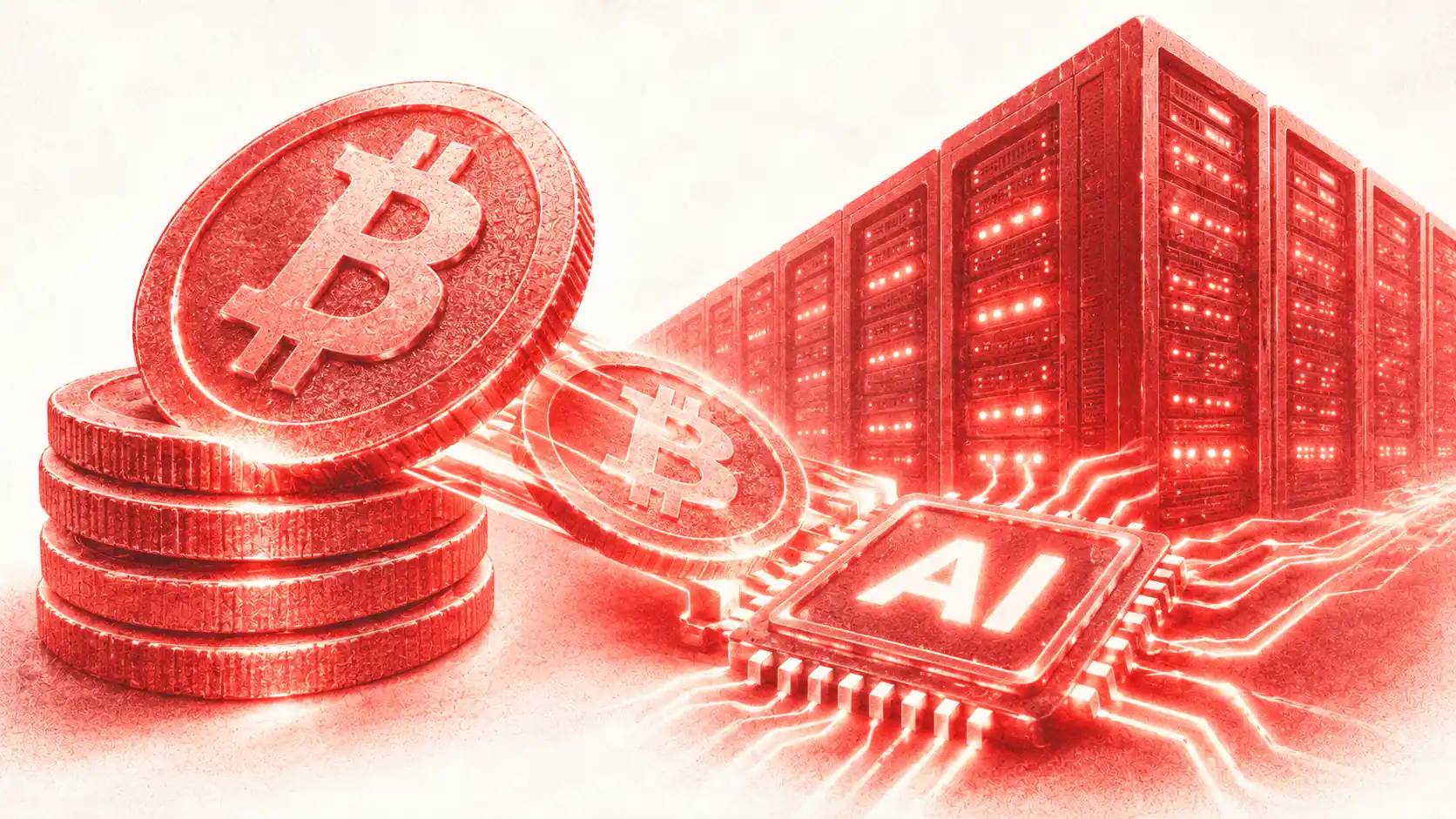
Bitcoin miners are selling their Bitcoin. To buy graphics cards.
It sounds like a paradox, and in some ways it is. The companies that built everything on mining Bitcoin are stepping back from that business, redirecting capacity and capital toward AI data centers. In March 2026, Core Scientific sold $175 million worth of Bitcoin, nearly 2,000 coins, according to SEC filings, to fund precisely this shift. This is not an isolated move. It is the defining industrial story of 2026, and it has already moved past the announcement phase into execution.
AI share of revenue for former miners (estimates, end of 2026)
Share of HPC and AI revenue. Source: Visible Alpha, S&P Global, 2026
No Longer Miners: They Are AI Landlords
The chart tells the story plainly. According to estimates from Visible Alpha and S&P Global, IREN, Core Scientific, and TeraWulf are each on track to derive around 70% of their revenue from AI by the end of 2026, up from near zero in 2024. These are no longer mining companies that occasionally lease out a few servers. They have become, in practice, AI hosting businesses. The reason is straightforward: they already own exactly what AI infrastructure demands, namely large-scale power capacity, pre-wired warehouse facilities, and direct grid connections.
The contracts confirm the scale of this shift. IREN signed a $9.7 billion hosting agreement with Microsoft. Cipher locked in a $5.5 billion deal with AWS. Hut 8 secured a $7 billion contract linked to Anthropic and Fluidstack. Core Scientific was acquired outright by CoreWeave for $9 billion in stock. The same energy infrastructure built to secure a decentralized network now powers the most centralized AI computing facilities on the planet.

What Bitcoin Leaves Behind
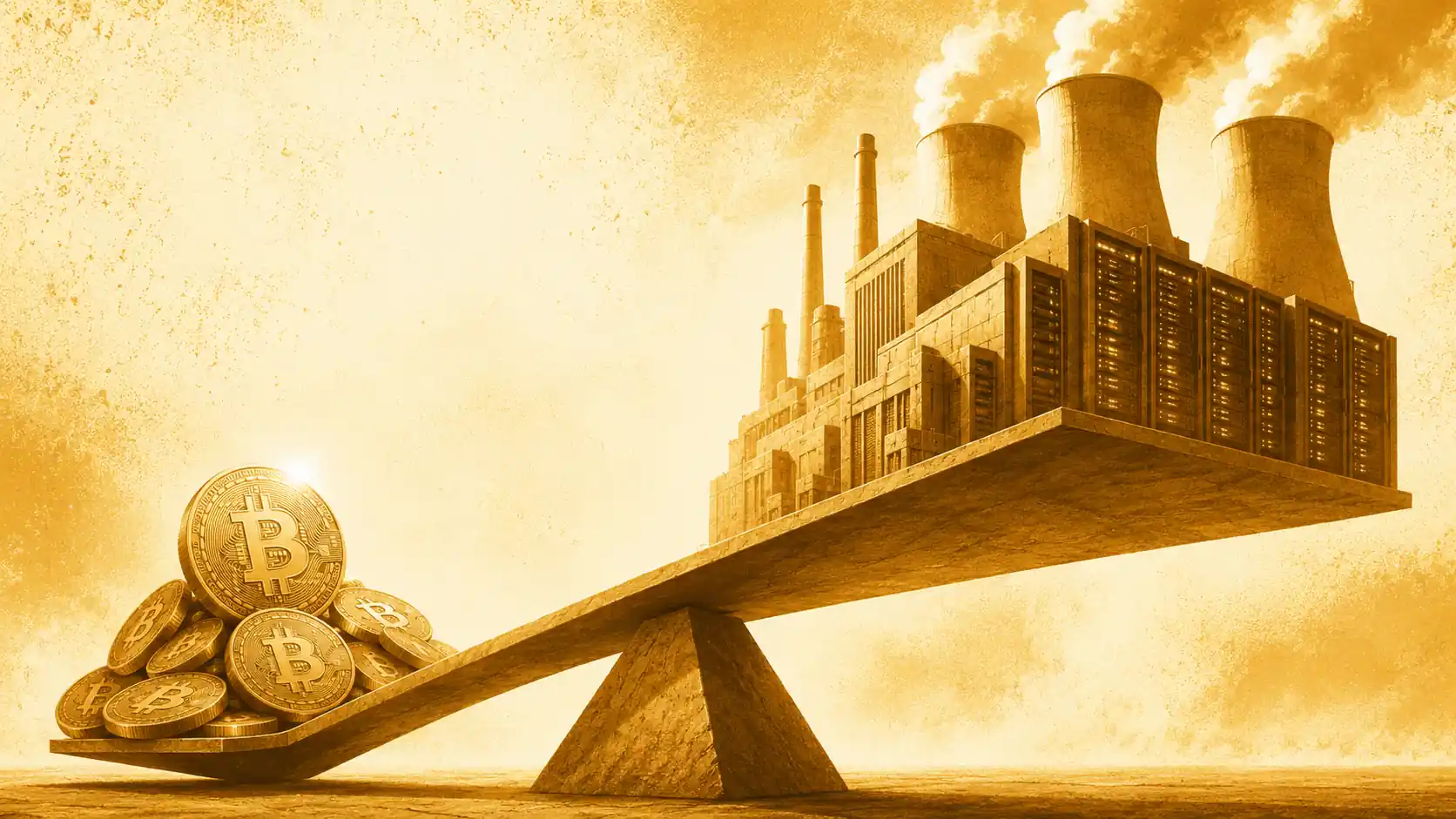
Functionally, this migration has a direct effect on the Bitcoin network itself. In Q1 2026, the network hashrate fell for the first time in six years. The industrial base that underpinned Bitcoin mining is moving elsewhere. That is not a crisis, but it is a signal worth reading carefully: the companies that extracted Bitcoin are discovering that their most valuable asset was never the coin they mined. It was the megawatt they controlled.
The Risks the Hype Conceals
A story this clean rarely is. First risk: all these companies are pivoting simultaneously, and a synchronized rush can oversaturate the AI hosting market precisely as they arrive in force.
Second: converting a mining site costs far more than filling it with ASICs. Retrofitting runs up to $10 million per megawatt, according to industry cost estimates, and that capital comes from debt and convertible bonds, meaning leverage and dilution for existing shareholders.
Third: unlike Bitcoin mining, which operators can throttle during grid stress events, AI workloads run continuously without interruption. That creates friction with energy regulators across the U.S. and Europe. Fourth: their financial fate is now tied to Microsoft, Amazon, and Anthropic, not to Bitcoin's price. The pivot is real, but it is being valued as if nothing can go wrong.
There is a deeper irony here that is hard to ignore. An industry born to secure a decentralized currency is now becoming the landlord of the most centralized AI computing infrastructure in existence. These companies have bet that the future lies not in the asset they mine, but in the energy they control.
If AI demand holds, they will have won decisively. If this turns out to be a bubble, they will have sold their Bitcoin to fill warehouses with idle servers. Either way, the bet is already placed. Industry estimates come from S&P Global, and individual company financials are available in documents filed with the SEC. This story connects closely to the broader discussion on AI agents and stablecoins. Coverage continues in the mining and Bitcoin sections.