

On June 15, 2026, Nvidia raised $25 billion in the bond market, the largest debt issuance by a chipmaker this year, attracting orders of $85 billion according to Bloomberg. The funds are earmarked for artificial intelligence infrastructure and debt refinancing. The ripple effect, though, reaches well beyond the hyperscaler data centers. It is reshaping an entire industry: Bitcoin mining.
The AI Debt Wave Reshaping Capital Markets
Nvidia's deal spans seven tranches, from two to thirty years, with the longest bonds maturing in 2056 paying roughly 0.9 percentage points above comparable U.S. Treasuries. This is not a one-off. Alphabet issued $20 billion in February 2026, Amazon $37 billion, and both Meta and Oracle $25 billion each, per Bloomberg data. Capital markets are funding the compute race on credit. The scale of capital Nvidia is deploying into AI has become a defining feature of this cycle.
Bitcoin Miners Are Changing Their Business
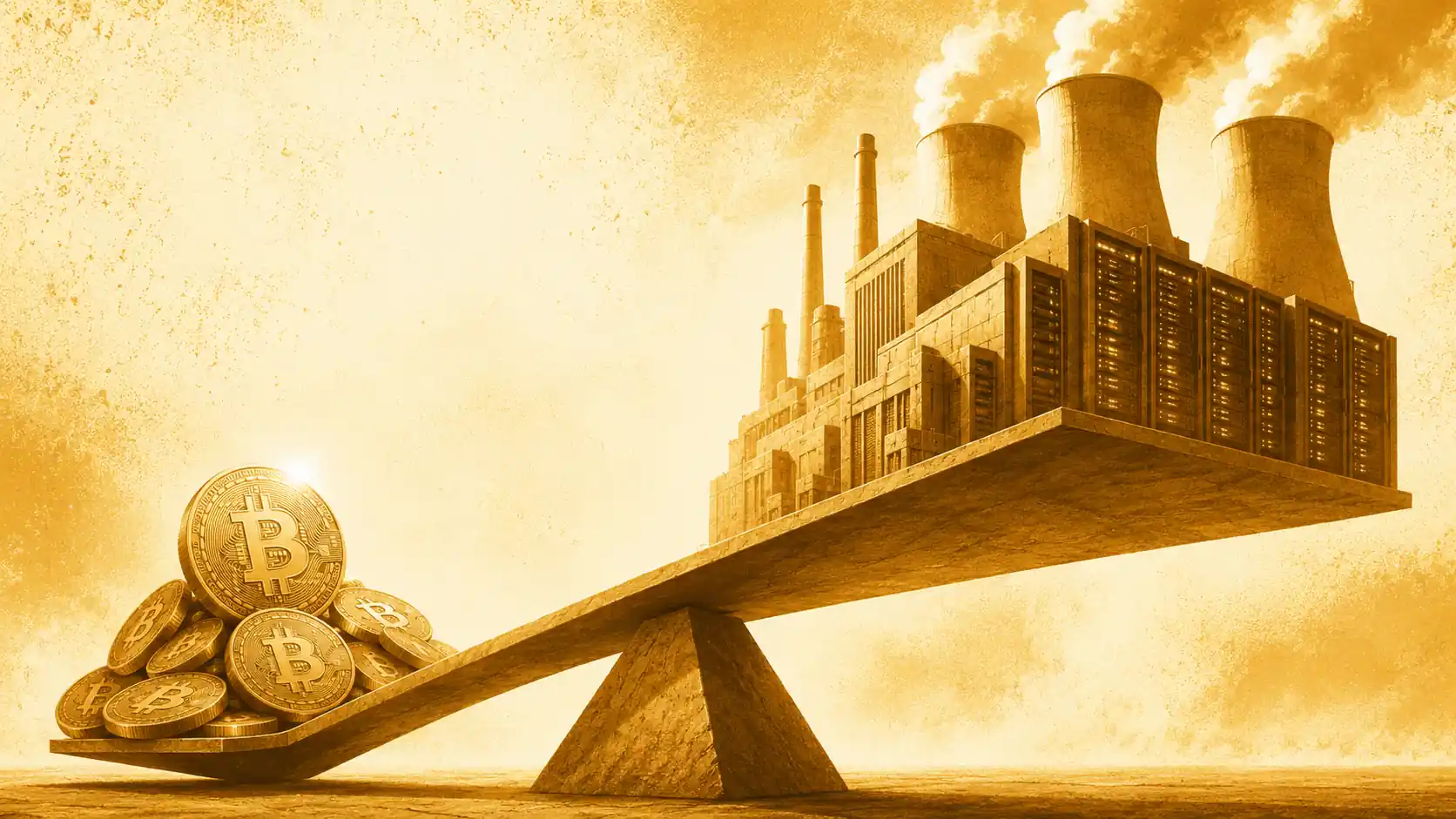
Functionally, public Bitcoin miners have announced over $70 billion in contracts for AI and high-performance computing, according to industry estimates from Bernstein and crypto.news. By end-2026, up to 70% of their revenues could come from AI workloads, compared with roughly 30% today. The deals are significant: Hut 8 signed a $7 billion contract with Fluidstack for a 245-megawatt data center, while IREN secured a $9.7 billion agreement with Microsoft for 76,000 GPUs and holds zero Bitcoin on its balance sheet. The conversion of miners into data center operators is no longer speculative. Hosting AI compute can yield up to three times more revenue per megawatt than pure mining.
A Nevada data center project tied to Nvidia has raised $4.59 billion from a junk-bond sale, adding to a wave of deals to fund artificial intelligence infrastructure https://t.co/fsFpm1U1Jn
— Bloomberg (@business) April 28, 2026
Why This Is Happening: Post-Halving Economics
The arithmetic is clear. The April 2024 Bitcoin halving cut the block reward from 6.25 to 3.125 BTC, halving guaranteed revenue per unit of compute. According to CryptoQuant data, hashprice collapsed to around $29 per petahash per day, and gross margins on pure mining fell from roughly 90% in 2021 to about 60%. AI cloud services, by comparison, operate on margins near 85%. Miners sold over 15,000 BTC between October 2024 and March 2025 to stay solvent as network difficulty dropped 10%. The energy arms race did the rest.
Projected revenue mix for public miners (end-2026 estimate)
Source: industry estimates (Bernstein, crypto.news), 2026
- AI and high-performance computing: 70%
- Traditional Bitcoin mining: 30%
What Actually Changes for Investors
The line between Bitcoin miner and AI infrastructure provider is fading fast. The real asset is no longer the mining rig: it is grid-connected power capacity and permitted sites, precisely what the AI industry lacks, as we explored in our analysis of the AI energy bottleneck. There is a risk on the other side: operators who tie themselves to a handful of hyperscaler contracts become vulnerable if the AI investment cycle turns.


While Bitcoin dropped 17% in early 2026, a basket of publicly listed mining stocks gained over 50% across the same period, per CoinGecko data, a clear signal that the market is already pricing in the sector's new identity. Nvidia's bond prospectus is available on SEC EDGAR, and the company's forward plans are outlined on the Nvidia investor relations page.