

Imagine a future where not just people own and spend money, but robots and artificial intelligence programs do too. A world where a machine, to carry out its work, can autonomously pay another machine for a service, using its own digital wallet. This isn't science fiction. It's the vision that Paolo Ardoino, CEO of Tether, the company behind the world's largest stablecoin, laid out in a recent interview. And, surprisingly, it has an Italian heart.
Tether is best known for USDT, the dollar-pegged digital currency used by millions to trade crypto and transfer value. But Ardoino now envisions a far larger role for the technology: turning USDT into the currency of what he calls the “machine economy.” Here's what that means, and why an Italian startup sits at the center of this ambition.
The Vision: Programmable Money for Machines
The core idea deserves careful unpacking. Today, stablecoins like USDT serve human users: we buy, sell, save, and send payments. Ardoino's vision is that in a future populated by increasingly autonomous robots and AI agents, these “entities” will also need to participate in the economy, holding and spending money on their own terms.
A factory robot, for example, might need to pay for the energy it consumes, the data it processes, or a service provided by another automated system. In that scenario, a programmable digital currency like USDT would be the ideal tool for these machine-to-machine payments: fast, automatable. Requiring no traditional bank at every step. USDT would become not just a human currency, but the payment infrastructure for an economy where machines are full economic actors. It's a long-term bet, but it signals clearly where Tether thinks the world is heading.

The Italian Connection: Generative Bionics
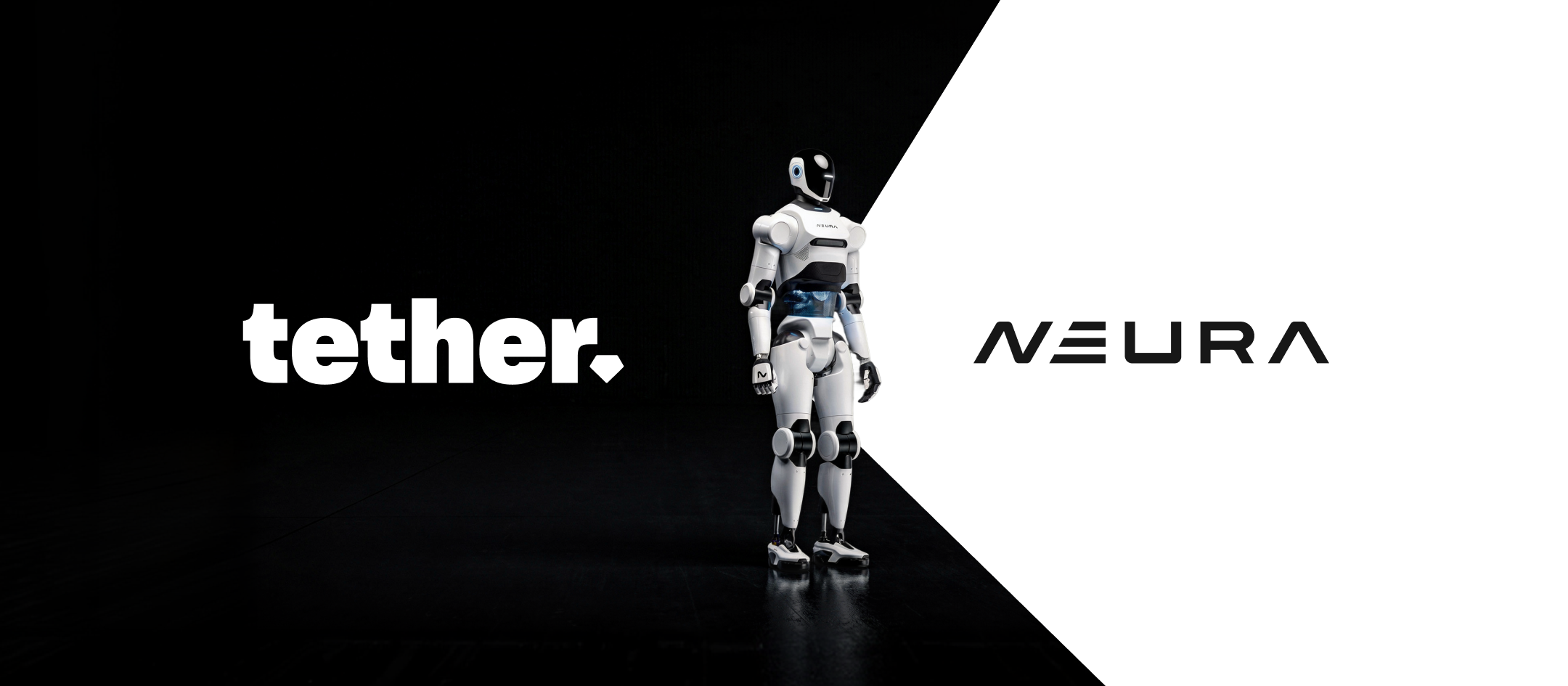
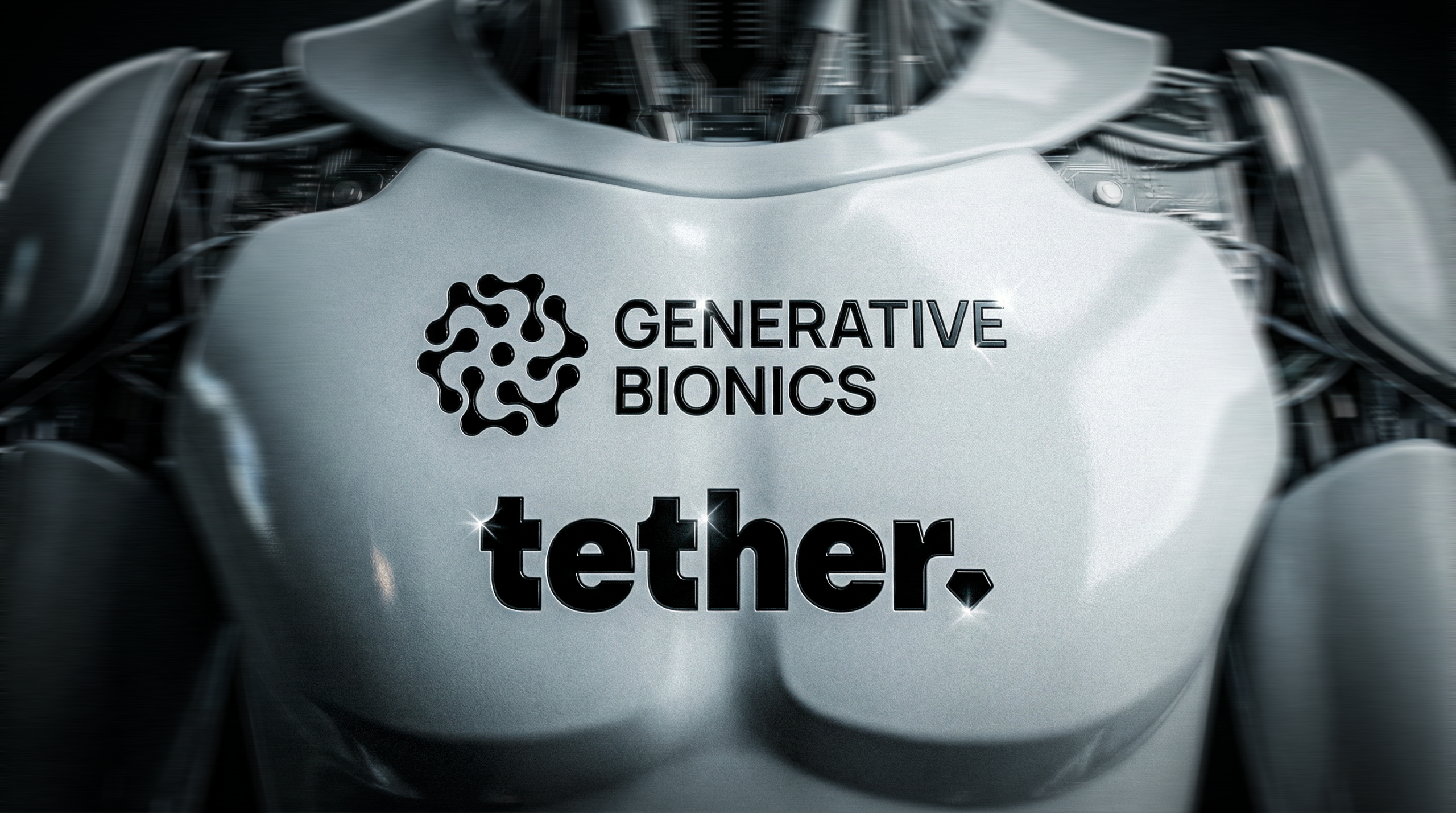
Here's where the story becomes concrete rather than theoretical. To build this future, Tether invested in a promising Italian startup called Generative Bionics, a spin-off of the Istituto Italiano di Tecnologia (IIT), one of Italy's most advanced research centers. According to Tether's press release from December 8, 2025, the investment was part of a 70-million-euro funding round led by Cassa Depositi e Prestiti's artificial intelligence fund, with participation from AMD's investment arm and Eni's venture unit.
Generative Bionics builds humanoid robots, human-shaped machines designed for industrial tasks spanning manufacturing, logistics, and healthcare. Born from researchers who spent twenty years building more than sixty prototypes, the company has already translated its designs into a functioning robot and is targeting deployment in real operational environments, with a public debut planned at a major technology trade show. The fact that Tether's own founders are Italian makes the link even more meaningful, turning a global technological bet into a showcase for Italian scientific excellence. This isn't isolated: much like the growth of tokenized finance in Italy, a recurring thread connects public and private capital around innovation.
Tether and the “Machine Economy”
Strategy at a glance. Source: Tether, Milano Finanza, 2026
- The vision: USDT not just for people, but as currency for robots and autonomous AI agents.
- The Italian angle: Tether's investment in Generative Bionics, the largest spin-off in IIT history.
- The strategy: not a one-off bet, but part of Tether's broader push into robotics and physical AI.
A Broader Strategy, and Some Hard Questions
The Italian investment, significant as it is, is one piece of a much larger and more ambitious picture. Earlier in 2026, Tether led a round of over one billion dollars into a German robotics startup, joined by Nvidia and Amazon. The direction is deliberate: deploy the enormous profits generated by USDT to become a genuine player in artificial intelligence and real-world robotics, reducing reliance on the established Big Tech giants.

Some realism is warranted alongside the excitement. Tether's aggressive diversification into sectors far from its core business arrives at a moment when questions about USDT reserve transparency haven't fully gone away: a major ratings agency recently flagged caution on that front. Pouring billions into robots and AI is a compelling vision, but for a company whose primary job is to guarantee the stability of a currency used by millions of people worldwide, the solidity and transparency of that currency remain what markets will scrutinize most closely. The futuristic vision and present-day financial soundness will need to advance together.
The Bigger Picture: Machines as Economic Actors
Step back from the individual deals and Tether's vision offers a genuinely striking window onto a possible evolution of the global economy. The idea that machines could become autonomous economic actors, with their own wallets and their own payments, was until recently pure speculation. The fact that one of the wealthiest companies in crypto is now betting billions on it transforms the concept into a concrete wager on convergence: cryptocurrencies, artificial intelligence, and robotics folding into a single, integrated system.
Two takeaways stand out for international observers. First, the crypto industry is far broader than price speculation: the underlying technologies are reaching for applications that could reshape entire sectors, from manufacturing to supply chains. Second, and worth noting for a European audience, Italy's robotics research base has placed the country at the center of one of the most forward-looking technological bets of the decade. Whether Tether's machine economy arrives on schedule or not, the fact that part of it is being built in Italy is the detail that makes this story genuinely interesting. To understand the role stablecoins play in all of this, our guide on what stablecoins are is a good starting point.