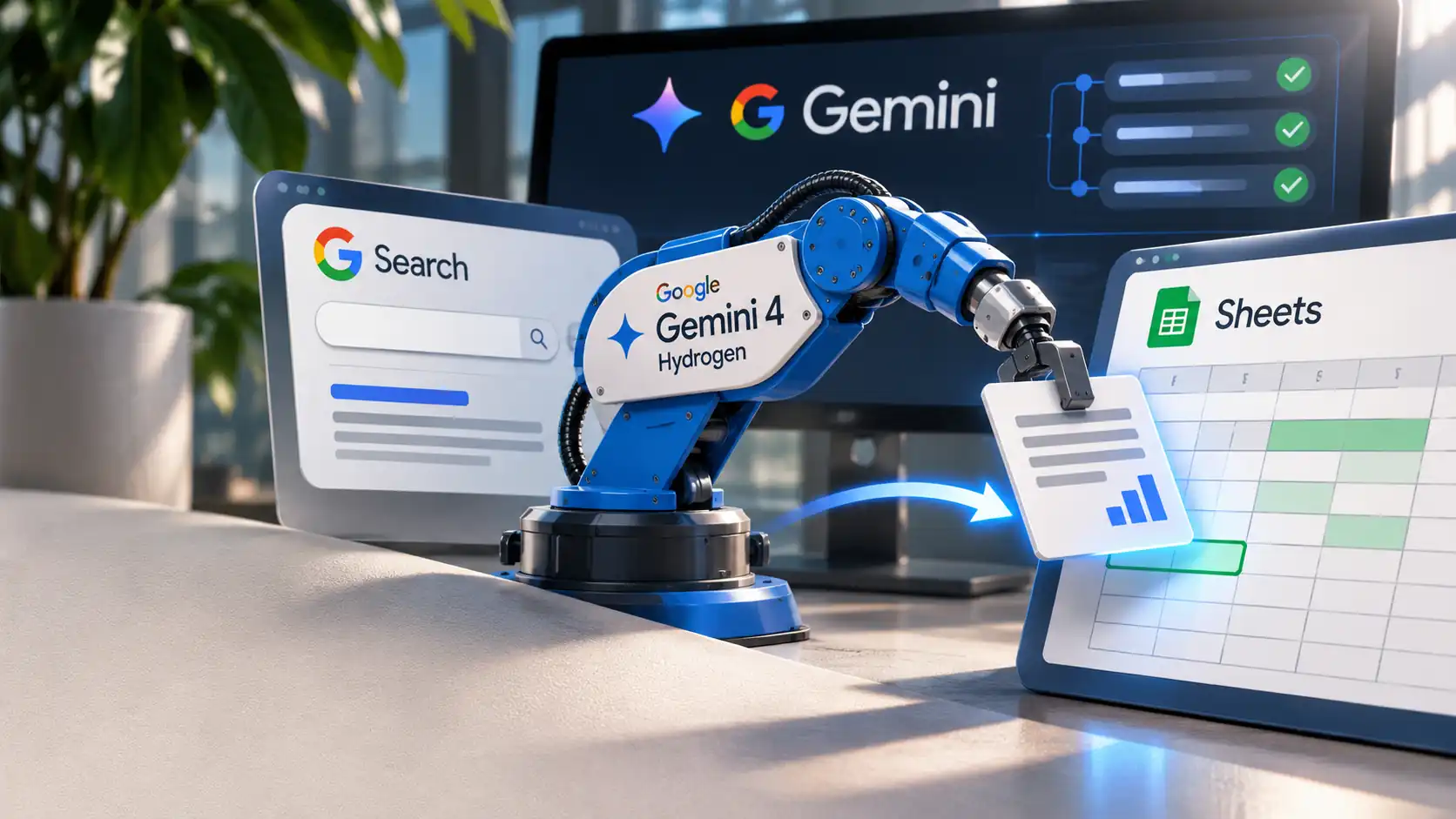


World Labs has opened Atlas to the public, its model for generating and reconstructing three-dimensional environments. Two new apps, Viewfinder and Chisel, together with tools for converting Gaussian splats into meshes and a set of developer APIs, are designed to bring AI-generated scenes into cinema, VFX, and 3D production workflows. How well the resulting geometry holds up in real pipelines, and how much manual cleanup it demands, remains to be seen.
We're opening up access to Atlas to everyone today.
— World Labs (@theworldlabs) November 12, 2026
We've built apps and API endpoints to help you use Atlas any way you can imagine: bring your ideas for building a 3D world and come away with keyframes, video clips, or 3D Gaussian splats. pic.twitter.com/Y9vhcrwbWu
World Labs first introduced Atlas in September 2026. On November 12, the company announced public access via web applications and API endpoints: starting from a single photograph or a user-defined scene, Atlas can generate new camera angles, video clips, and 3D representations. The stated goal is to connect environment generation to downstream work on cameras, lighting, and geometry.
From a Single Image to New Camera Angles
Viewfinder reconstructs a scene from photographs or AI-generated images. Users can explore different viewpoints, define camera paths, and then export stills, video, or Gaussian splats.
Reconstruction can start from a single image, but that does not mean every part of the resulting environment corresponds to a real, documented location. World Labs explains that where some zones are not visible in the input images, Atlas can fill them in by inference. Providing multiple photographs of the same scene gives the model more context and reduces how much it needs to invent plausible but undocumented geometry.

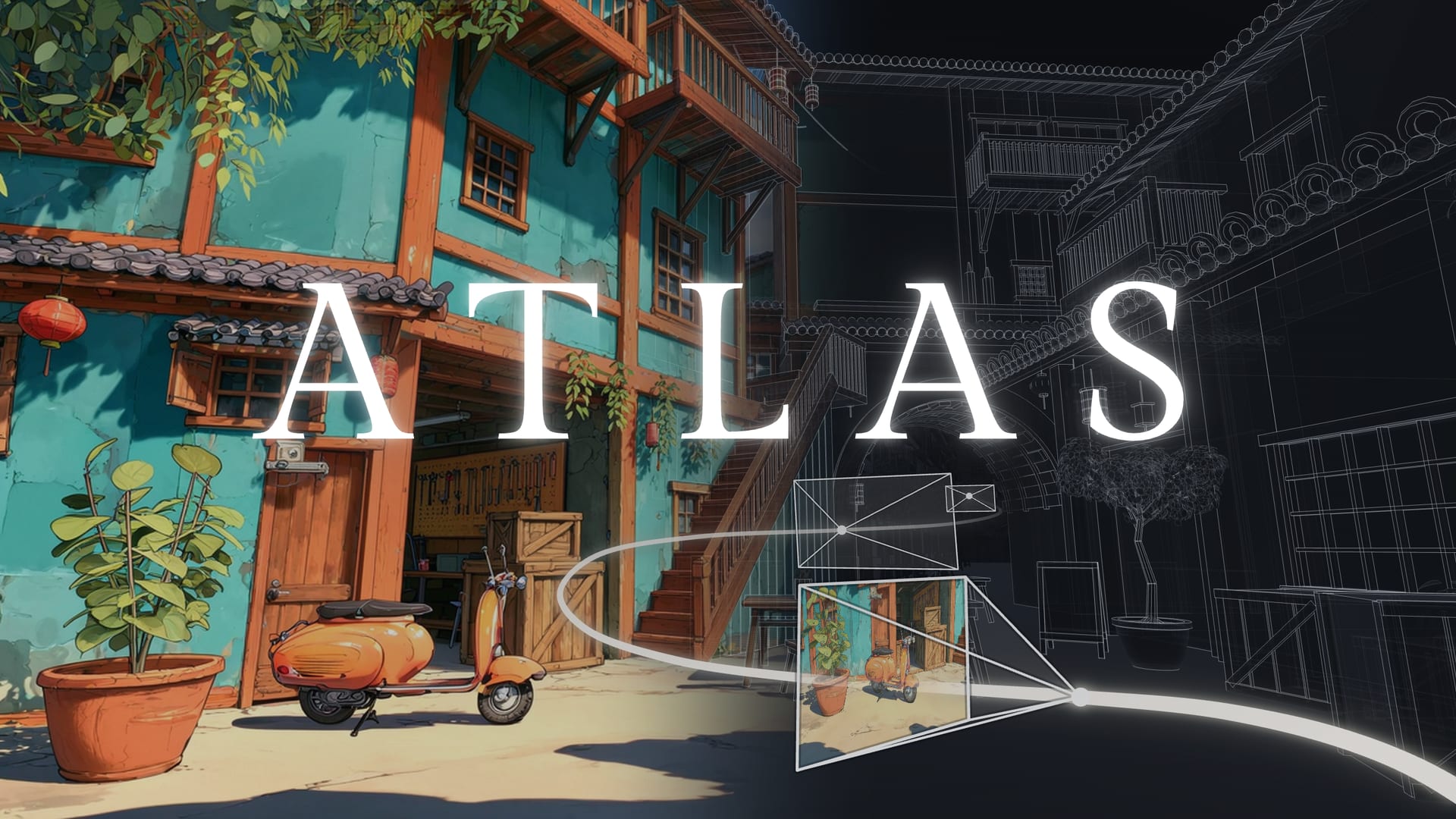
That distinction matters in practice. Creating an explorable scene for a visual narrative is a very different task from faithfully reconstructing a real physical space. For the latter, the number and coverage of input images still count significantly.
Chisel, Splats to Mesh, and Relight
Chisel lets users structure a scene through grayboxing: define volumes and element placement, then refine them while monitoring different camera angles. It's a more directed approach than generating from a single photo, giving artists earlier control over spatial layout.
The other announced tools round out the pipeline. Splats to Mesh converts Gaussian splats into meshes usable in games and interactive environments. Relight allows users to modify the scene's lighting after generation. World Labs has also announced API integrations to bring Atlas capabilities into existing tools, including Blender.
The mesh conversion step is arguably the most consequential. A mesh can be imported into 3D software and game engines for further work in a way that a Gaussian splat cannot. What the company hasn't provided are independent assessments of topology quality, geometric detail, or the time required to clean up assets before they're production-ready.
A Creative Pipeline Worth Testing
Atlas's core promise is connecting steps that professionals typically handle with separate, specialized tools: starting from images or a graybox, building an explorable space, defining camera movement, generating video or splats, and converting those into exportable geometry.
World Labs cites cinema and VFX, architecture and design, and robotics simulation as target applications, as stated in the company's November 12 announcement on X. These are use cases declared by the company, not independent certifications that Atlas is already production-ready for every workflow or that it replaces existing specialist tools.
The practical value of Atlas will ultimately depend on how continuous the loop between generation and editing actually is. A convincing scene rendered as video serves creators well. A controllable, Blender-importable mesh can enter a broader production process. The decisive test is how much human intervention the output requires before it can be reused, and that answer will only come from people who push it inside a real pipeline.