

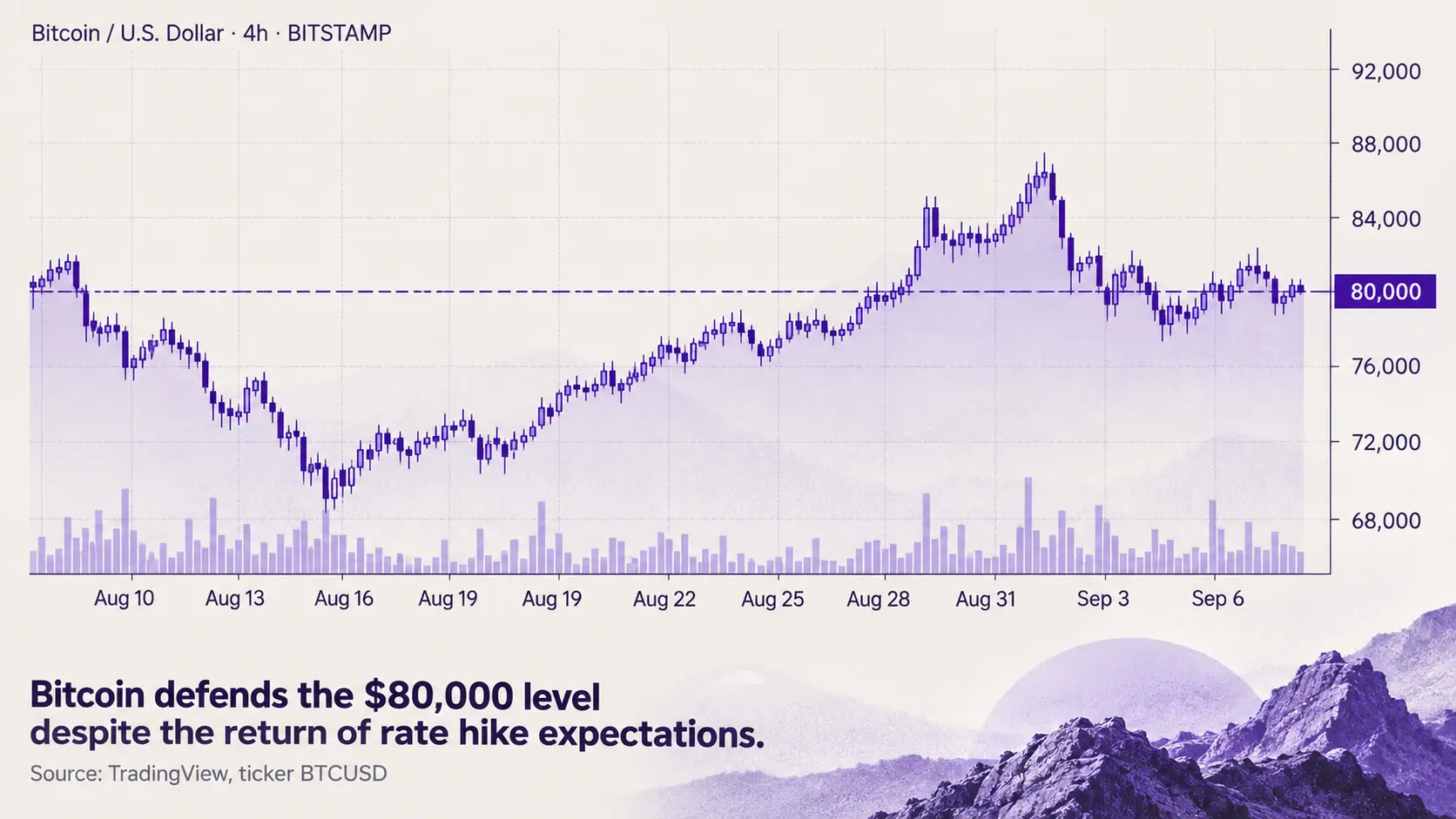
Bitcoin is showing real resilience at a moment when the macroeconomic backdrop, on paper, should be working against it. Bitcoin and Fed rate expectations are back in sharp focus, with the cryptocurrency holding the psychologically significant $80,000 level even as markets reprice the odds of tighter monetary policy from both the Federal Reserve and the European Central Bank. This is a genuine stress test, and the result matters more than the price itself.
The real story here isn't the number. It's what holding that number, under these conditions, tells us about the structural demand underneath Bitcoin's recent recovery.
Rate Fear Returns to the Market
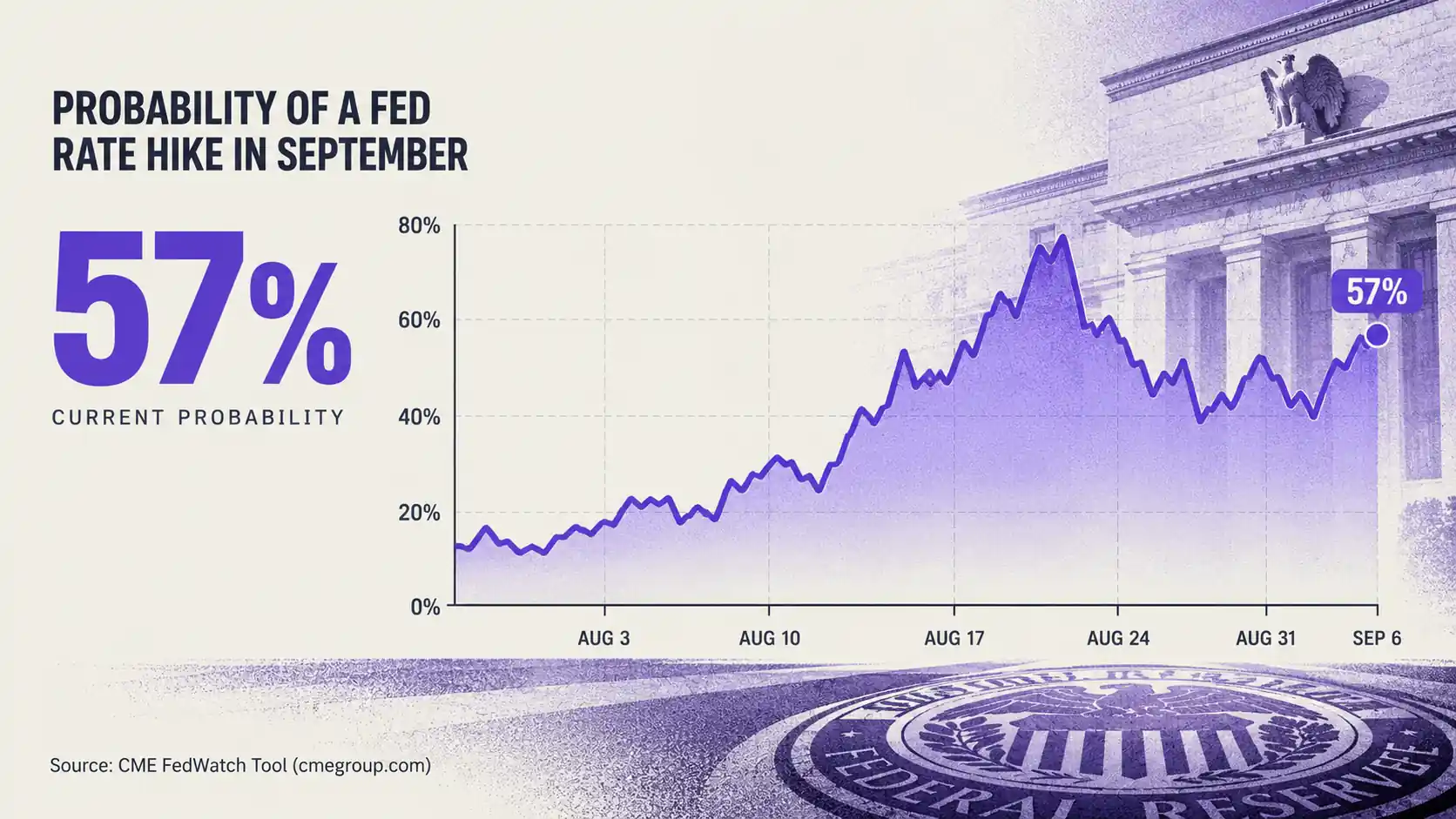
The picture shifted sharply in recent weeks. A stronger-than-expected U.S. jobs report forced markets to revise their Federal Reserve outlook upward: fed funds futures now assign roughly 57% probability to a rate hike at the September FOMC meeting, according to CME FedWatch data. That scenario looked remote just a month ago. It's worth stressing how unstable that figure has been. The probability has swung dramatically over the past two weeks, driven by incoming economic data and shifting signals from central bank officials, which reflects just how much genuine uncertainty is priced into this environment.
This isn't purely an American story. The ECB is also due to issue a rate decision in the same week, with markets pricing in a possible move toward 2.75%. The logic connecting higher rates to Bitcoin pressure is straightforward: when bond yields rise, capital rotates toward safer, yield-bearing assets, leaving less appetite for volatile alternatives like crypto. The same dynamic surfaced after the Jackson Hole summit and its ripple effects across risk assets, confirming how tightly Bitcoin now tracks the logic of traditional financial markets.
 European Central Bank
Why Holding $80,000 Actually Matters
Here's what makes this phase genuinely interesting to watch. Under normal conditions, rising rate expectations should push a risk asset like Bitcoin lower. The fact that Bitcoin is not only holding but defending $80,000 with stubborn consistency suggests there's a base layer of demand solid enough to absorb meaningful macro headwinds.
Where is that demand coming from? Many observers connect it to the sustained capital inflows through spot Bitcoin ETFs. Over three weeks in late August and early September, those funds gathered $3.8 billion in net inflows, according to SpazioCrypto's analysis of Bloomberg data. The hypothesis, still unconfirmed, is that institutional ETF demand is acting as a structural floor under the price, making Bitcoin more shock-resistant than it was in previous cycles. If that reading is correct, we're looking at a more mature Bitcoin, one less vulnerable to short-term speculative mood swings. That's exactly the thesis the next few days will either validate or puncture.
The Dates That Will Decide Bitcoin's Short-Term Direction
The next move belongs to the data. Two macro releases are circled in red on every serious investor's calendar right now. First comes the U.S. weekly jobless claims report, due September 10. Then, the big one: the U.S. Consumer Price Index for August, scheduled for release on September 11.
The CPI print will probably be the deciding factor. A softer-than-forecast inflation reading would cool Fed rate hike bets, relieve pressure on Bitcoin, and potentially fuel further upside. A hotter reading, on the other hand, would strengthen the hand of the Fed's hawkish faction and put $80,000 under serious threat. There is one reason for cautious optimism on the bull side: some recent sub-indicators show core inflation decelerating. Nothing is settled yet. Bitcoin is effectively in a holding pattern, its near-term fate tied to numbers it has no control over.
The Bigger Picture: Bitcoin Has Changed
This market phase is emblematic of how much Bitcoin has evolved. Once marketed as an asset entirely detached from the traditional financial system, Bitcoin today moves in lockstep with central bank decisions, responding to rate expectations and inflation prints the way equities and bonds do. Its sensitivity to macroeconomic variables is the clearest evidence of its “maturation” as an asset class, with all the benefits and constraints that come with that status.
For anyone watching or invested in this market, the lesson is two-layered. Observing how Bitcoin responds to the September macro data will reveal a great deal about the genuine solidity of the demand supporting it, helping to distinguish a fragile bounce from a durable structural recovery. At the same time, this moment is a reminder that, regardless of how compelling the underlying technology remains, Bitcoin's short-term price is currently driven more by global macroeconomic forces than by anything happening on-chain. You can't afford to tune out the Federal Reserve or the ECB anymore. The battle playing out over the next few days won't be settled on the blockchain. It'll be settled in the CPI release rooms and in FOMC boardroom projections. And how Bitcoin navigates that will tell us whether the floor at $80,000 is concrete or just painted on. For readers new to this asset class, our guide on what Bitcoin and cryptocurrencies are provides useful grounding.