

The headline circulating right now is the kind that generates genuine excitement: one of the world's most prestigious airlines now accepts crypto for flight bookings. That's true, and it matters. But behind the announcement sit two significant constraints that almost no one is reporting, and they substantially narrow the real scope of what happened.
Understanding what Emirates actually did, and what it didn't do, is more instructive than the headline itself. It reveals how crypto adoption really works when it collides with a large, regulated corporation.
TL;DR: Emirates activated Crypto.com Pay on July 28, 2026, but only for UAE residents paying in dirhams. Emirates itself never holds crypto: every payment is converted to dirhams before reaching the airline.
What Emirates Actually Announced
Starting July 28, Emirates activated Crypto.com Pay as a payment method on its website and app. Users with a Crypto.com account can now select the option at checkout, scan a QR code, and approve the transaction from their wallet, receiving their e-ticket shortly after. On mobile, the Emirates app hands off to the Crypto.com app for confirmation, then returns the user to complete the booking.
The launch is the concrete result of a partnership signed one year earlier, in July 2025. Emirates becomes the first major Gulf carrier to integrate crypto payments directly into its own channels, rather than routing through an external intermediary. The move fits within Dubai's stated goal of making 90% of transactions digital by the end of 2026, per the emirate's D33 Agenda.
We've officially launched @cryptocom Pay, allowing eligible UAE residents to book using the digital payment solution on our website and app. https://t.co/F7ZiTjUPua pic.twitter.com/XaViajqVms
— Emirates (@emirates) July 28, 2026
Limit One: Only for a Fraction of Customers
Here's the first and most glaring omission from the triumphant headlines. The option is available exclusively to residents of the United Arab Emirates, for bookings priced and settled in dirhams. It doesn't matter where you're flying to: if you don't live in the UAE and pay in dirhams, you won't even see the button.
That means, despite Emirates' global profile, this feature is currently unavailable to a British, American, or European customer. It's a geographically locked launch, and expanding it is not Emirates' call. Broadening the scope would require authorization from a central bank to settle payments in different currencies or through different mechanisms. The real reach, in short, is far narrower than perception suggests.
What the Launch Actually Says
Enthusiastic headline vs. operational reality
- UAE residents only: anyone outside the Emirates won't even see the payment option.
- Dirhams only: the booking must be priced and settled in local currency.
- Emirates never touches crypto: every payment is converted to dirhams before it reaches the airline.
Limit Two: Emirates Never Holds Crypto
This is the most technically significant point, and the one most consistently misunderstood. When you pay, your crypto doesn't land in Emirates' accounts. It's converted immediately into dirhams, or into central-bank-approved dirham-pegged stablecoins, through a specific license for prepaid payments. The airline receives traditional currency, every single time.
It's exactly the same principle seen with tokenized equities and mass-market payment integrations: the mainstream company wants the crypto customer but not the volatility risk. Digital value enters through one door and exits the other side already converted into conventional money. It's convenient for the user, but from the company's perspective this isn't crypto adoption. It's one more channel for collecting fiat. The blockchain acts as the rail, not the destination.
Crypto.com is partnering with @emirates to enable Crypto.com Pay™ for flight bookings.
, Crypto.com (@cryptocom) July 28, 2026
Available to approved users in the UAE, this brings next-generation payments to world-class travel while accelerating the vision of the Dubai Cashless Strategy under the D33 Agenda
Read… pic.twitter.com/KwyU5zwnoa
The Real Story: Licensing Was the Bottleneck
There's one data point that deserves more attention than anything else here. It reveals something genuinely useful about adoption. Between the signing of the partnership and the launch, 384 days elapsed. Of those, roughly 80% was spent waiting on a central bank license. Once approval arrived, Emirates built and deployed the full integration in just 78 days.
The lesson is unambiguous: the obstacle to crypto adoption is almost never the technology, which is ready and fast to implement. It's regulation. Engineering doesn't eat the time; waiting for a permit does. Anyone trying to predict where and when crypto will enter mainstream products should be watching regulators, not developers. This pattern is consistent with other major launches of recent months, from stablecoin-enabled wallets to integrated payment rails.
 Emirates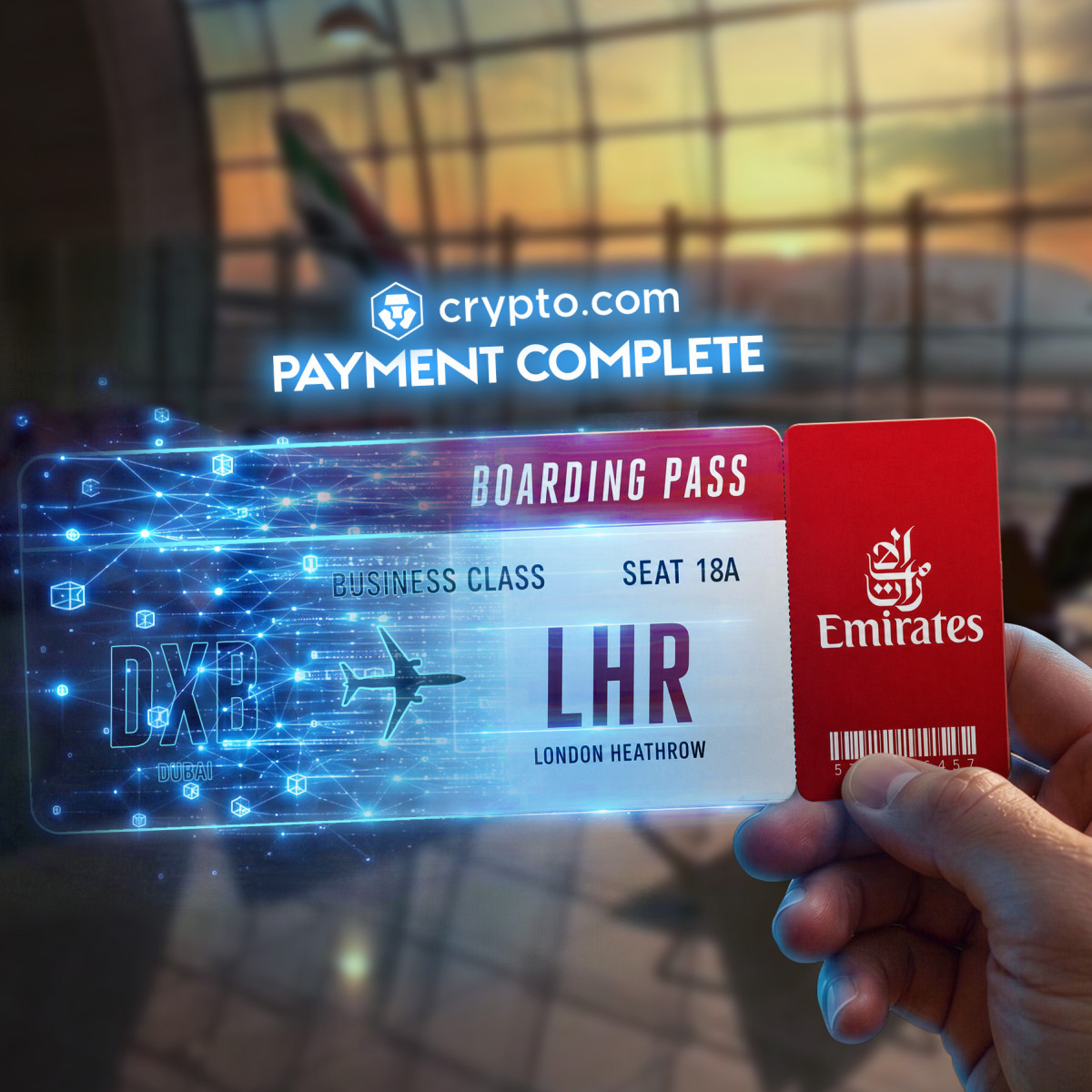
The Broader Adoption Picture
Placed alongside other recent stories, the Emirates move completes a recognizable pattern. Samsung is embedding stablecoins in its mobile wallet, Musk's payment app left crypto out entirely, and now a major airline accepts it only behind an instant conversion and in a single country. Three different approaches, one shared direction: crypto is entering the real world as a payment rail, increasingly invisible to both the user and the company processing the transaction.
The geographic context matters here. It's no coincidence this happened in Dubai, where a clear regulatory framework exists and public strategy actively pushes digital payments. Where rules are clear and consistently applied, adoption moves quickly. Where they're ambiguous or absent, adoption stalls. That's the confirmation, again, that the real engine driving the sector in 2026 is not technology. It's regulatory clarity.
Read SnapShot Issue 214 now:
, Crypto.com (@cryptocom) July 12, 2025
BTC hits ATH
⚙️ Buterin proposes a cap on gas fees
襤 XAUT holders up 172% as gold tokens surge
Solana matches all L1s and L2s in active users
✈️ Emirates integrates https://t.co/vCNztATkNg Pay to accept crypto
, and more pic.twitter.com/ZKs4RfEZX5
What This Means in Practice
The Emirates launch is real and significant as a signal, but it's a controlled test, not a global shift. It describes adoption advancing in small, tightly regulated steps, within the boundaries that regulators draw, where crypto functions increasingly as a payment instrument rather than an asset anyone holds.
The practical lesson for readers: learn to read past the headline. Every time a major brand “embraces crypto,” the right questions aren't about excitement. Ask who can actually use it, in what currency, and whether the company holds the crypto or converts it instantly. The answers to those three questions tell you whether it's genuine adoption or just a new sign above the same old door. For a deeper grounding in how digital payment rails work, our guide on stablecoins is a useful starting point. Official details remain on Emirates' own channels.