


Mario Nobile, Director General of Italy's Agency for Digital Italy (AgID), confirmed that experiments are already underway to anticipate the needs of citizens and businesses. Examples cited cover services related to the birth of a child and public grants for companies. No list of participating agencies, test results, or activation date has been announced yet.
Italy's public administration is testing artificial intelligence agents designed to identify and connect public services before a citizen even asks for them. Mario Nobile, Director General of AgID, made this disclosure during the event “Digital: Transformation Accelerates,” organized by Adnkronos on November 26.
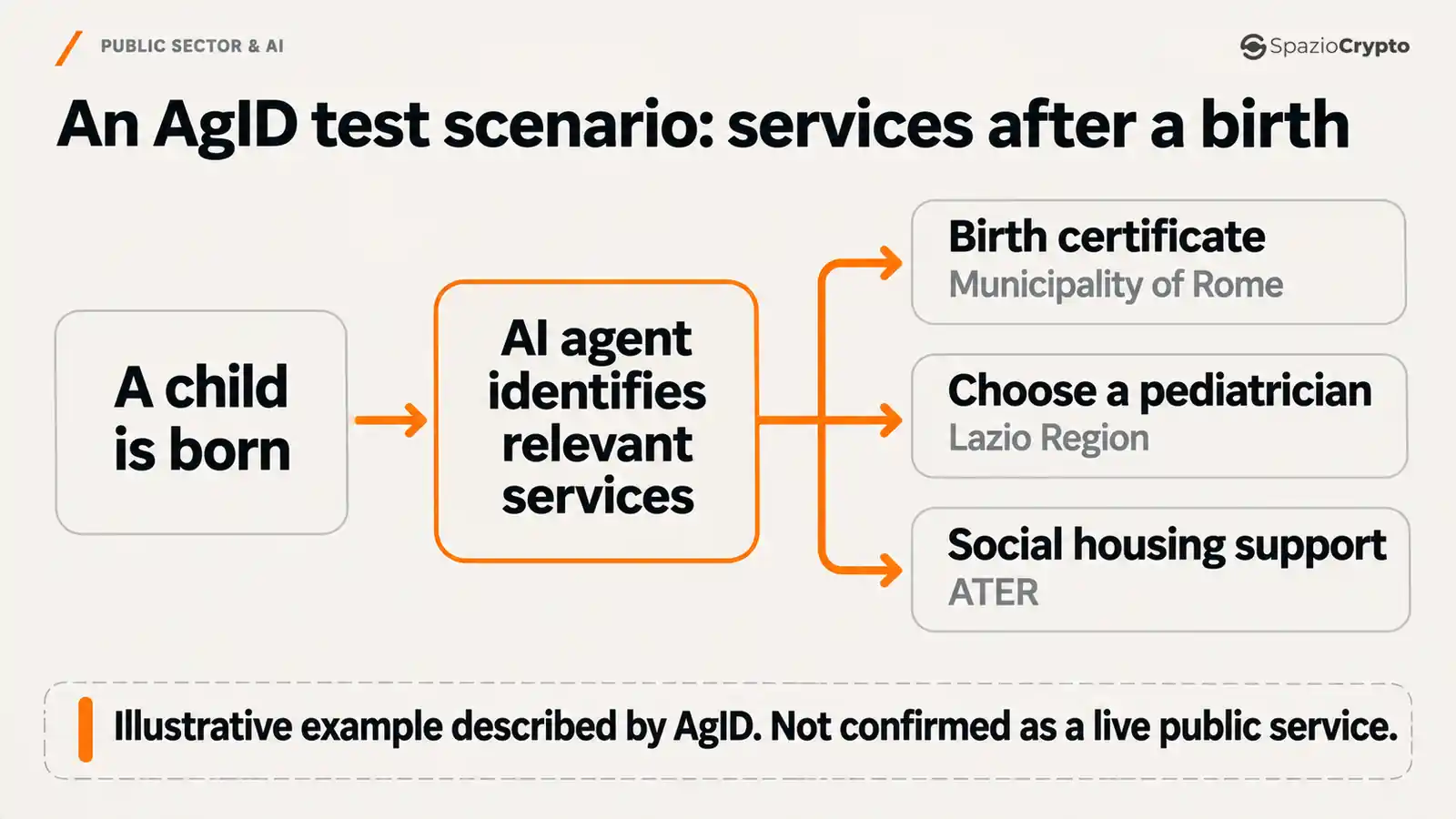
What Nobile described is a shift from an assistant that answers a question to a system capable of recognising a situation and coordinating information or services spread across multiple agencies. For now, though, these remain experiments disclosed by the agency's director: there is no confirmation that the services described are live for citizens.
From Birth Certificates to Multi-Agency Services
One example concerns the birth of a child. Today, a family must already know that the Municipality can issue a birth certificate, that the Region allows the family to register with a pediatrician, and that ATER may offer a social housing benefit. In the scenario Nobile described, an AI agent could connect these possibilities and present them to the person concerned, in multiple languages if needed.
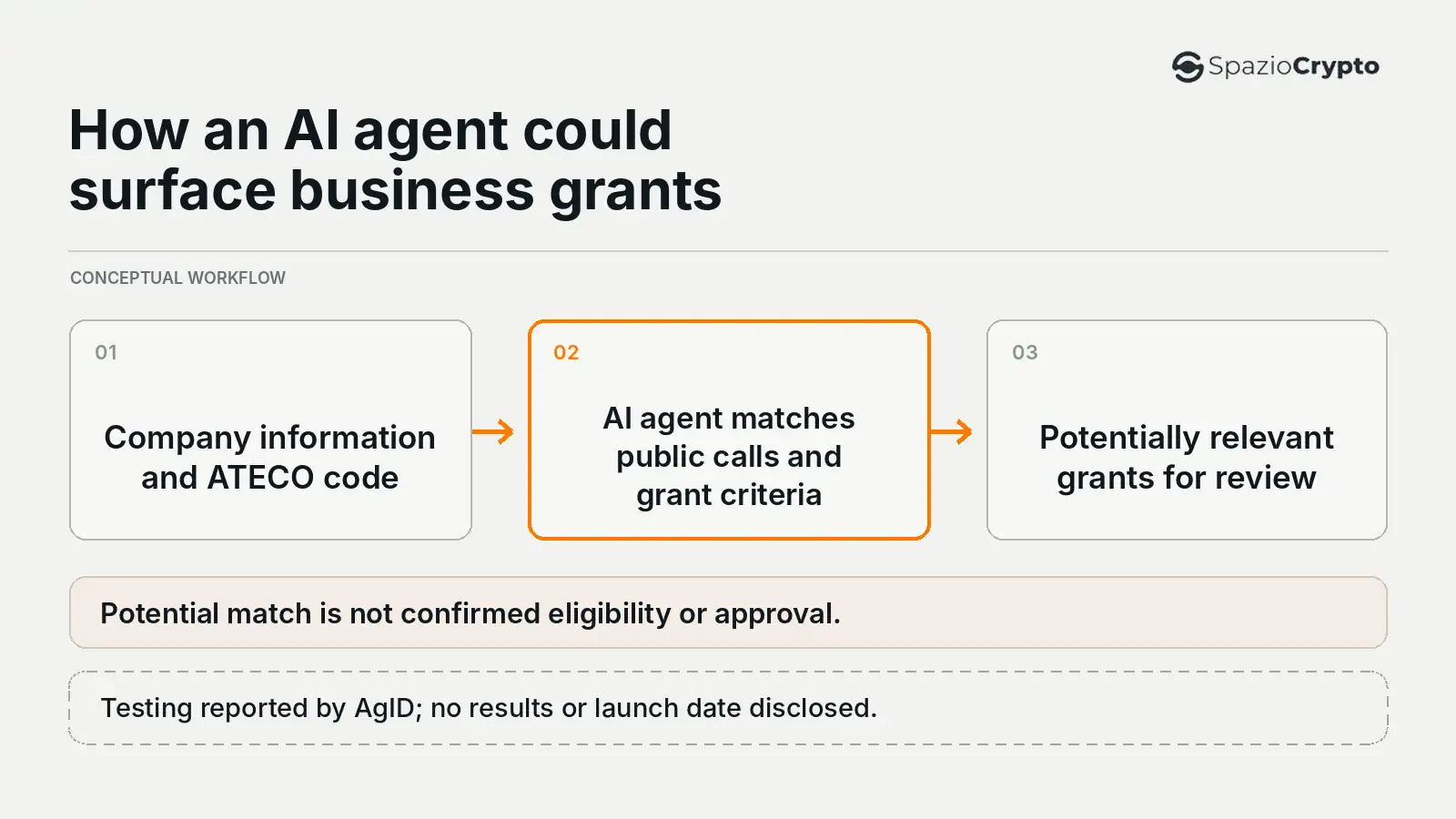
The second example involves businesses. By cross-referencing data already available, such as ATECO industry codes and company records, an agent could flag tenders, subsidies, or grants for which a business might qualify. The goal would be to cut the work required to discover public support measures scattered across ministries and central agencies.
These examples describe a proactive service, but they don't demonstrate that an agent can autonomously submit applications, certify requirements, or authorise payments. The distinction matters: identifying a potential benefit is not the same as establishing the legal right to receive it. Eligibility documents and the final administrative decision remain separate steps.
From Assistant to Agent: The Key Difference
An information assistant waits for a request and responds using available data. An agent, by contrast, can execute a sequence of tasks: recognise an event, consult sources or services, match a person to relevant opportunities, and propose next steps. In the scenario AgID outlined, the potential value comes from coordination across administrations, not simply from chatting with a bot.
Nobile cautioned that the technology is not fully autonomous and urged users to engage with it knowing its limits. In the video address, he described several levels of automation, drawing an analogy with the levels of autonomous driving. His statement does not specify, though, which level AgID's tests have reached or which decisions can be executed without human intervention.
Open Questions That Still Need Answers
The information available does not indicate which administrations are participating in the experiments, which databases are connected, how eligibility is verified, or what results have been measured. No timeline for a potential public rollout has been published. Controls over what happens before an agent transmits data or initiates a procedure on behalf of a citizen or business also remain unspecified.
For an agentic public service, oversight and administrative accountability are core design requirements, not afterthoughts. A wrong suggestion could steer a family toward an irrelevant benefit or lead a company to rely on a grant it doesn't qualify for. Nobile's statement confirms that the tests exist and that the ambition to coordinate services is real; it does not yet provide detail on human review, audit trails, data handling, or liability in the event of an error.
The experiment marks an interesting moment for Italy's digital public services. Its effectiveness can only be assessed once test data is published and services are genuinely available to users. Until then, the birth-registration and business-grant examples remain scenarios illustrated by AgID, not services already accessible through an agent.
Sources
- Adnkronos, interview with Mario Nobile, November 26, 2026
- Adnkronos, full video of the address
- Original video on Dailymotion, segment on tests from 00:35