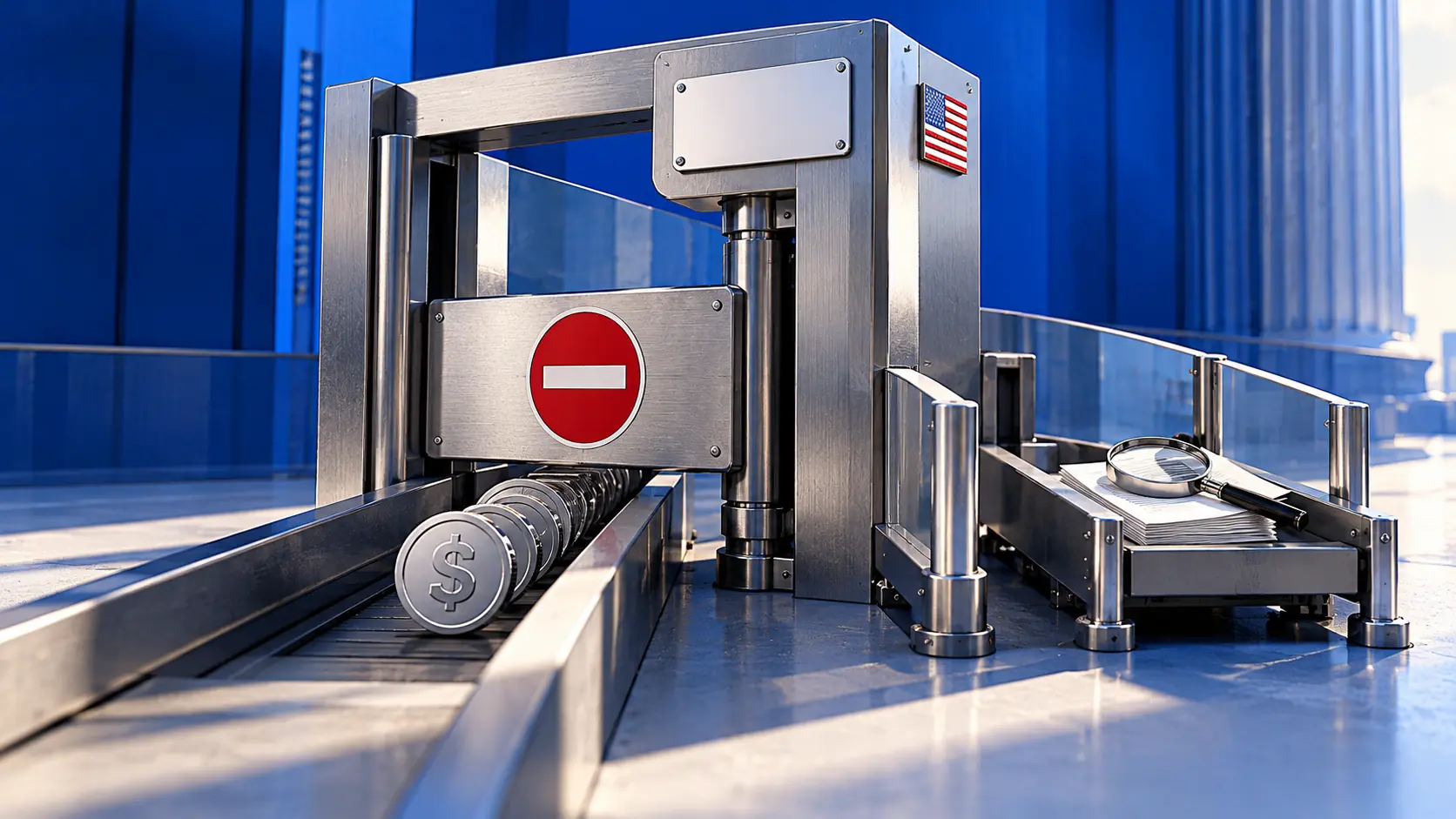
Polymarket's legal fight in Italy has entered a new phase, one that's easy to misread. The platform, the world's leading prediction market, made a tactical retreat in its court battle against the Italian block: it withdrew its urgent request to suspend the site blackout. For now, the block holds, and Polymarket remains inaccessible from Italy.
Don't mistake this for surrender. Dropping the urgent injunction is not the end of the legal fight, it's a pivot. The battle moves to the merits stage, where the core legal question will finally be put to a judge. And buried in these procedural details lies one of the most consequential questions facing the crypto world right now: is a blockchain-based prediction market a crypto product or a gambling service?
What Happened, and What It Actually Means
The sequence of events matters. In early July, Italy's Agenzia delle Dogane e dei Monopoli (ADM), the authority that oversees gambling in the country, ordered internet service providers to block access to Polymarket's website, placing it on the official registry of unauthorized gambling sites. Companies linked to the platform challenged the order before the administrative court, requesting both full annulment and, as an immediate measure, an urgent suspension of the blackout.
In early August, the court rejected the initial request for immediate suspension. According to reporting by Il Sole 24 Ore in 2026, judges found no sufficient grounds of gravity and urgency to justify emergency intervention, and deferred the matter to a full collegiate hearing scheduled for late August. Shortly before that hearing, Polymarket withdrew its suspension request entirely. That move locks in the current blackout for the foreseeable future, but Polymarket has not abandoned the broader case: the challenge to the legality of the ADM order itself continues on the merits. The main event is still to come.


Not Just Polymarket: the Gambling Industry Steps In
What makes this case more than a bilateral dispute between a crypto startup and a national regulator is the entrance of Italy's established gambling operators. Several major licensed gambling companies have intervened in the proceedings on the side of the block. Their presence reframes the entire dispute as a clash between two economic models.
On one side: international prediction markets, typically built on blockchain infrastructure, operating at global scale without necessarily holding national gambling licenses. On the other: Italy's licensed gambling system, which runs on state concessions, where operators pay for the right to offer betting services and comply with detailed regulatory requirements. The incumbents have an obvious financial stake in defending that system, and their decision to formally intervene signals that the sector sees this case as a precedent. The commercial fallout is already visible: a Serie A football club's sponsorship deal with Polymarket, concluded before the block took effect, was terminated early as a direct consequence of the blackout.
The Polymarket Case in Italy
Where things stand. Source: Il Sole 24 Ore, newswires, 2026
- The block stands: Polymarket withdrew its urgent suspension request. The blackout remains in force.
- But it's not over: the merits case continues. This is not a final defeat, the legal fight goes on.
- The core question: is a blockchain prediction market a crypto product or a gambling service?
Crypto or Gambling? The Real Stakes
Here is where the case becomes genuinely interesting for anyone tracking the crypto space. Beneath the procedural surface, Italy is confronting a classification question that is going to get harder to avoid across every major jurisdiction: how do you legally categorize a prediction market built on a blockchain?
Is it a financial or crypto product, subject to securities and digital-asset frameworks? Or is it, in substance, a gambling service, requiring national betting licenses? The answer is not obvious, and it carries enormous consequences. On Polymarket, users stake money on future outcomes, from election results to sports events, with positions settled via cryptocurrency and smart contracts. Defenders of the platform emphasize its technological and financial character; Italian authorities, and the traditional gambling operators now backing them, emphasize the underlying betting mechanics.

The fact that a service runs on a blockchain does not automatically determine its legal classification. The technology used to settle transactions is one thing; the nature of the service offered to the end user is another. This is a point that MiCA, the EU's comprehensive crypto-asset regulation that came into full force on December 30, 2024, does not resolve on its own. MiCA governs crypto-asset services and issuance, but a product that looks, for practical purposes, like a betting service may well fall outside its scope regardless of the underlying tech stack.
The Bigger Picture
The Polymarket episode, whatever its eventual outcome, is a precise illustration of one of the defining tensions of this moment: how does technological innovation, which by its nature ignores borders, coexist with national regulatory frameworks, which exist precisely to police them? Blockchain-based prediction markets are a fast-growing global phenomenon. But when they run into individual countries' gambling and financial laws, collisions like this one are inevitable.
There are two lessons worth taking from the Italian case. First, technology, however advanced, does not operate in a legal vacuum. Sooner or later, innovative products must answer to real-world rules, and novelty confers no immunity. Second, this Italian courtroom is a small-scale test of a global question: where does a financial product end and a gambling service begin? The rulings that follow, not just in Rome but in courts across Europe and beyond, will help draw the boundaries of a sector that is still being defined. For once, Italy is not catching up to a regulatory debate; it's setting the terms of one that the rest of the world will soon have to join.