

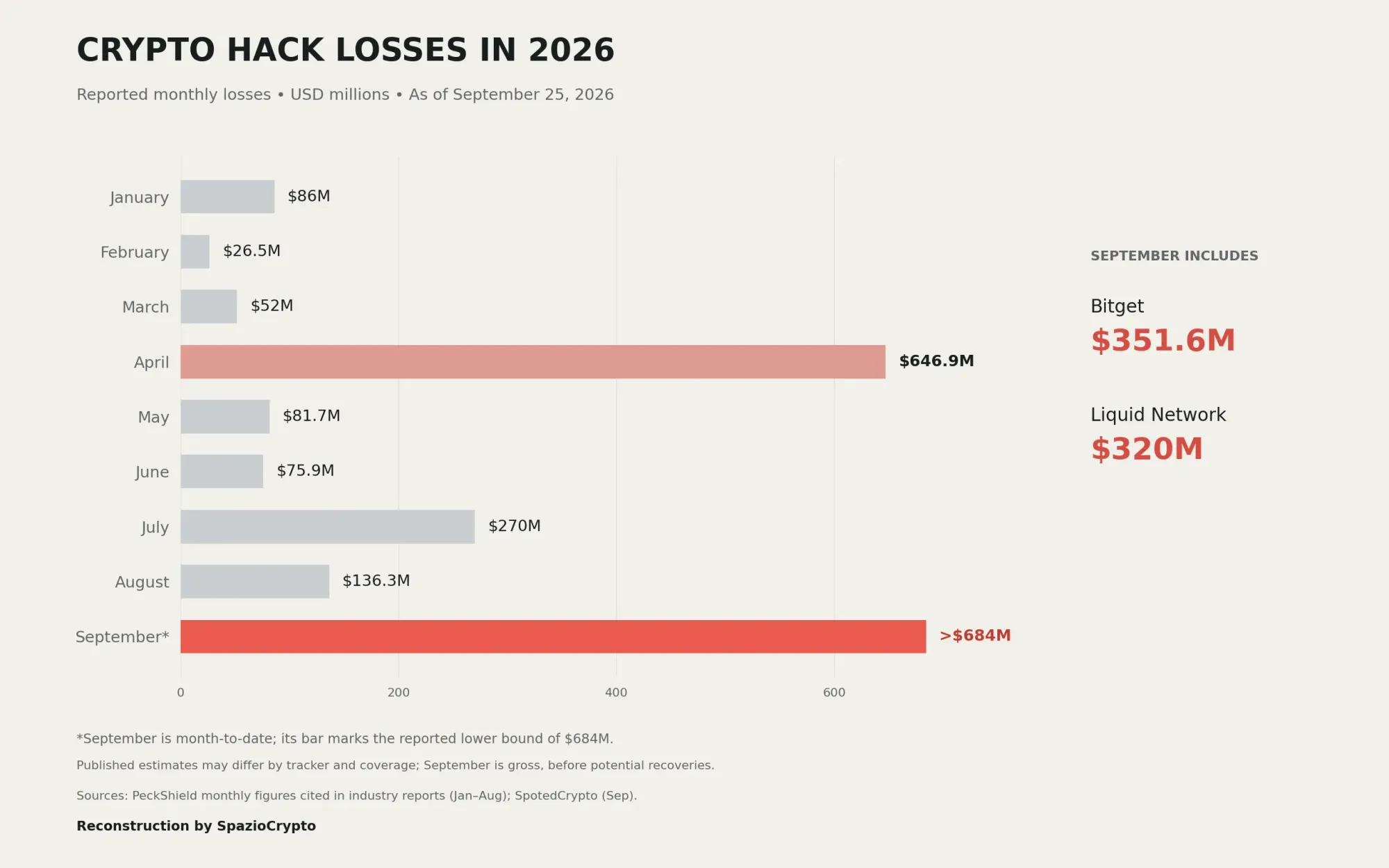
Bitget, one of the world's most active crypto exchanges, suffered a confirmed hack of approximately $351.6 million on September 24, 2026, draining funds from multiple hot wallets and at least one cold wallet within a window of roughly 20 minutes. The platform suspended withdrawals immediately, and CEO Gracy Chen addressed users in a live stream lasting over three hours.
The breach was first flagged through unusual platform behavior and user reports of blocked withdrawals, before on-chain data confirmed the scale of the attack.
Arkham Intelligence Traces the Funds
According to Arkham Intelligence data, a series of large transfers swept through Bitget-labeled wallets in an unusually compressed timeframe. The funds originated from several hot wallets, all tagged as belonging to Bitget, and from at least one cold wallet. Early Arkham tracking put the initial movement at around $176 million, but that figure was quickly revised upward as more transfers surfaced.
Once Arkham and outlets including BeinCrypto had published their findings, Bitget officially confirmed that the total loss exceeded early estimates, settling at just under $351.6 million across multiple assets. A single destination address, 0x770b...63Ee, appears repeatedly in the transaction logs, receiving ETH, AVAX, BNB, USDT, USDC, XAUT, and other tokens from exchange-linked wallets within that narrow window.
The speed and coordination of the transfers is what makes this incident stand out. Multiple wallets sending different assets to the same address, almost simultaneously, is a pattern that raises immediate red flags for on-chain analysts.
How the Attackers Operated
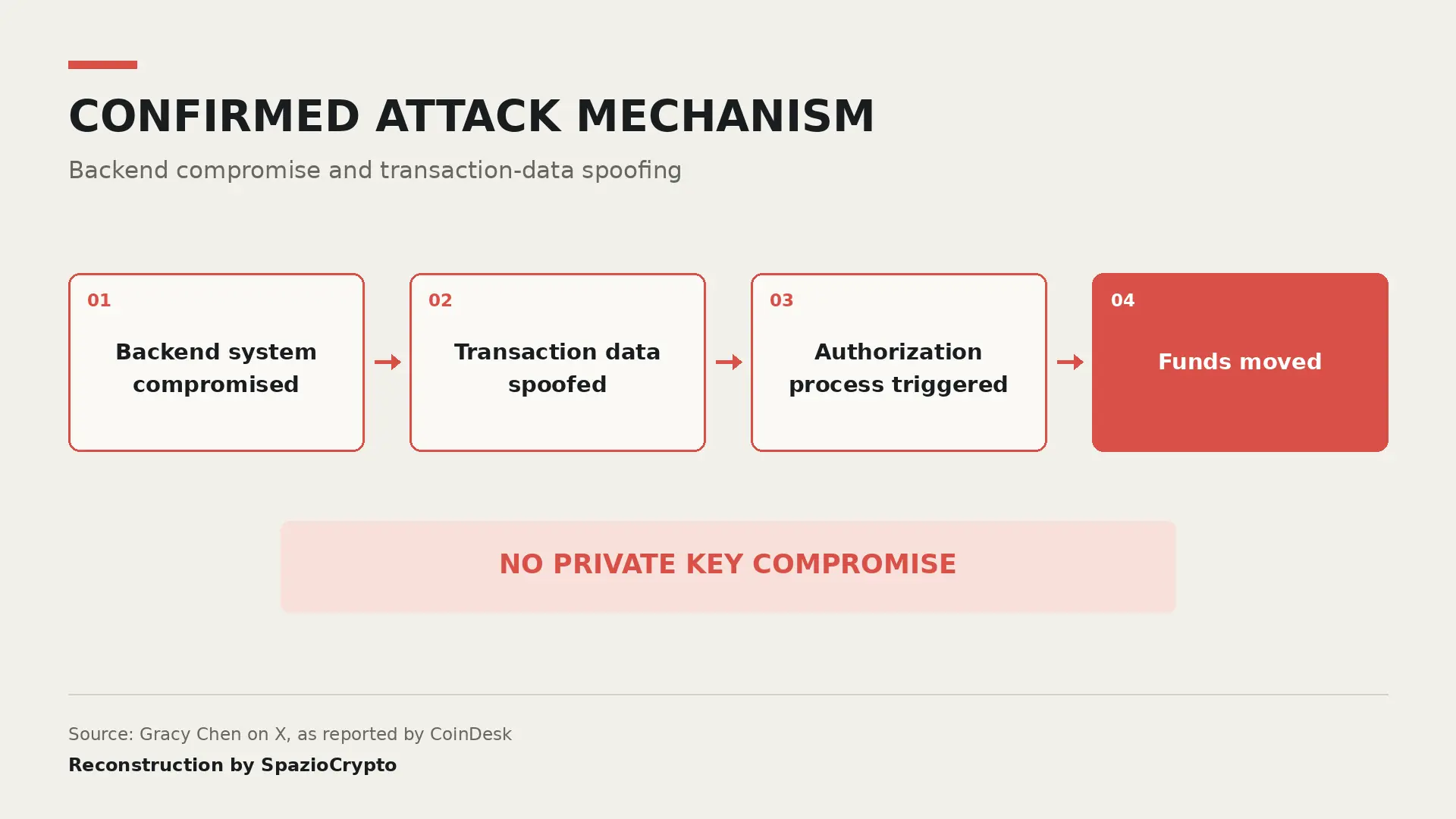
The attack pattern is unusual in ways that merit attention. Several wallets appear to have sent a variety of assets to a single address in an extremely short time span. That profile is consistent with what analysts see during exchange hacks, but it also resembles the internal fund movements that exchanges themselves carry out during wallet maintenance or custody transitions, which is precisely why the initial response was cautious.
The mechanics here contrast with other recent high-profile breaches. In the Fogo hack, attackers moved 400 million Fogo tokens into a single account before redistributing them to a second wallet. The Coldcard incident was different again: a known programming bug that developers had identified but never fully resolved left the system open to exploitation. Three attacks, three different methods. The frequency of these events raises a question the industry hasn't answered convincingly: how much work remains to adequately secure exchanges and the assets they hold?
Bitget confirmed that user withdrawals remain suspended as a precautionary measure. CEO Gracy Chen reassured the community that the full amount affected falls within the Bitget User Protection Fund, meaning user balances are covered.
[SECURITY NOTICE] Bitget Hot Wallet Incident — September 24, 2026
, Gracy Chen @Bitget (@GracyBitget) September 24, 2026
At 18:31 UTC on September 24, 2026, Bitget's security systems detected unauthorized transfers from some of our hot wallets. Our security team activated emergency response protocols immediately.
What we have…
Bitget's Response and What Comes Next
Credit where it's due: Bitget's reaction was faster and more transparent than many exchanges manage under pressure. The CEO went live for more than three hours on September 24, walking through the situation in real time. Bitget also self-disclosed the full $351.6 million figure before third-party trackers had confirmed it, at a point when Arkham and BeinCrypto were still reporting the lower $170 million estimate. That kind of proactive disclosure matters, and it's worth noting as a contrast to exchanges that obscure losses for days.
As of the latest updates, Bitget says it has already identified leads on who carried out the theft and is working to map the exact sequence of events. The exchange's security team and external investigators are involved. A resolution, partial or full, may come sooner than past incidents of this scale would suggest.
The Bitget hack of September 24, 2026, landing at $351.6 million according to Arkham Intelligence tracking, sits among the largest single-day exchange losses of the year. Investors using centralized exchanges should monitor Bitget's official communications for the withdrawal resumption date and review whether their own assets sit in exchange-held wallets or in self-custody. The Bitget User Protection Fund provides a coverage backstop, but the episode is a clear signal that on-chain security at major exchanges still has structural gaps that sophisticated attackers know how to exploit.