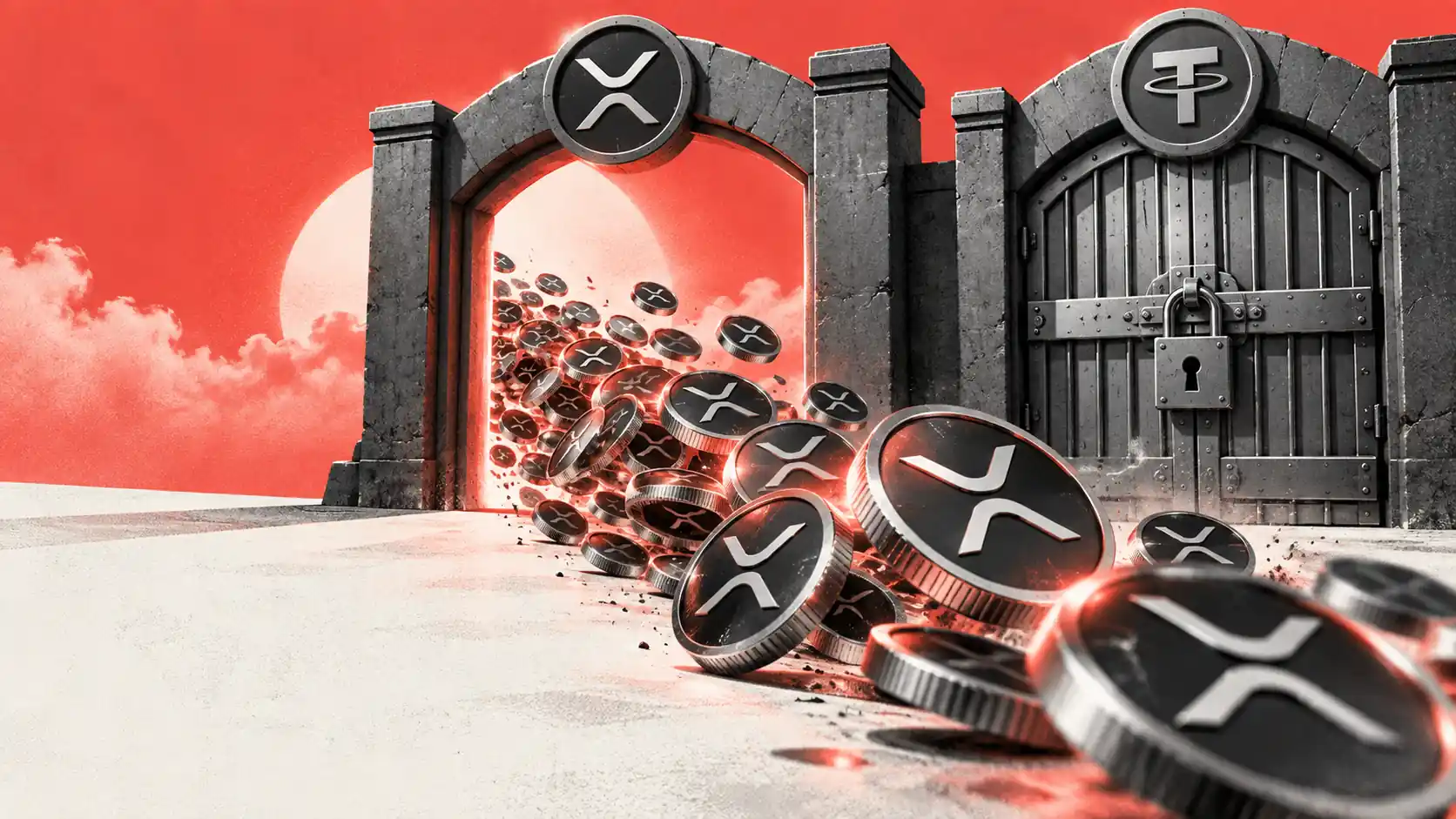
SecondFi, a Cardano wallet and successor to the well-known Yoroi client, is permanently shutting down after attackers drained 16.1 million ADA (roughly $2.4 million) from 374 addresses. The culprit was not a phishing attack or a stolen seed phrase. A defect in the wallet's signing software left private keys mathematically recoverable from public blockchain data. Cardano's network itself was never compromised.
The incident deserves close attention from every self-custody user, regardless of which chain they use.
TL;DR: SecondFi's signing code generated predictable nonce values, allowing anyone to reconstruct private keys from public transaction data on Cardano. Moving your seed phrase to another wallet offered zero protection, because the keys themselves were already compromised.
What Happened at SecondFi
The attack was discovered on June 23, 2026. According to SecondFi and security firm SlowMist, 16.1 million ADA worth approximately $2.4 million were stolen from 374 wallets in three separate waves. An emergency response managed to move roughly 129 million ADA (around $18.5 million) to a third-party custodian before attackers could reach those funds. SlowMist estimates that total exposure across all compromised wallets, including tokens and NFTs, could have exceeded $20 million.
SecondFi has since announced it will not resume normal operations. The company is now focused solely on returning funds to affected users.
Incident by the Numbers
Stolen funds, rescued funds, and estimated total exposure. Source: SecondFi, SlowMist, 2026
- Stolen by attackers16.1M ADA
- Rescued in emergency129M ADA
374 addresses affected. The Cardano network itself was not compromised.
How a Private Key Leaks On-Chain Without Anyone Stealing It
The mechanism here is worth understanding carefully, because it applies to every blockchain, not just Cardano. When you sign a transaction, your wallet combines your private key with a one-time random value called a nonce. That nonce is what makes every signature unique. The foundational rule of elliptic curve cryptography is that the nonce must be unpredictable and never reused.
When that value becomes predictable or repeats, the signature stops protecting the secret and starts revealing it. From the public signature data alone, anyone can work backward mathematically to recover the private key. That is precisely what happened here: SecondFi's software generated the nonce incorrectly. Every signed transaction, fully public and readable on-chain by anyone, contained enough information to reconstruct the wallet's credentials. This is not an obscure edge case. It is one of the most well-documented failure modes in applied cryptography, which is exactly why serious developers never improvise the cryptographic layer.
Why Moving Your Seed Phrase to Another Wallet Did Nothing
This is the detail that upends the standard advice. Normally, when a service is compromised, the immediate response is to move funds elsewhere using your recovery phrase. Here, that instinct was useless.
The flaw operated at the address level and was triggered the moment a user signed a transaction. Importing the same seed phrase into a different wallet provided no protection whatsoever: the keys were already derivable from on-chain data, and they remained derivable wherever you took them. Affected users were explicitly warned not to restore those seed phrases in any other wallet. Those credentials were permanently burned.
What Protected Users and What Did Not
The practical lessons from the SecondFi incident
- Did protect: using a hardware wallet. Those users were not affected.
- Did not protect: moving your seed phrase to another wallet, because the flaw was already in the keys.
- Did not protect: storing your seed phrase securely, because the problem was in key generation, not theft.
What Happens Next for Affected Users
Recovery is underway but far from complete. SecondFi has announced wallet export tools for early August and a recovery portal later in the same month, but no date has been set for distributing recovered funds. A full independent audit explaining the technical details in depth is also still missing, leaving affected users without a definitive picture of their losses.
On the investigative side, the blockchain intelligence firm engaged by EMURGO described the primary attacker as sophisticated and well-funded. Cardano founder Charles Hoskinson commented publicly on the incident, noting that while the sum stolen is modest compared to other major hacks in the sector, that observation offers no comfort to those who lost their savings.
The Lesson That Actually Matters
The uncomfortable part of this story is that it dismantles a widespread assumption. Most self-custody guides focus on personal discipline: protect your seed phrase, avoid phishing links, trust no one. All of that is correct, but it's not sufficient. Beneath those rules sits a layer you don't control: the quality of the code that generates your keys and signs your transactions.
Two concrete conclusions follow. First, for any meaningful sum, use a hardware wallet. In this case, hardware wallet users were entirely unaffected. Second, favor software with a long track record, open-source code, and independent audits. Be skeptical of proprietary solutions that reinvent their own cryptographic primitives. In self-custody, prudence alone is not enough: you also need to choose carefully who handles the part you cannot inspect yourself. For a grounding in how these systems work at the protocol level, our guide on how a blockchain works is a useful starting point.