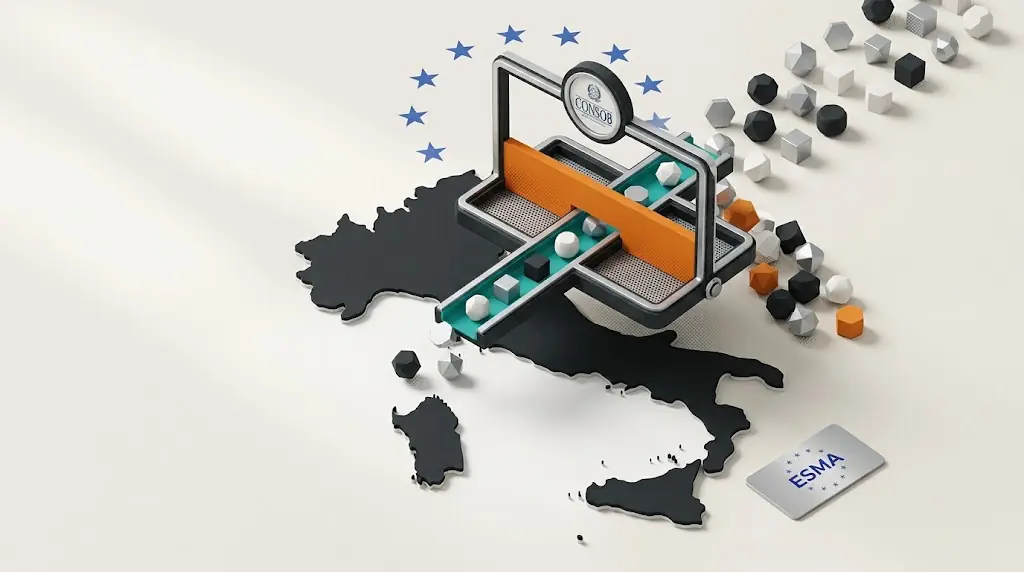


Italian retail associations including Confcommercio, Confesercenti, FIPE, and Netcomm presented a joint position to Banca d'Italia on September 25, 2026, demanding zero fees on digital euro micropayments and free integration across the country's existing payment infrastructure. The proposal comes at a critical moment in the EU legislative process, as the digital euro trilogue is still ongoing and the fee structure for small transactions remains unresolved.
Before unpacking the details, one point deserves emphasis upfront: this is not a confrontation between Italian merchants and Banca d'Italia. As we'll show, the central bank's own technical research, published just days earlier, already leans toward a fee model that favors small businesses. The real question is where exactly to draw the line.
Four Demands from Italian Retailers
The joint document sets out four priorities. First, zero fees on micropayments across all channels, from physical stores to e-commerce, alongside a transparent European benchmark for acceptance costs calculated on the most efficient payment solutions available, not on the average of current private card fees. Second, the digital euro must work on the approximately four million POS terminals already operating in Italy, on electronic cash registers, and in online sales systems, with no additional hardware costs for merchants. Third, offline functionality: shops and restaurants need to keep accepting payments even when network connectivity fails.
The associations ground these demands in a specific figure from the European Central Bank: 54% of in-store transactions across the euro area are below twenty euros, according to ECB data. That makes the fee structure on small amounts especially consequential for bars, restaurants, and neighborhood stores, where low-value payments are the daily norm.
Banca d'Italia's Position Is Closer Than It Looks
On September 9, just weeks before the merchant meeting, Banca d'Italia published a technical study on fee cap models, authored by three of the institution's own researchers. The paper compares two approaches: a specific cap negotiated individually with each merchant, or a uniform market benchmark based on the average fees applied to comparable payment instruments across the euro area. The researchers' conclusion is clear. Individual-agreement models are hard to verify and difficult to enforce, while a uniform market benchmark is simpler to monitor and fairer in practice.
That technical conclusion would be welcome news for small retailers. Today, according to the Banca d'Italia study, small merchants pay fees estimated at three to four times higher than those obtained by large retail chains, a direct consequence of weaker negotiating power tied to lower transaction volumes. Speaking on September 25, Deputy Director General Chiara Scotti reinforced this point, stating that “a fee cap can provide important protection, especially for merchants with less bargaining power”, a concern she described as “particularly relevant in Italy, where nearly 95% of businesses have fewer than ten employees.” She added a technical caution, though: complex mechanisms that are difficult to verify or influenced by individual operators' contractual conditions risk becoming an obstacle to adoption.
The demands at a glance
What merchants want and how Banca d'Italia responds. Source: Confcommercio, FIPE, Banca d'Italia, 2026
- Merchants: zero fees on micropayments, use of existing POS terminals, offline functionality.
- Banca d'Italia: already favors a uniform benchmark, not individually negotiated rates.
- Open question: where exactly to set the threshold, now being decided in the EU trilogue.
The Eurosystem Absorbs Part of the Infrastructure Costs
One concrete element to emerge from the September 25 meeting concerns how this balance will be funded. Deputy Director General Scotti explained that the Eurosystem will directly shoulder a significant share of infrastructure costs, a commitment that helps explain how low merchant fees can coexist with a system that remains financially viable for the intermediaries distributing it. That's not a minor detail: it signals that European institutions are treating the digital euro's fee structure as a matter of institutional priority, not just market negotiation.
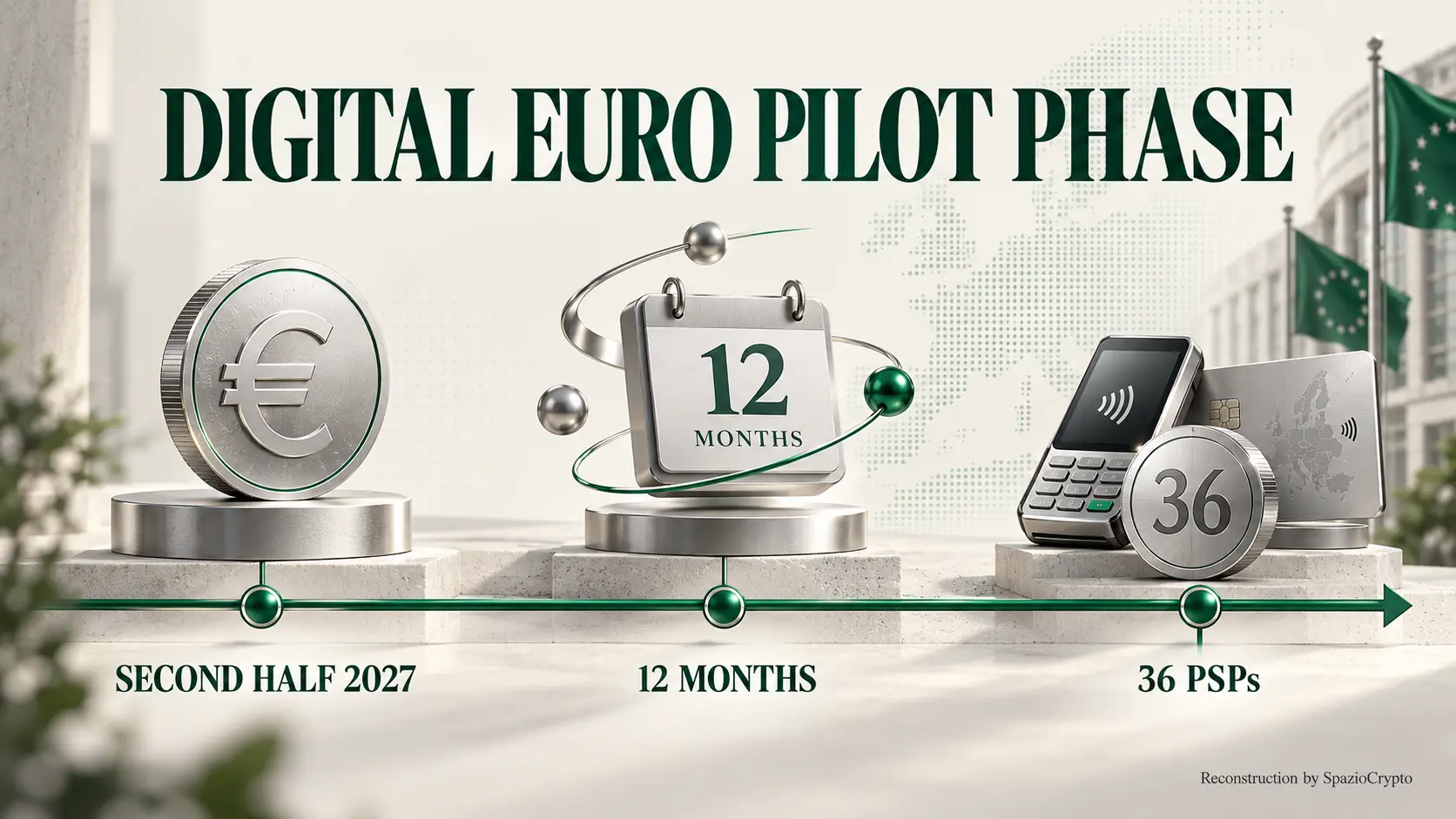
On the operational timeline, Scotti confirmed that the pilot phase will begin in the second half of 2027, running for twelve months in a closed environment designed to test a beta version of the digital euro. Thirty-six payment service providers have been selected to participate, including several Italian operators: Banca Monte dei Paschi di Siena, Banca Sella, Isybank, Nexi Payments, Numia, Poste Italiane, and UniCredit.

What This Means for the Digital Euro Debate
This episode shifts the digital euro conversation from abstract principles to a very concrete question: who actually pays to make it work at the checkout counter? For small merchants, who make up the vast majority of Italy's business fabric, the technical direction suggested by Banca d'Italia's own research already points toward a fairer fee model than the current one. Whether the European legislature, at the end of the ongoing trilogue, will actually choose the full zero-fee approach demanded by retailers for micropayments, or settle for a low-but-not-zero level as Scotti's technical caution implies, remains to be seen.
 European Central Bank
Two observations stand out for anyone tracking this story. The digital euro debate has clearly moved into a phase of very specific technical detail, far removed from the broader conceptual discussions of earlier years. And the Eurosystem's decision to directly absorb a meaningful share of infrastructure costs tells you how seriously European institutions take the risk of launching a public currency that arrives disadvantaged against private card networks from day one. Watch the EU trilogue closely: a conclusion could come before the end of 2026, and the outcome will set the fee floor for every small business that accepts digital payments across the eurozone.