

Over recent days, a compelling story has spread across crypto circles: GTA VI, the most anticipated video game ever made, will integrate cryptocurrency payments, accepting USDT or building its in-game economy on Solana. For the crypto world, that would be enormous news. There is one problem: it isn't true, or more precisely, no verifiable evidence exists that it is. This article won't amplify the rumor. It will do the opposite: dismantle it, explain how it was built, and show why it deserves extreme skepticism.
The story is a near-perfect case study in how misinformation spreads through the crypto sector. It blends an old, never-confirmed claim with documents whose authenticity was never established and, lurking in the background, a memecoin created specifically to profit from the noise. Reconstructing this sequence matters not just to clarify the GTA VI situation, but to recognize the mechanics behind how crypto hoaxes are assembled.
🚨GTA 6 will enable crypto currency payments.
— Gordon 🐂 (@GordonGekko) July 3, 2024
So far only Bitcoin, Ethereum and USDT confirmed 😳 pic.twitter.com/MoYQoppH5z
The USDT Rumor: A Claim Years in the Making
The suggestion that GTA VI would accept USDT alongside Bitcoin and Ethereum isn't new. It traces back to a claim that circulated in the summer of 2024, spread by a pseudonymous influencer along with a trailer that turned out to be fake. When pressed on the source, that person responded with irony, suggesting a relative “worked there”, hardly a credible confirmation by any journalistic standard. Some accounts trace the idea even further back, to a 2021 statement by a known gaming industry insider who suggested certain missions might reward players with an internal version of Bitcoin. That same insider later clarified he believed the feature had been dropped years earlier.
In both cases, the source is unverified speculation, not an official announcement. Neither Rockstar, the developer, nor Take-Two Interactive, the publisher, has ever confirmed any of this. The reference to USDT doesn't originate from a company press release or filing. It comes from an old corridor rumor that resurfaces periodically, never finding confirmation.
 Alexey Bondarev
The Alleged “SEC Documents” on Sharkbux and Solana
The most insidious layer of the rumor involves documents that circulated in August 2026 describing a supposed GTA VI in-game currency called “Sharkbux,” which would allegedly be represented as a token on the Solana blockchain. These PDFs carried the branding of Take-Two and Rockstar, which made them look official. That's where the deception runs deepest.
Those documents were not official filings submitted by the company to the U.S. Securities and Exchange Commission through formal channels. They had simply been uploaded to the SEC's public comment section for a proposed rulemaking, a consultation open to anyone at all, much like the new SEC crypto rules we've covered separately. In practical terms, any member of the public could theoretically upload a file to that section. The authenticity and corporate authorization of those PDFs were never established, and as of this writing the files are no longer available. The accurate description is “unauthenticated documents uploaded to a public SEC rulemaking comment section,” not “an official Take-Two filing.” That distinction matters enormously.
The Real (and Entirely Different) Take-Two and Solana Connection
A genuine connection between GTA VI's publisher and Solana does exist. It has nothing to do with the game. In early August, a financial firm created a tokenized version of Take-Two Interactive's Nasdaq-listed stock, making it tradable on the Solana blockchain. Each token represents a real company share and is declared redeemable on a one-to-one basis.
This is a financial product, entirely comparable to the tokenized shares of other major companies we've reported on, and it has no connection to Rockstar, the game itself, or any hypothetical in-game currency. This coincidence likely fed the confusion: the fact that the publisher's stock can be traded on Solana was conflated, or deliberately distorted, into the claim that “GTA VI is on Solana.” These are entirely separate things. One is stock tokenization, a real and growing financial phenomenon. The other is blockchain integration in a video game, for which no evidence exists.


The Memecoin Behind the Leaks: Where the Money Went
To understand who had a financial interest in amplifying this narrative, look at who was behind the recent GTA VI gameplay leaks. The group responsible for those leaks was simultaneously promoting their own memecoin on Solana, using stolen footage as bait. They distributed gameplay clips overlaid with QR codes linking to the token purchase page, promising to release more material if the coin's value rose.
The structure is the classic predatory pump-and-dump: artificially inflate an asset's value through hype, sell at the peak, and leave other buyers holding tokens that collapse. According to reporting on the incident, the creator collected approximately $250,000 shortly before Rockstar's official game presentation, while the token crashed. It bears noting that many of the claims about an alleged real-money-convertible in-game currency originated from the same party with a direct financial stake in generating GTA VI and crypto hype simultaneously. The rumor's source was the person profiting from it. Recognizing these dynamics is the first line of defense, as we explain in our guide on how to spot a crypto scam.
 Backpack Learn
What Rockstar and Take-Two Have Actually Said
Against all this noise, what do official sources actually say? The answer is straightforward: nothing relating to cryptocurrency. The official GTA VI page presents the game, supported platforms, and a release date of November 19, 2026, with zero mention of USDT, Solana, blockchain, or any token. Likewise, Take-Two's most recent official financial results confirm the launch date and projected revenues from traditional in-game virtual currencies, the same as always, but contain no announcement whatsoever regarding crypto or blockchain integration.
It's also worth recalling that Rockstar maintains a policy banning cryptocurrency and NFTs from third-party roleplay servers. That signals corporate caution toward the sector, though it would be inaccurate to read it as an absolute, permanent prohibition on any future decision. The core point stands regardless: as things currently are, no official communication supports the idea of real crypto integration in the game.
 Luke James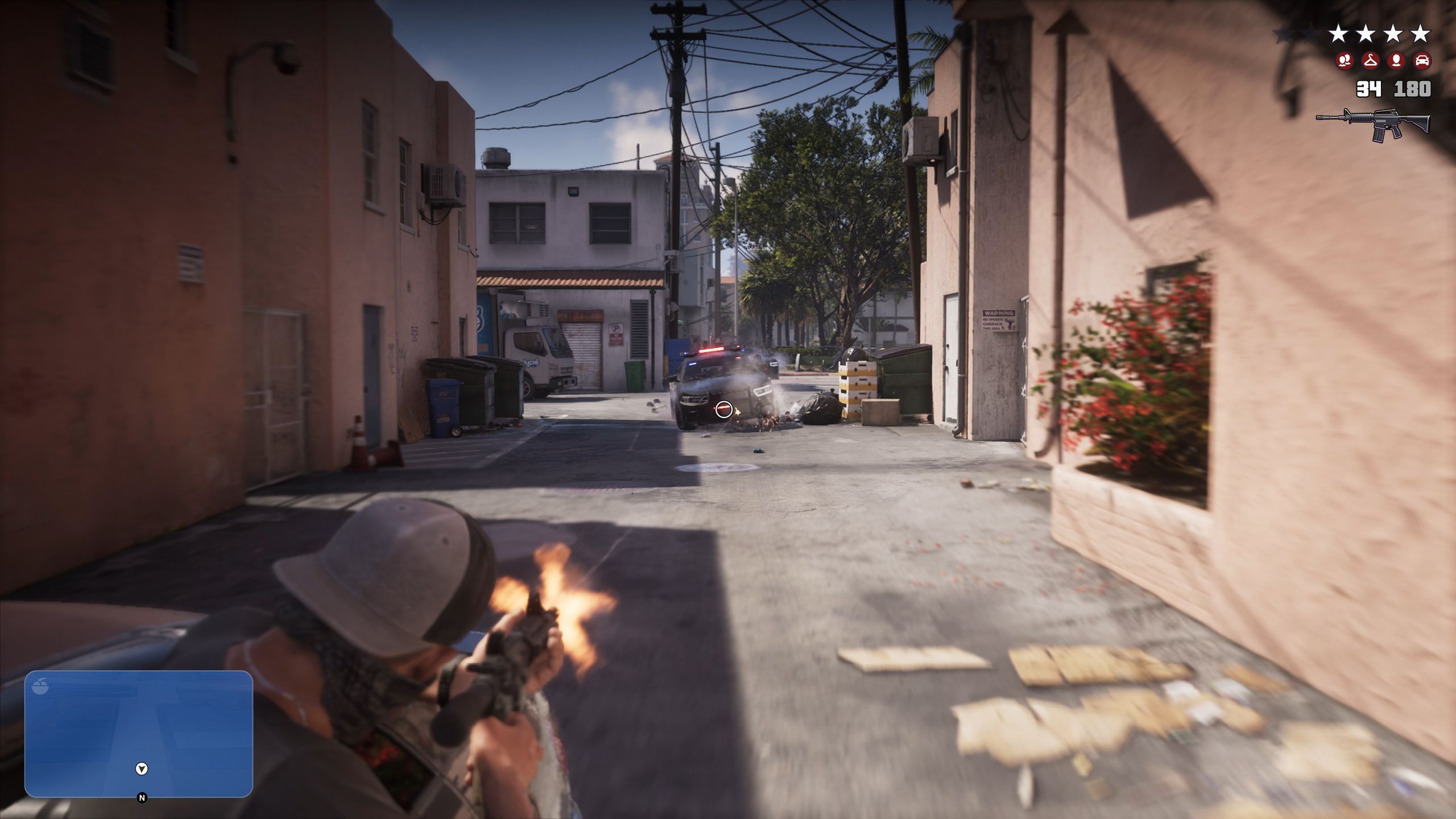
The Bigger Picture
To summarize: no verifiable evidence currently exists that GTA VI will use USDT, Solana, or any real cryptocurrency. The USDT reference traces back to a 2024 rumor; the alleged Solana integration to unauthenticated documents uploaded to a public consultation; and the only genuine connection to Solana involves an external financial product, a tokenized version of the publisher's stock, which has nothing to do with the game itself. The entire narrative was amplified by parties with a direct financial stake in doing so, through a memecoin that subsequently collapsed.
Two lessons emerge for any careful observer. The first is methodological: this episode shows with unusual clarity how convincing disinformation gets constructed, by blending a fragment of truth (the tokenized shares do exist) with old rumors and fabricated documents, all driven by a concealed financial motive. Learning to break down these narratives, to ask “who is saying this and what do they gain from it,” is the most practical defense against scams. The second is an honest reflection: one cannot entirely rule out that GTA VI, true to its historically sharp satire of American society, might include a purely fictional cryptocurrency as a parody of the sector, something perfectly consistent with its narrative universe. But that would be deeply different from actually integrating USDT or a public blockchain. Until Rockstar itself provides evidence to the contrary, every other claim should be treated for what it is: unconfirmed speculation. In a sector that runs on hype, the ability to separate fact from wishful thinking is the single most valuable skill around, and it's one worth building from the foundations of what cryptocurrencies actually are.