Tether is synonymous with one thing for most crypto investors: USDT, the world's most widely used stablecoin. But the company's strategic ambitions run far deeper, and a formal announcement made on August 6, 2026 makes that unmistakably clear. Tether will bring institutional real estate tokenization to Saudi Arabia, using its Hadron platform to put property assets on-chain in one of the world's most ambitious emerging markets.
This isn't a technical side project. It's a deliberate repositioning: Tether no longer wants to be defined solely as “the stablecoin company.” The firm is building the infrastructure layer for real-world assets on the blockchain, and it's chosen the Kingdom of Saudi Arabia as the proving ground.


What Was Actually Announced
According to Tether's official press release dated August 6, 2026, the company has formed a strategic collaboration with two partners to tokenize institutional-grade real estate in Saudi Arabia. The first is First Data (officially First Advanced Data for Artificial Intelligence LLC), a Saudi provider of financial technology and services, which will act as issuer and market operator. The second partner is BKN301, a fintech firm based in San Marino and led by entrepreneur Stiven Muccioli, responsible for connecting the platform to banking infrastructure and compliance systems.
The technological core of the venture is Hadron, Tether's tokenization platform launched in 2024. In straightforward terms, Hadron converts a real-world asset (in this case, property) into digital tokens that can be issued, managed, and traded on-chain, with all required legal and compliance controls built in. The goal is to “unlock” value trapped in real estate: an asset class that is notoriously illiquid, hard to divide, and difficult for smaller investors to access.
 Ledger Insights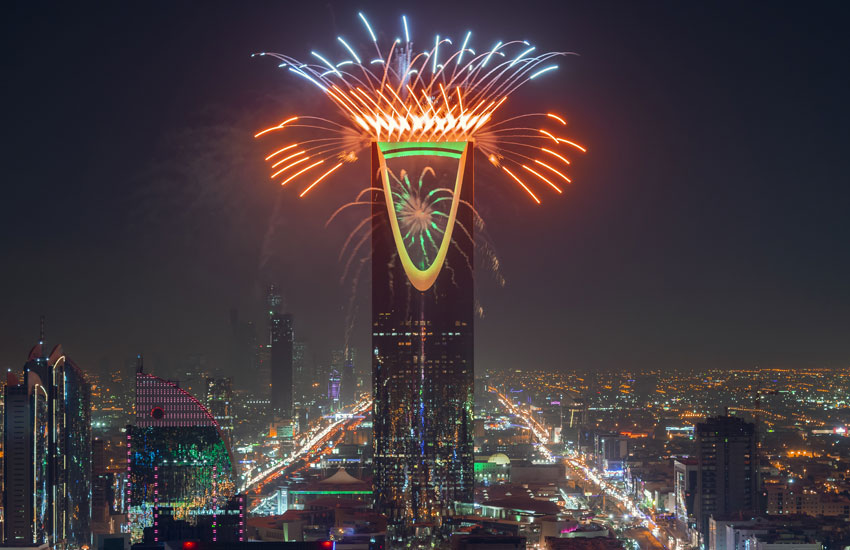
Why Saudi Arabia, and Why Now
The choice of market is anything but accidental. Saudi Arabia is midway through a sweeping economic transformation under its “Vision 2030” plan, which aims to diversify the kingdom's revenues beyond oil and modernize its financial architecture. Tokenization is explicitly one of the pillars of that vision: the Saudi sovereign wealth fund, which manages assets approaching $1 trillion according to Bloomberg, has approved a five-year roadmap to bring strategic assets onto the blockchain.
In this context, Saudi Arabia offers the ideal conditions for a platform like Hadron to prove its worth at scale. As Tether CEO Paolo Ardoino stated in the official announcement, the kingdom “stands out as an ideal market to demonstrate the impact of platforms like Hadron.” There's a specific structural fit too: the project is designed to be compatible with Islamic finance principles, meaning Sharia-compliant structuring is baked in from the start, a non-negotiable requirement in that market. Both partners have also signaled that real estate is the entry point, but the model is designed to extend across energy and infrastructure assets as well.
The Real Story: Tether Beyond the Stablecoin
For years, Tether was identified (and frequently criticized) almost entirely through the lens of USDT. It's an extraordinarily profitable business, but one that carries regulatory scrutiny and persistent controversy. This move reveals a company deliberately building a second pillar, diversifying into real-world asset tokenization, which many institutional analysts now regard as the next major frontier in finance.
This isn't an isolated experiment. Tether is already the world's largest issuer of tokenized gold, with a product valued at approximately $2.6 billion according to CoinGecko data. Bringing real estate on-chain is the next step in a coherent strategy. The stakes are high: Citi Research has estimated the market for tokenized securities could reach $5.5 trillion by 2030. That's the same territory being contested by institutional giants, from BlackRock tokenizing U.S. Treasuries to consumer-facing projects like Enel bringing energy billing on-chain. The race to tokenize the real world is no longer theoretical, and Tether clearly intends to be a central player.
Tether's Saudi Move at a Glance
What changes with Tether's entry into Saudi real estate. Source: Tether, CoinDesk, 2026
- The platform: Hadron converts institutional real estate into tokens, with KYC and compliance built in.
- The context: Vision 2030 and a sovereign wealth fund approaching $1 trillion are both committed to tokenization.
- The strategy: Tether moves beyond USDT toward becoming the infrastructure layer for real-world assets on-chain.
The Bigger Picture
Tether's entry into Saudi real estate matters on two levels. For the company itself, it signals a deliberate shift: from issuer of a single (if dominant) stablecoin, to a provider of foundational infrastructure for the tokenized economy. It's a bet that the future of finance won't be built on digital dollars alone, but on every category of real-world asset brought onto a programmable ledger.
At the broader market level, this is further confirmation that real-world asset tokenization is moving from whitepaper to live deployment, in strategic markets with serious institutional backing. Execution, real transaction volumes, and the legal complexity of fractionalizing property ownership still need to be proven out. The direction, though, is set. American banks, European utilities, and now the world's largest stablecoin issuer alongside a Gulf kingdom are converging on the same technology. When actors this different all commit capital to the same bet, that technology has stopped being a promise and started being a competitive arena. Readers who want to understand the foundations can start with our guide to tokenized real-world assets.