


The European Council nominated Pablo Hernández de Cos as Christine Lagarde's successor at the ECB, effective February 7, 2027. Laurence Boone and Markus Brunnermeier were put forward for two seats on the Executive Board. All three nominations still require consultations with the European Parliament and the ECB Governing Council before any formal decision is made.
Pablo Hernández de Cos is the European Council's candidate to become the next President of the European Central Bank. The nomination, announced on November 26, 2026, concerns the succession to Christine Lagarde, whose term is due to end on February 7, 2027. The ECB presidency lasts eight years and is non-renewable.
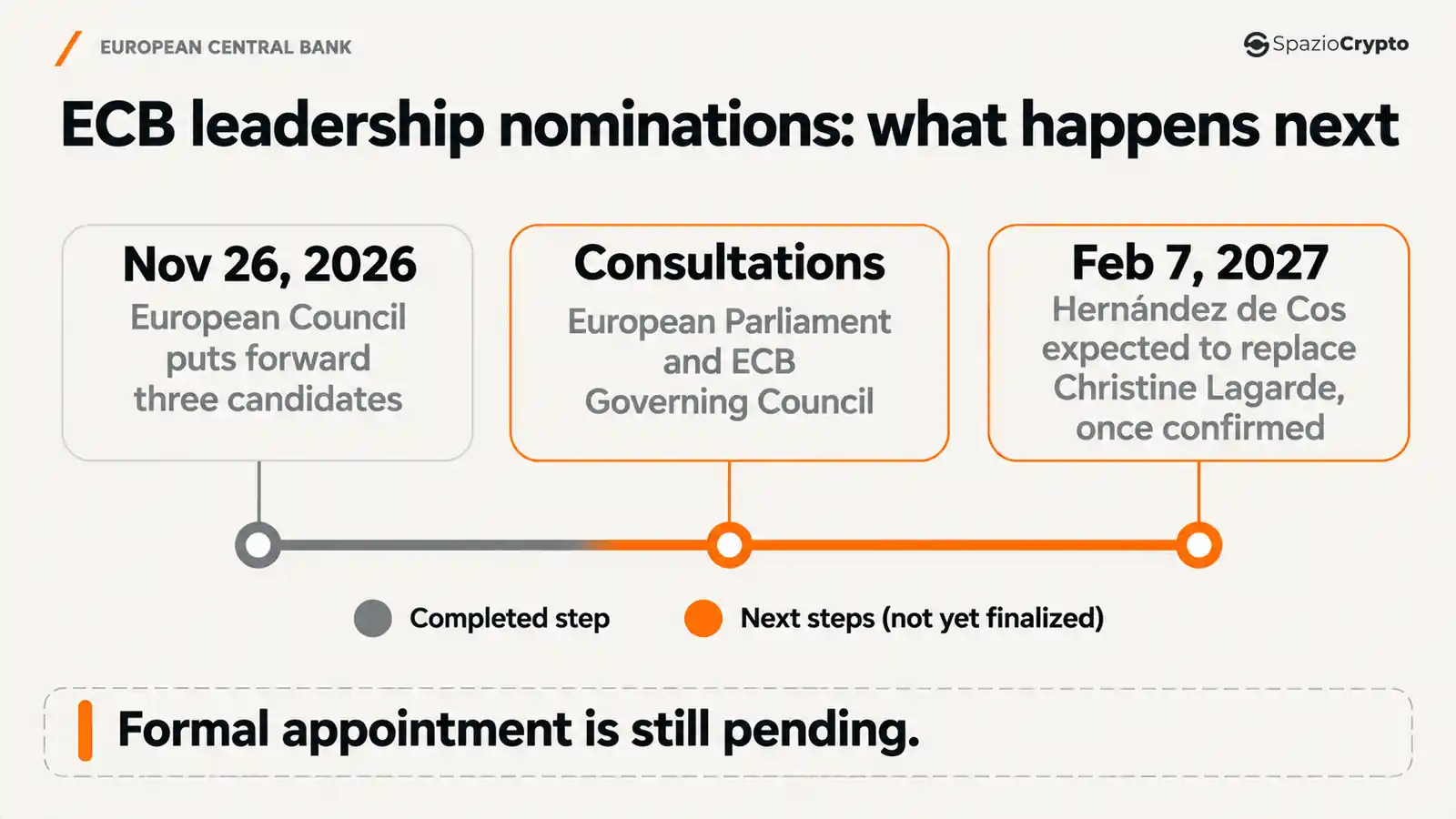
The choice is not yet final. Before the formal appointment, the European Council must consult the European Parliament and the ECB Governing Council. The process then moves to a qualified majority vote by the European Council, as laid out in EU treaty procedures.
Boone and Brunnermeier Proposed for the Executive Board
The same announcement put forward Laurence Boone and Markus Brunnermeier as candidates to join the ECB Executive Board, replacing Isabel Schnabel and Philip Lane. Schnabel has stated her intention to leave on January 3, 2027; Lane's term ends May 31, 2027. Both candidacies will also go through the required consultations with Parliament and the Governing Council before any formal decision is reached.
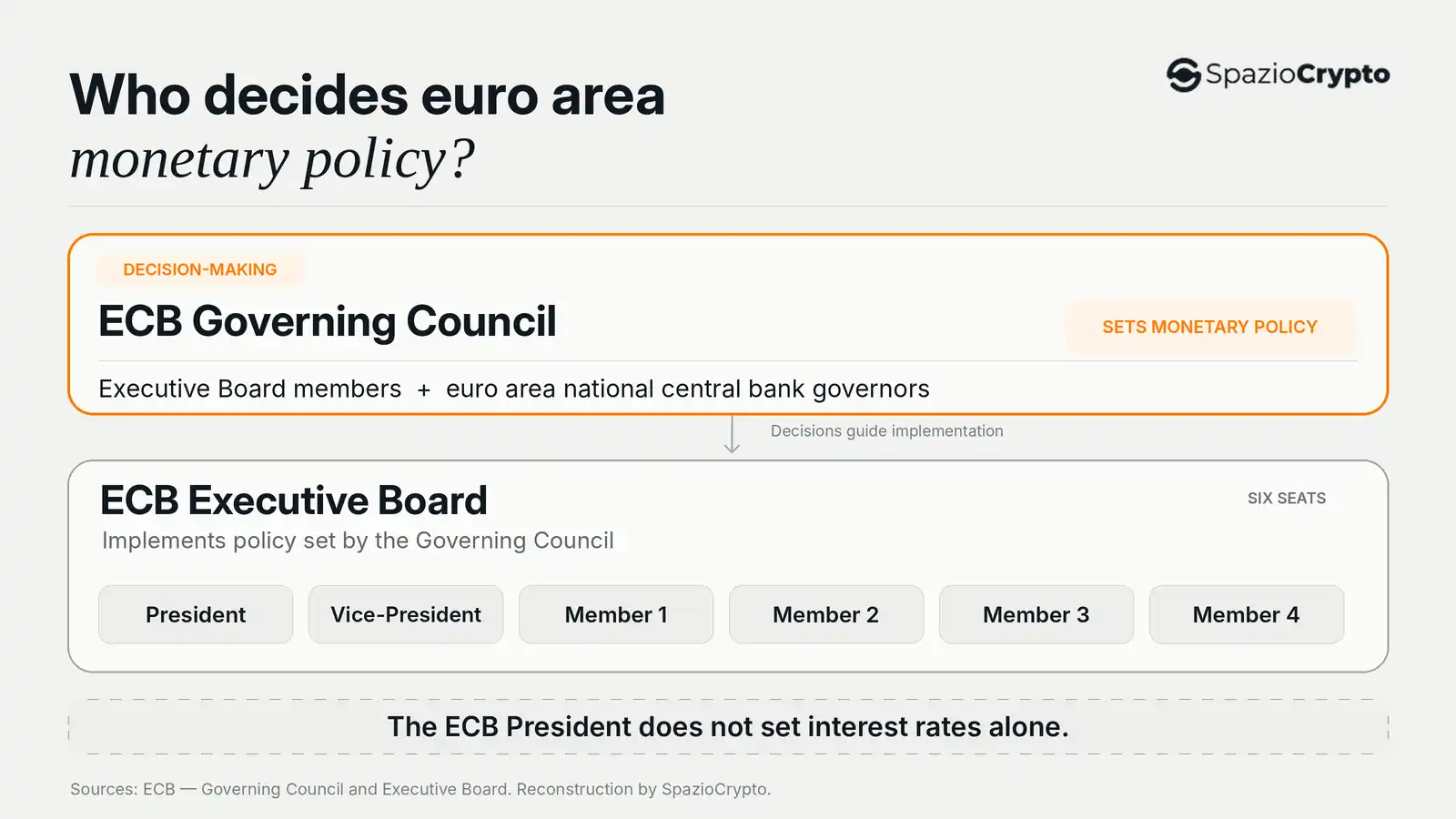
The Executive Board consists of the President, the Vice-President, and four other members. It implements monetary policy for the euro area in line with the guidelines set by the Governing Council, the broader body that also includes the governors of eurozone national central banks.
A Leadership Change, Not a Policy Change
The designation of Hernández de Cos opens a transition at the top of the ECB, but it does not automatically determine the institution's future rate decisions. Monetary policy choices are made collectively by the Governing Council. The President chairs the institution's work and participates in those decisions, but cannot set euro area borrowing costs unilaterally.
The proposed Executive Board appointments complete the picture of the leadership reshuffle announced alongside Lagarde's succession. Until the full process concludes, Hernández de Cos, Boone, and Brunnermeier remain nominees put forward by the European Council, not yet installed in their respective roles.
Who Is Pablo Hernández de Cos?
A Spanish economist, Hernández de Cos served as Governor of the Banco de España from 2018 to 2024 and participated in ECB Governing Council proceedings in that capacity. The European Council's proposal now places him at the center of the succession to the ECB presidency. His potential mandate would only begin after consultations are complete and the formal appointment is made.

Sources
- European Council, official press release, November 26, 2026
- Banco de España, list of governors
- Reuters, coverage of the nomination
- Associated Press, coverage of the nomination