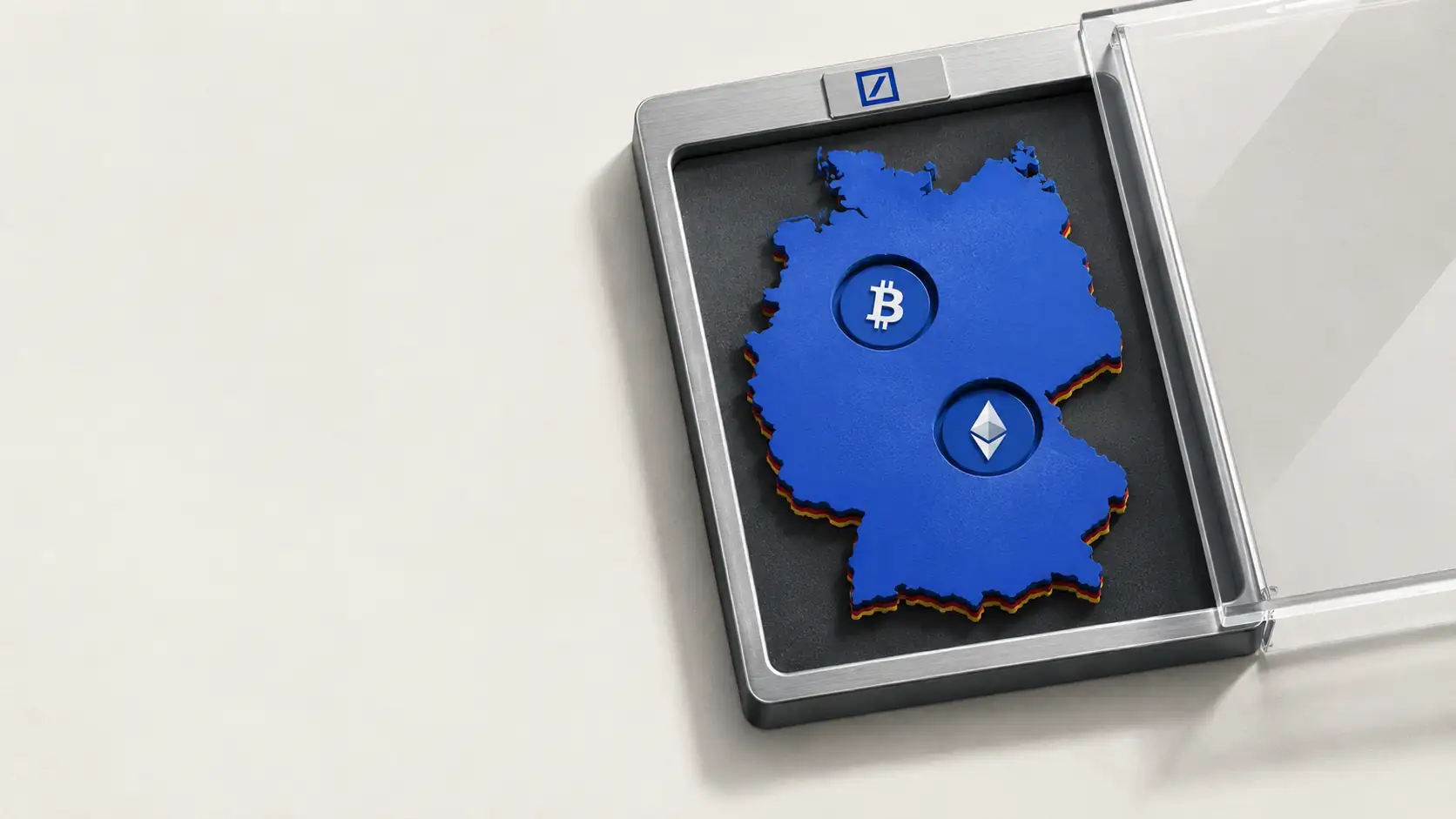


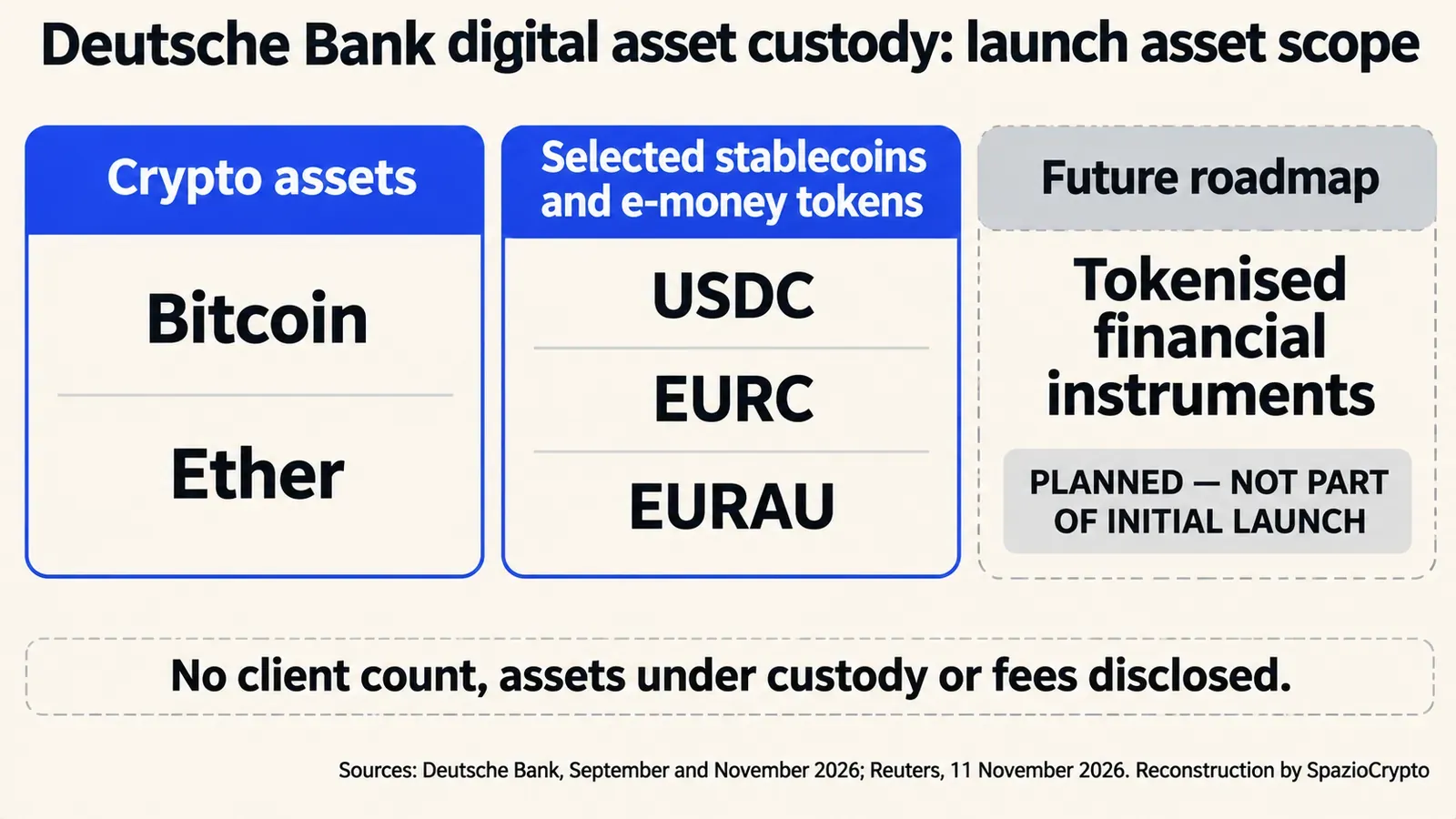
Deutsche Bank activated its digital asset custody service for European institutional and corporate clients on November 11, 2026. The bank manages wallets and private keys on behalf of clients, allowing them to hold and transfer digital assets without building their own infrastructure. The initial offering covers Bitcoin, Ether and three stablecoins: USDC, EURC and EURAU. Retail clients are not eligible.
Reuters confirmed the service is live and available to paying clients as of November 11, 2026. Deutsche Bank’s original announcement, published in September, had made the launch conditional on completing regulatory requirements.
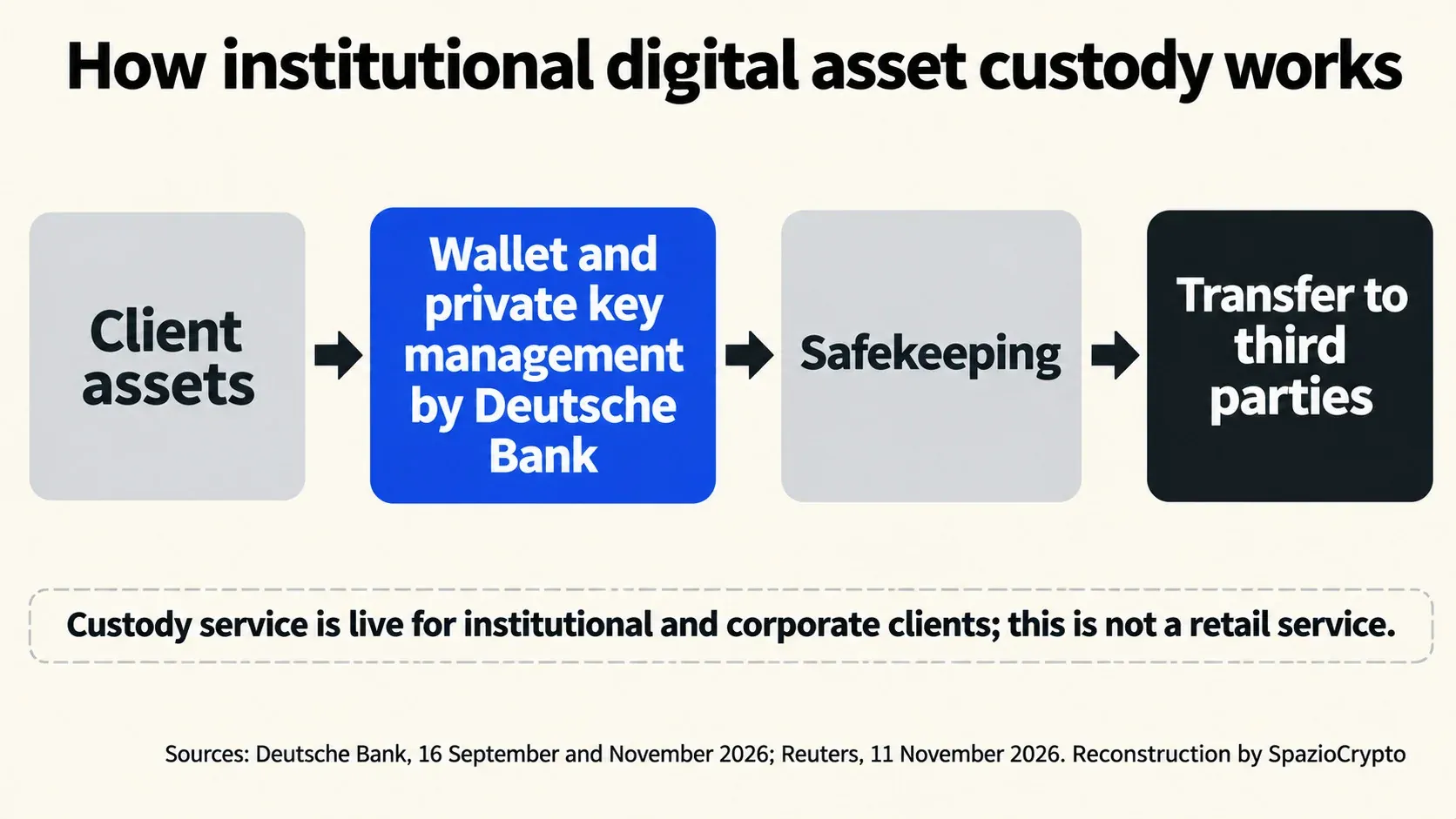
Custody solves a concrete operational problem for professional market participants. Managing private keys and secure storage systems demands dedicated infrastructure and strict controls, which most institutional clients prefer to outsource rather than build internally. Deutsche Bank positions this as a wallet and key management service operated entirely on the client’s behalf.
Service Is Live, Future Products Still Undefined
The bank has indicated the asset range may expand over time, subject to client demand, internal approval processes and regulatory requirements. Tokenized financial instruments appear on the roadmap but are not part of the initial launch.
Separately, a memorandum of understanding has been noted between Deutsche Bank and Deutsche Asset Management covering exploratory work on tokenized money market funds, crypto-linked ETCs and stablecoins. This must be distinguished from the custody service already running: an exploratory memorandum does not equal a product launch. No figures on assets under custody, active client numbers or fee structures have been reported, so the commercial scale of the service cannot yet be measured.
Deutsche Bank’s own service page still carries a disclaimer stating that availability depends on completing the regulatory pathway and technical preparation. That wording sits in tension with both the operational launch announcement and Reuters’ November 11 report. For the current status, the November corporate communication and Reuters’ confirmation are the most authoritative references.
What This Means for Institutional Clients
A major German bank entering regulated crypto custody materially broadens the options available to professional operators across Europe. That’s a meaningful development under MiCA, which since December 30, 2024 has required crypto-asset service providers to hold a CASP license. Deutsche Bank is not offering retail trading, nor has it launched tokenized funds or new investment products. The distinction matters: custody of the five listed assets is live today; tokenized product initiatives remain exploratory or on the roadmap.
The next data points to watch are the actual expansion of the client base and the range of supported assets. Until Deutsche Bank publishes figures on volumes, client counts and fee structures, the launch documents the availability of the service but does not yet allow an assessment of its commercial uptake.
FSB Calls on Turkey for Dedicated Stablecoin Rules
The Financial Stability Board (FSB) acknowledged in a report published on November 11, 2026 that Turkey has made progress in bringing crypto markets under registration and licensing frameworks, while flagging a gap in regulation for stablecoin issuers. The FSB recommends that Turkey create a dedicated regime for stablecoin issuers, strengthen monitoring of financial stability risks and improve cooperation between domestic and foreign authorities. These are international recommendations, not legislation already enacted in Turkey.
According to the FSB report, Turkish authorities have brought a significant share of crypto service providers and activities within the regulatory perimeter. Progress cited includes registration and licensing requirements for service providers, segregation of custody assets and a centralized data-collection platform for sector activity. The report also notes the existing ban on using crypto for domestic payments, a measure that limits certain links with the banking and payments system.
Stablecoin Issuers: The Core Gap
For the FSB, the absence of a specific framework for stablecoin issuers is the central vulnerability. Foreign-currency-pegged stablecoins can create direct links to foreign exchange markets and, as the report states, contribute to the risk of “digital dollarization”: the growing use of dollar-denominated instruments by people seeking protection from local currency weakness.
Reuters reported that the FSB specifically highlighted the spread of crypto and stablecoins in Turkey in the context of lira depreciation and elevated inflation. The report does not state that a stablecoin-driven instability event has already occurred; it identifies risk channels that authorities should monitor and regulate.
The Other Recommendations
Beyond a stablecoin-specific regime, the FSB asks Turkey to operationalize a formal financial stability monitoring framework, increase supervisory and enforcement capacity, and strengthen information sharing with foreign authorities. Cross-border cooperation is an explicit part of the recommendations: crypto markets operate across national borders and, the FSB argues, the associated risks cannot be addressed by domestic measures alone.
The Board’s overall assessment is therefore nuanced. It recognizes genuine progress while concluding the framework remains incomplete. The recommendations do not directly mandate legislative change, and no implementation deadline was set in the communication. It is for Turkish authorities to decide how to proceed.
Our read, stated as such, is that the report shifts the focus from operator licensing alone toward managing risks that could affect the broader financial system. The concrete signal to track will be whether Turkey introduces rules for stablecoin issuers and formal procedures to assess systemic risks. Until that happens, the FSB’s demands remain recommendations and do not describe any regime already in effect.