

Every few weeks, Italy's financial markets regulator Consob issues another notice announcing the takedown of unauthorized financial websites. The latest, published on August 6, brought six new sites down, pushing the cumulative total to 1,805 since 2019. Routine enforcement, at first glance. But behind these numbers, a genuinely important shift is underway in how Italy protects investors in the crypto space.
With the EU's MiCAR framework now fully operative, Italy's market is entering a sharper, cleaner phase: you are either a licensed operator or you are outside the law. No more grey zones. And Consob now wields two legally distinct tools to enforce that boundary. Here's what that actually means.
What Consob Decided on August 6
The facts first. With its August 6 order, as reported by Teleborsa/ANSA, Consob instructed Italian internet service providers to block access to six websites through which investment services were being offered without any regulatory authorization. With these additions, the total number of sites blocked since July 2019, when Consob first received this enforcement power, rises to 1,805. Of those, 233 relate specifically to crypto-asset fraud.
The mechanism is concrete. Consob orders ISPs operating in Italy to block access to flagged sites from Italian territory, including login pages and trading platforms targeting Italian users. It's a meaningful defense, though not an airtight one. As the regulator itself acknowledges, fraudulent organizations often respond by registering near-identical new domains within days. That's precisely why these notices are so frequent and why the counter keeps climbing.
 redazione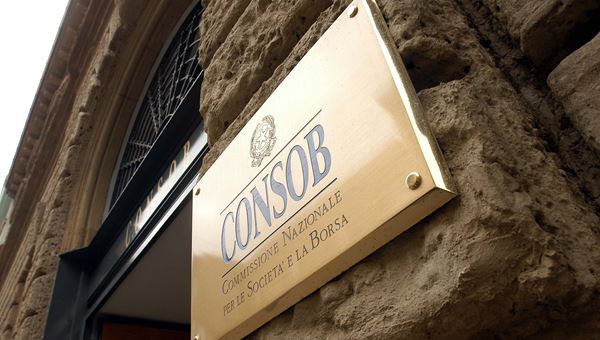
The Detail That Matters: Two Distinct Legal Powers
This is where the story becomes genuinely interesting, and where this notice differs from those of previous years. Consob now acts under two separate legal frameworks, and conflating them misses what's actually happening. The first, the older one, flows from Italy's “Decreto Crescita” of 2019, which granted Consob the power to block websites of unauthorized financial intermediaries in general: unlicensed trading in equities, foreign exchange, and derivatives.


The second power is new. It derives from EU Regulation 2023/1114, the MiCAR framework, transposed into Italian law. Under this authority, Consob can specifically block sites offering crypto-asset services to Italian investors without the required authorization. Two instruments, two separate legal foundations, even if the practical outcome (the site goes dark) is the same. Understanding the distinction matters: not every crypto site gets blocked “in the name of MiCA.” The overlap of the two powers reflects a supervisory apparatus that is becoming more articulated and specialized.
Consob's Two Enforcement Tools
Two distinct legal powers, one shared objective. Source: Consob, 2026
- Decreto Crescita (2019): blocks unauthorized financial intermediaries broadly (unlicensed trading in stocks, forex, derivatives).
- MiCAR framework: the new, crypto-specific power to block unauthorized sites offering crypto-asset services to Italian retail investors.
- The total: 1,805 sites blocked since 2019, of which 233 are linked to crypto-asset fraud.
A Cleaner Market: What MiCA Changes for Investors
This is where the deeper shift becomes clear. Until recently, crypto in Italy existed in an extended grey zone: a transitional period during which many platforms operated while waiting for definitive rules. With MiCAR now fully in force, that transitional phase is over. The line is clear: an operator offering crypto services in Italy is either authorized under the new European rules (possibly holding a license obtained in another EU member state and valid across the entire Union) or it is outside the law. Full stop.
This makes Consob's enforcement both simpler and sharper. The old ambiguity is gone. Any operator not appearing on the authorized register and still offering these services is, by definition, acting unlawfully and can be blocked. It's the same process of regulatory clarification we described when covering the rollout of MiCA across Europe: once rules are fully operative, the boundary between inside and outside becomes sharp. For retail investors, that clarity is genuinely good news: it's now far easier to distinguish legitimate operators from fraudsters.
How to Protect Yourself: The Practical Side
Let's get to what matters for you as a reader, because prevention remains the strongest defense. Consob has flagged a worrying evolution in how scams operate: bad actors increasingly use sophisticated tools, including cloned websites that mimic legitimate platforms, fake social media profiles of well-known figures, and AI-generated content such as deepfake images, voices, and video like those used to impersonate Binance's CZ, to deceive victims.
Against these threats, one rule applies above all others: verify before you invest a single euro. Consob maintains a dedicated public section on its official website called “Occhio alle truffe” (Watch Out for Scams), which lists all blocked sites and warnings about unauthorized operators. Before entrusting money to any platform, especially one that promises easy returns or reached you through unsolicited messages, check there first. And keep this principle in mind: no serious operator will ever pressure you or manufacture urgency to get you to invest quickly, as we explained in our analysis of the new MiCA-related scam waves.
The Bigger Picture
What looks like a routine enforcement update is actually evidence of a maturing market. Consob's sustained activity, reinforced by the new European legal toolkit, is steadily transforming Italy's crypto landscape from uncertain ground into an increasingly regulated space, where the boundary between lawful and unlawful is drawn with growing precision. It's not a dramatic overhaul. It's a slow, patient process of clearing the field.
For investors, the lesson cuts two ways. On one side, they can count on a more active and better-equipped regulator: authorities now have the legal instruments to intervene specifically in the crypto space. On the other, no list of blocked sites can replace personal vigilance. Fraudsters move fast and constantly reinvent themselves. Real protection comes from the combination of a functioning regulatory framework and an informed citizen who checks before trusting. In an era of increasingly sophisticated deception, that habit of verification is the most valuable asset to cultivate. Readers who want to go deeper on the regulatory framework can start with our guide on crypto regulation in Europe.