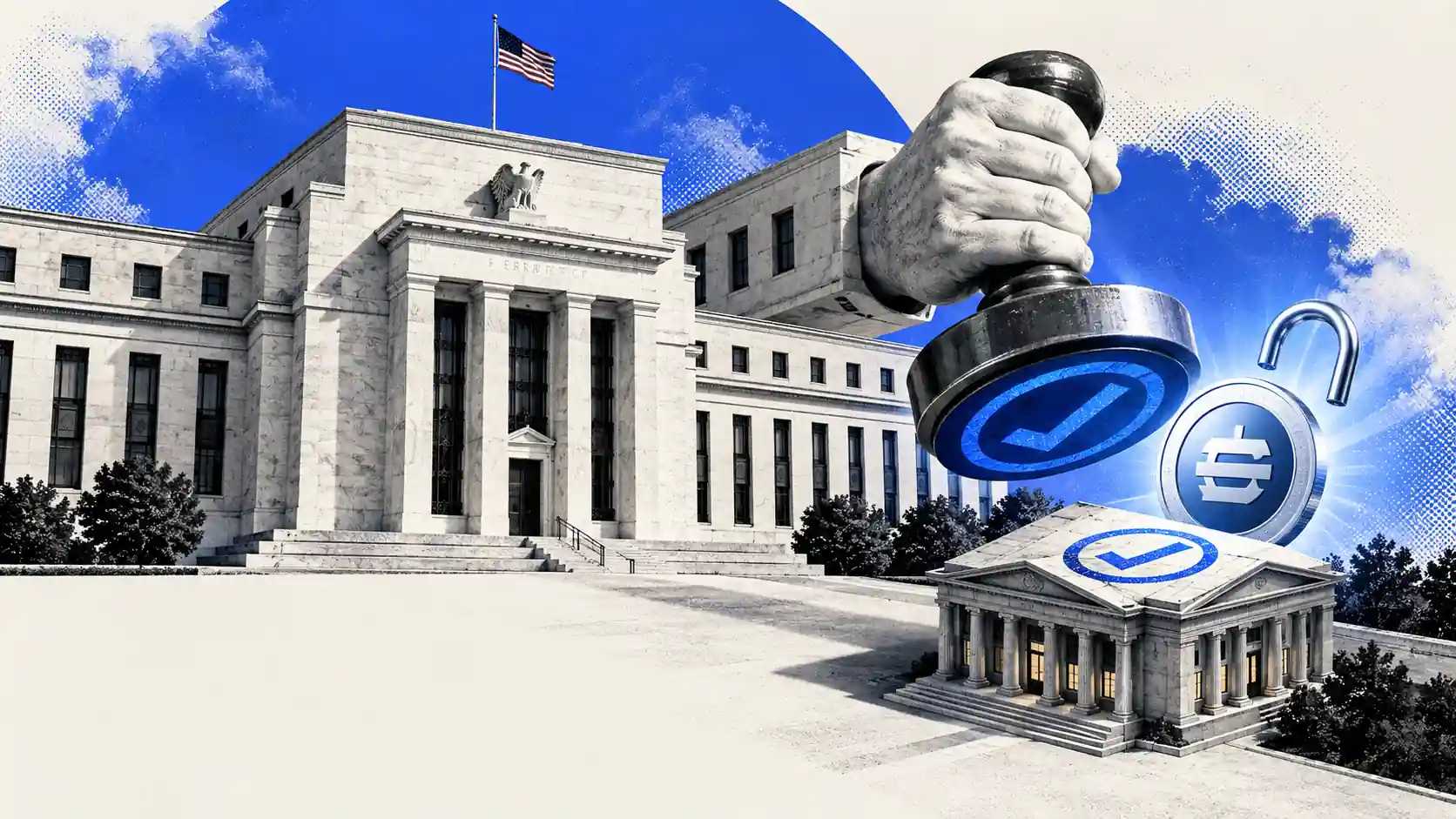


World, the digital identity project formerly known as Worldcoin and co-founded by OpenAI CEO Sam Altman, launched World Money on September 17: a self-custodial financial “super app” now available in more than 150 countries. World Money represents a fundamental shift in what Worldcoin was built to be, moving from a biometric identity verification tool to a full-featured consumer financial account built on stablecoin infrastructure. The app integrates stablecoin balances, cross-border payments, digital asset trading, yield generation, and virtual accounts, all inside a single interface.
This isn't a routine token update for WLD holders. World is transforming its identity verification infrastructure into something far closer to a global consumer financial account, with partners including Stripe, Bridge, and Morpho integrated directly into the app. What follows is a breakdown of the features, the caveats regulators in Europe and the US should note, and why the identity-to-finance sequence World is describing deserves close attention.
 World Help Center
What World Money Actually Offers
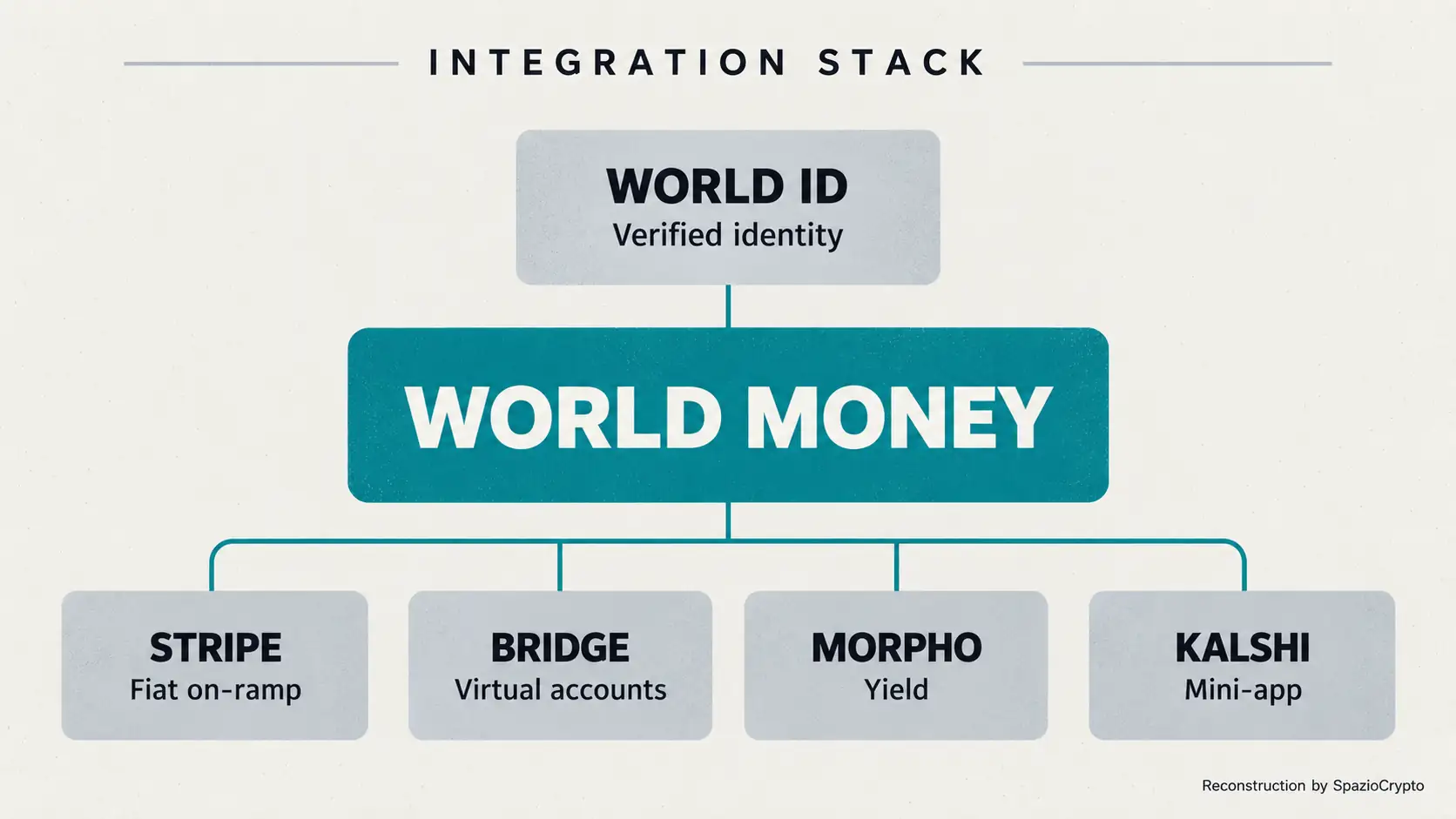
The app, developed by Tools for Humanity, the company behind the World project, lets users hold stablecoin balances in eight different currencies, send and receive digital assets internationally, monitor wallets and transactions, and set price alerts. All of this runs through a self-custodial interface where users retain direct control of their private keys. In the US market, Stripe powers the funding flow via Apple Pay, converting funds into stablecoins within minutes. Bridge handles the creation of virtual accounts that convert deposits into digital US dollars, with account details issued directly by a partner banking institution.
The app also includes a dedicated yield section, powered by the decentralized lending protocol Morpho, which allows users to deposit selected assets to generate interest over time. Rates and conditions are neither guaranteed nor fixed, varying with market conditions. A growing ecosystem of integrated “mini apps” rounds out the offering, including the prediction market platform Kalshi and the Morpho protocol itself for yield management.
A Critical Caveat, Directly from World
Before getting carried away by the scale of this launch, there is a fundamental clarification that World's own official product documentation makes clear, and that every user should understand before signing up. Stablecoins held within World Money are digital assets, not insured bank deposits. That distinction applies to any stablecoin, but it carries particular weight in an app designed and marketed as a daily alternative to traditional banking, where the feel of a “balance” can easily be mistaken for the security of a guaranteed current account.
There is a second caveat worth noting, flagged by early press coverage. Availability across more than 150 countries does not mean uniform access to all features. Functionality and eligibility vary considerably by jurisdiction. The initial official communications did not specify how compliance requirements were addressed in each individual market. For US and UK readers used to FDIC or FSCS deposit protection, that gap matters.
World Money at a Glance
Key facts. Source: World, The Block, 2026
- The reach: over 150 countries, with features varying by jurisdiction.
- The partners: Stripe, Bridge, Morpho, and mini apps including Kalshi, integrated directly.
- The warning: stablecoins held in the app are not insured bank deposits.
From Identity to Financial Account: The Sequence That Matters
The most striking aspect of this launch, beyond the feature list, is the logical sequence it represents. World began as a system for proving, through iris scanning, that a given user is a real person and not a bot. The company has increasingly tied that mission to AI's growing capacity to generate convincing fake digital identities at scale. With World Money, that same proof of identity becomes the access layer to a complete financial account, built on top of a stablecoin infrastructure.
The chain runs like this: identity verified via World ID unlocks a self-custodial wallet, which holds stablecoin balances, connected to fiat conversion infrastructure provided by Stripe and Bridge, extending all the way to genuine financial services including yield-bearing savings and international transfers. It's the same pattern of silent stablecoin adoption seen in Nubank's Nu Global launch, where deposits convert automatically into stablecoins without the user noticing, and in Lisk's transformation into a fintech platform that abstracts the underlying blockchain entirely.

Why This Raises Regulatory Questions in Europe and Beyond
There is a broader reason to follow this evolution carefully, beyond the product launch itself. Until now, World's biometric identity layer was tied primarily to token distribution and anti-fraud verification. With World Money, that same biometric identity can become the identity layer for real financial services: from payments to savings. That's a meaningful step up. It opens non-trivial regulatory questions about how a system linking sensitive biometric data to access to banking and financial services at global scale should be treated under existing law.
Under MiCA, the EU's crypto-asset regulatory framework that entered full force on December 30, 2024, stablecoin issuers and crypto-asset service providers face strict requirements around e-money licensing, reserve management, and consumer protection. Linking biometric identity data to financial services at this scale would also raise questions under GDPR, particularly around the processing of special-category data. Neither issue is simple, and World's official communications at launch did not address either in detail.
The World Money launch fits a broader pattern: stablecoins and digital payments are progressively disappearing from the “crypto” interface as perceived by the end user, who simply sees a balance, a transfer, a payment, while underneath, blockchains and stablecoins are doing the work. This is a theme that extends well beyond trading, as the growing role of stablecoins in private credit markets and the real economy makes clear.
The Bigger Picture
The launch of World Money marks a potentially significant moment in the evolution of stablecoin-based financial infrastructure, because it brings together two elements that until recently seemed to belong to separate worlds: biometric identity verification and access to full financial services. Whether this represents a genuinely useful evolution, capable of extending financial services to people currently excluded from traditional banking, or a worrying concentration of sensitive data and financial power in the hands of a single project, remains an open and legitimately contested question.
Two observations stand out. First, this launch confirms the trend toward increasingly invisible stablecoins, embedded inside user experiences that look more and more like an ordinary bank account rather than a recognizable crypto product. Second, the scale and speed of this rollout (more than 150 countries from day one, according to World's official announcement) raises concrete questions about how regulators, especially the European Commission, ESMA, and national competent authorities under MiCA, will approach a product that links biometrics and financial services at a combination and scale never seen before. Those questions are likely to find answers in the months ahead. For a grounding in the instruments at the center of this story, our guide to what stablecoins are and how they work is a good starting point.