


A preliminary injunction issued November 23, 2026, requires Kalshi to block access to its sports event contracts for users physically located on the lands of four Native communities in New Mexico. The platform must comply by December 7. The underlying lawsuit continues, and this order is not a final ruling on the merits.
Kalshi must now prevent users physically present on the territories of four New Mexico Native communities from accessing its sports contracts. Federal Judge Margaret Strickland issued the preliminary injunction on November 23, granting relief to the Mescalero Apache Tribe, the Pueblo of Isleta, the Pueblo of Pojoaque, and the Pueblo of Sandia.
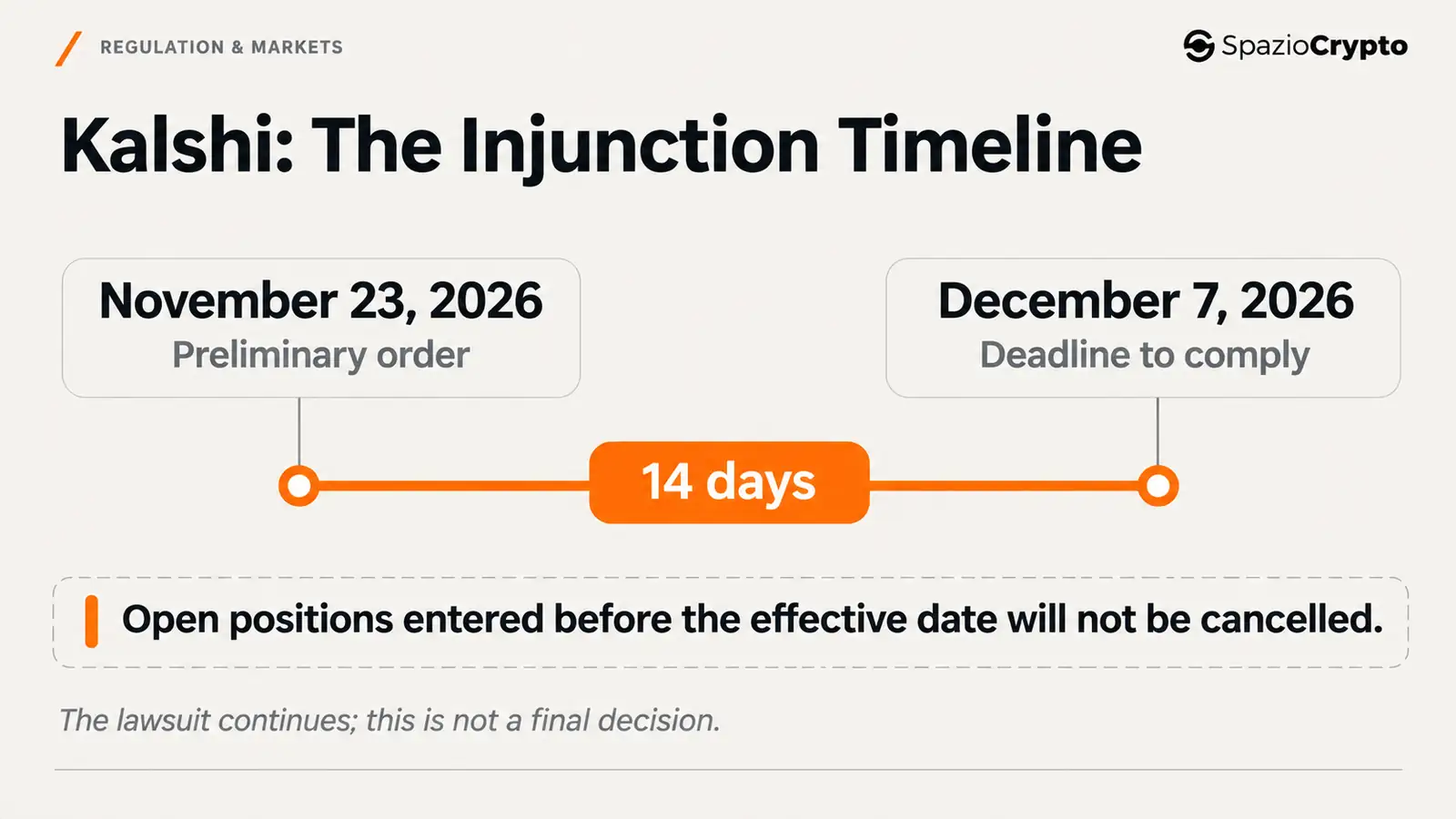
Kalshi has fourteen days from the order, until December 7, to implement the restriction. The court requires the platform to block sports contracts on the affected lands via geofencing or another effective method. Positions already open before the injunction took effect are not canceled. The measure applies only to the four tribal territories named in the suit and remains active while the case proceeds. It does not constitute a statewide ban across New Mexico, nor a final judgment on the underlying legal questions.
The Legal Tension: IGRA vs. the Commodity Exchange Act
The dispute pits two federal statutes against each other. The Indian Gaming Regulatory Act (IGRA) governs gambling on tribal lands and grants Native communities significant authority over gaming within their territories. The Commodity Exchange Act (CEA), by contrast, is the federal law regulating derivatives markets, administered by the Commodity Futures Trading Commission (CFTC).
At this preliminary stage, Judge Strickland found it plausible that Kalshi’s sports contracts could qualify as Class III gaming under IGRA. She also rejected Kalshi’s argument that the CEA automatically pre-empts tribal law from applying. The order does not definitively classify these contracts. It evaluates whether the tribes’ claims are strong enough to justify temporary protection while the full case is decided.
One of the most consequential passages in the ruling concerns where a wager legally occurs. At this stage, the court found that the relevant activity takes place where the user is physically located when placing a trade, not where the platform’s servers are based. That framing means a user’s geographic position can determine which authority has jurisdiction to act.
Why Geofencing Now Enters Kalshi’s Operational Model
Kalshi must apply a territorial restriction that follows tribal land boundaries, even when a user accesses the service online. The court found it plausible that geolocation tools could be used to block contract offerings in the specified areas, and determined that interference with tribal sovereignty could constitute irreparable harm.
The ruling lands as the CFTC has separately published its own interpretation of fair-access requirements for Designated Contract Markets. On November 5, the CFTC asked platforms to either cease domestic geographic restrictions that violate those requirements within 30 days or explain why compliance is not feasible. That CFTC guidance is distinct from the court’s injunction. In the New Mexico proceeding, Kalshi had argued that the geographic exclusion the tribes sought was incompatible with fair-access requirements. Judge Strickland nonetheless granted preliminary relief based on the IGRA framework and the specific facts of the case. The two regulatory threads will need to be reconciled, but the court order remains binding on the parties involved.
30,000 Site Visits Are Not 30,000 Bets
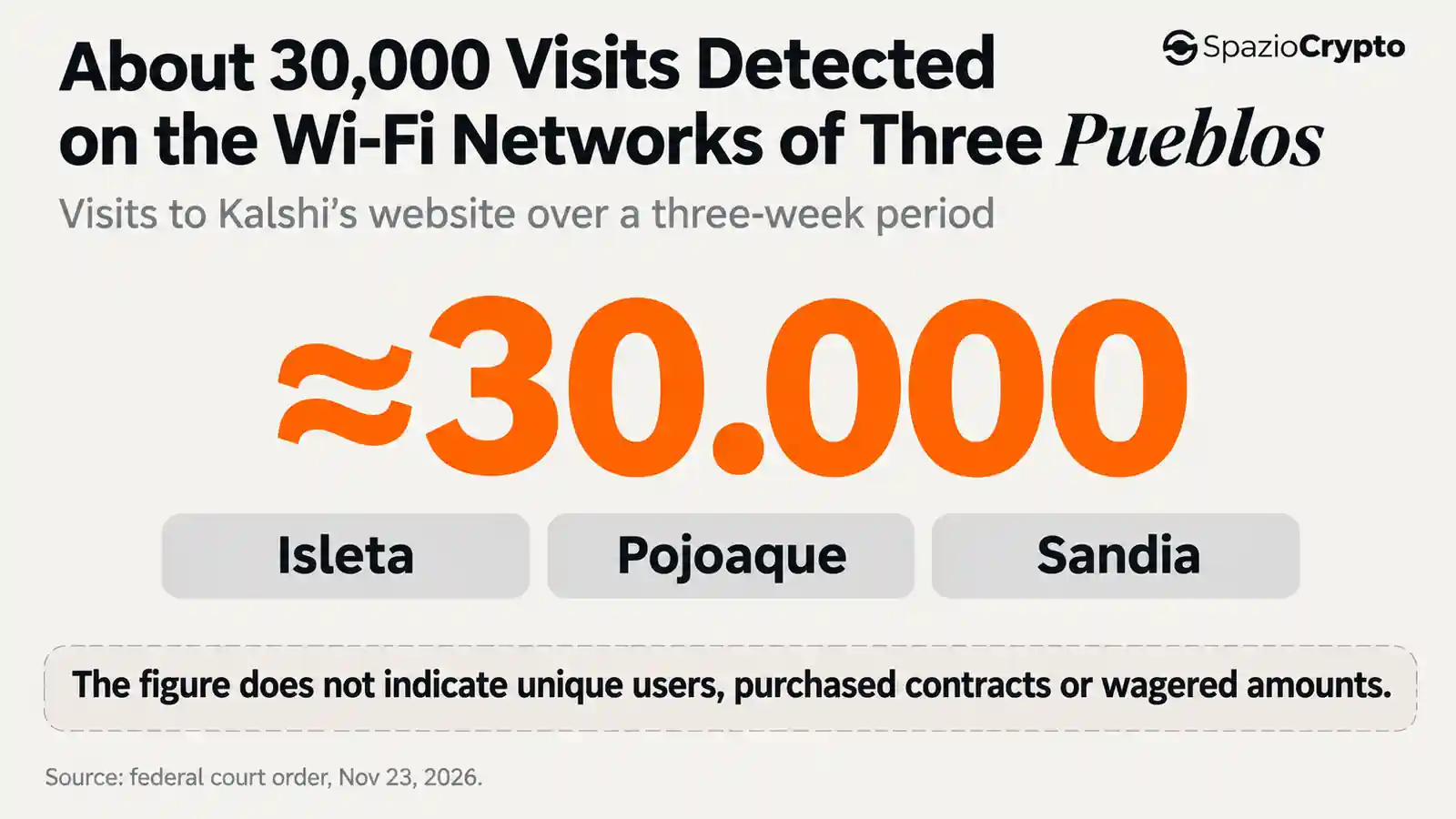
Declarations submitted in the proceeding report approximately 30,000 visits to the Kalshi website over three weeks, detected across the Wi-Fi networks of three of the pueblos: Isleta, Pojoaque, and Sandia. That figure measures site accesses recorded on those networks. It does not represent unique users, contracts purchased, amounts wagered, or revenue generated. It does not, in other words, quantify actual betting activity within those communities.
The order is a pointed example of how prediction market compliance can hinge on hyper-local boundaries and overlapping legal regimes. For Kalshi, the immediate obligation is narrow: by December 7, the platform must stop offering new sports contracts to users on the four tribal territories, while preserving positions already open. The full lawsuit will determine whether and how federal and tribal law apply on a permanent basis.
Key Facts
- The injunction is preliminary and does not close the case.
- It applies to the lands of four specific communities, not the entire state of New Mexico.
- The court-imposed deadline is December 7, 2026.
- Existing positions opened before the order took effect are not canceled.
- The roughly 30,000 site visits cited in filings do not correspond to bets placed or unique users.
Sources
- GovInfo, District of New Mexico docket
- Full text of the preliminary injunction
- CFTC, fair-access requirements interpretation, November 5, 2026
- KSFR / Source New Mexico, case coverage
The December 7 deadline is the immediate pressure point for Kalshi, but the deeper question, whether a CFTC-regulated prediction market can operate under tribal gaming law, will take considerably longer to resolve. Traders and operators active in prediction markets should watch how the court reconciles IGRA and the CEA in its final ruling, since the outcome could set a precedent that extends well beyond New Mexico’s tribal boundaries.