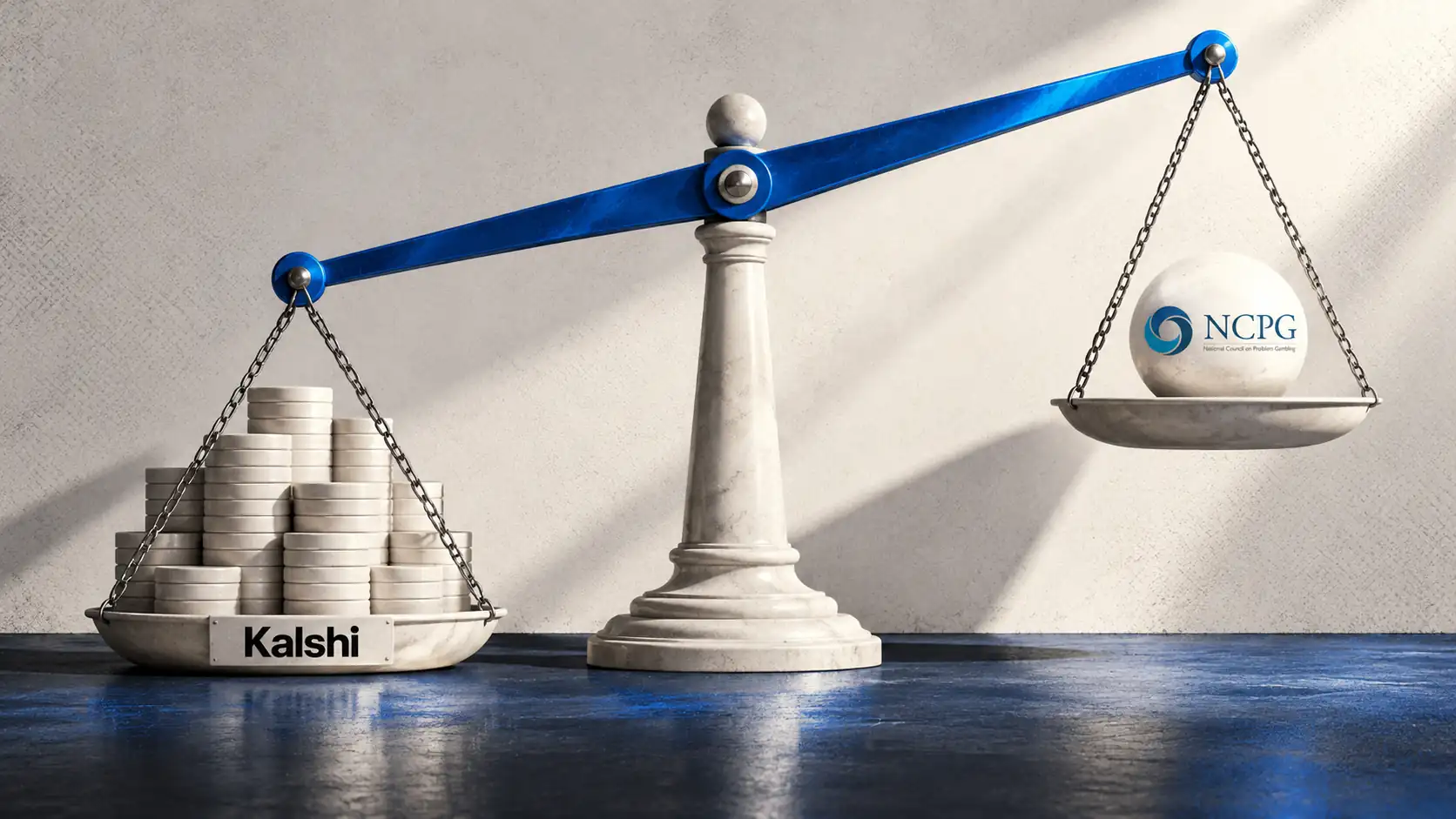
A former White House teleprompter operator knew what President Trump would say roughly an hour before anyone else. He used that knowledge to place bets on a prediction market platform, walking away with more than $107,000 in profits. The Commodity Futures Trading Commission (CFTC) has now sanctioned him, and the case is already being cited as a landmark moment for an industry that is growing fast but writing its rulebook on the fly.
How a Teleprompter Became a Trading Edge
The mechanics are almost absurdly simple. Gabriel Perez worked for years at the White House managing the teleprompter, the device that scrolls a speaker's prepared text. His role gave him access to the full content of presidential speeches roughly sixty minutes before delivery. On their own, those scripts look like routine government paperwork. Paired with a prediction market account, they became something else entirely.
Platforms like Kalshi offer what are called “mention markets”: contracts that pay out based on whether a specific word or phrase is spoken during a public address. Knowing the text in advance, Perez could bet on outcomes he already knew, effectively eliminating the risk that every other participant was carrying. According to the CFTC order, between late 2025 and the early months of 2026, Perez exploited this advantage across more than a dozen speeches, accumulating over $107,000 in essentially risk-free profits.
The CFTC Sanction: $172,000 and a Three-Year Ban
The CFTC, which oversees U.S. derivatives markets, stepped in with a penalty that covered multiple fronts. Per the official CFTC press release dated 2026, Perez was ordered to disgorge all illicit profits, pay a $65,000 civil monetary penalty, and accept a three-year ban from trading on any CFTC-regulated platform. He settled the charges without formally admitting the findings, a standard outcome in civil enforcement actions of this kind.
One detail stands out: the fine was reduced by approximately 40% compared to what the CFTC might otherwise have imposed. The agency cited his “exemplary” cooperation as the reason. That concession matters less for Perez than for the broader message it sends: cooperate early, and regulators will notice.
What makes the enforcement story more interesting is where the tip originated. Kalshi's own internal surveillance system flagged the suspicious trading pattern first and reported it to the authorities. The platform's compliance team publicly acknowledged the outcome, making clear that rules apply regardless of who you are or where you work. For a prediction market trying to win institutional credibility, that kind of proactive compliance is exactly the signal the industry needs to send. Federal prosecutors were informed but chose not to pursue criminal charges, keeping the matter in the civil lane.
A New Kind of Insider Trading the Old Rules Weren't Built For
This is where the case moves beyond courthouse drama and into genuine regulatory territory. Prediction markets are built on a simple premise: real-world events become tradeable contracts. Elections, policy announcements, sports results, public statements, all of them can be priced and traded. That design is also what creates an insider-trading problem far broader than anything traditional finance has had to manage.
In classic securities law, insider trading is relatively bounded. It typically involves someone who has advance knowledge of a company's unreleased earnings, a merger, or a regulatory decision that will move a stock price. The universe of people with that kind of access is, by design, fairly small: executives, board members, select advisors.
Prediction markets blow that universe open. Anyone whose job gives them early or exclusive access to non-public information of any kind becomes a potential insider. Government officials who know what a policy announcement will say before it is released. Journalists who have an embargoed story about an economic data print. Event organizers who know the outcome of a competition before it goes public. Political aides who have seen a speech draft. The list runs long, and the legal framework for drawing the line between normal professional knowledge and unlawful informational advantage in this context is still being built from scratch.
A Precedent That Will Set the Standard
This case isn't a one-off. According to statements accompanying the CFTC order, it is the second enforcement action involving federal government employees and prediction market event contracts, with both actions settled within a few weeks of each other. That pattern suggests the CFTC is no longer treating these markets as a curiosity but as a regulated space that requires active policing.
Prediction markets spent years as a niche corner of the internet, primarily used by forecasting enthusiasts. Today, platforms like Kalshi are licensed, attracting significant trading volumes, and drawing interest from institutional investors. The same CFTC that sanctioned Perez is also working through how to handle other innovative trading platforms, including considerations around decentralized perpetual exchanges like Hyperliquid. As volumes grow, so does the incentive to cheat, and so does the regulator's attention. Each enforcement action, taken together, is slowly assembling the compliance architecture that will define the sector's future.
The Bigger Picture: Every Sector That Scaled Had to Solve This
The teleprompter case is worth more than a passing read. Financial innovation consistently arrives ahead of the rules designed to contain it. Crypto markets spent years operating in regulatory grey zones before the CFTC, SEC. International bodies began drawing firm lines. Prediction markets are now at the same early juncture.
The lesson cuts two ways. On one side, Kalshi's decision to build internal surveillance and cooperate with the CFTC shows what the responsible path looks like for platforms that want long-term viability. On the other, the deeper question this case opens is genuinely hard: in a world where you can bet on almost anything, where exactly does professional knowledge end and unlawful informational advantage begin? That boundary is not obvious, and the regulatory frameworks in the U.S. and Europe are nowhere near settled on the answer.
Cases like this one, almost comic in their specifics, are the first data points in that longer argument. Regulators, platforms, and market participants will be working out the implications for years. For anyone tracking the evolution of digital finance and prediction markets, the CFTC's action against Gabriel Perez is a date worth remembering: it marks the moment this question stopped being theoretical.